
多行星生存

Search documents
马斯克:月球计划当然还在推进,一切顺利的话30年内建成自给火星城
3 6 Ke· 2025-09-15 11:19
Group 1 - Elon Musk emphasizes that the Optimus robot is currently the project he invests the most energy into, with the third version design being finalized, aiming for human-like dexterity and autonomous navigation [5][7] - The projected cost for each Optimus robot is expected to be around $40,000 by 2030, with initial production costs potentially ranging from $20,000 to $25,000 once annual production reaches 1 million units [6][8] - The AI5 chip being developed by Tesla is anticipated to have performance improvements of up to 40 times compared to the AI4 chip, with significant enhancements in processing capabilities [12][13] Group 2 - SpaceX plans to launch the Starlink mobile phone within two years, which will allow direct satellite connections to mobile devices, potentially changing the landscape of mobile telecommunications [14][16] - The Starship program is progressing towards achieving fully reusable rockets, with expectations to demonstrate this capability next year, significantly increasing payload capacity compared to existing rockets [18][20] - The Grok model, under development by xAI, aims to utilize synthetic data for knowledge reconstruction, with predictions that AI capabilities could surpass the collective intelligence of humanity by 2030 [21][23] Group 3 - Musk warns of a demographic crisis in Western countries, highlighting declining birth rates and the potential for societal self-destruction if optimism about the future is not restored [24][26] - The establishment of a lunar base is seen as a crucial step towards understanding the universe, with plans to eventually create a self-sustaining city on Mars to ensure the survival of human civilization [27][29][30]


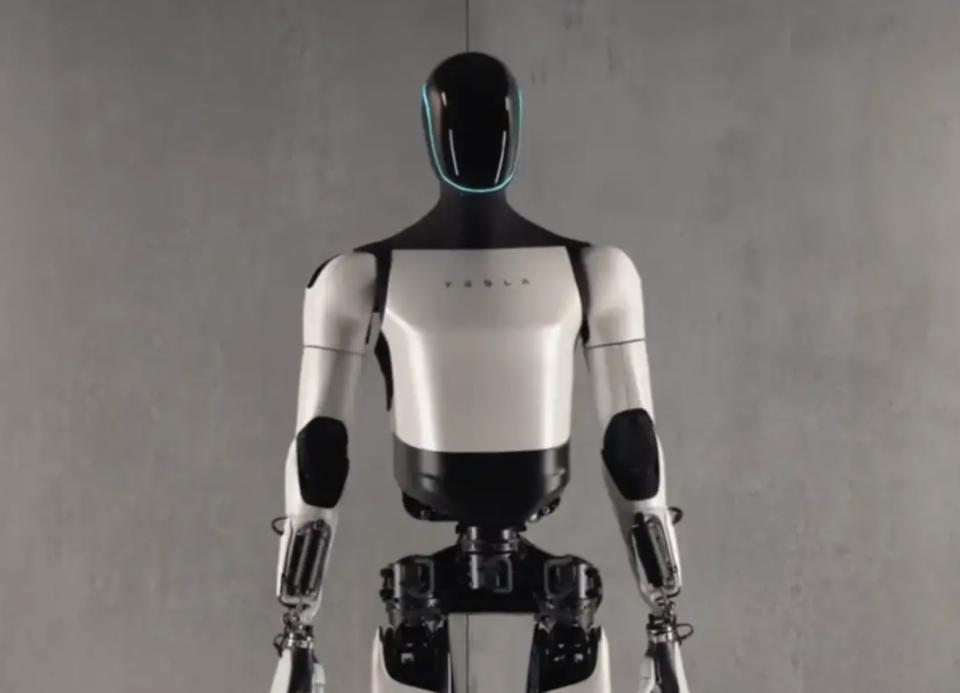
马斯克:目前最花精力的是打造“擎天柱”,两年后还要推星链手机
3 6 Ke· 2025-09-15 04:41
Group 1: Optimus Development - The company is finalizing the design of the third version of the Optimus robot, which will feature human-like hand dexterity, autonomous navigation, and advanced AI capabilities, aiming for mass production by 2030 with an estimated cost of $40,000 per unit [3][4]. - The initial production cost of the first batch of robots is influenced by the cost of AI chips and actuators, with a projected marginal production cost of $20,000 to $25,000 when annual production reaches 1 million units [4][5]. - The hardware design, particularly the hand design, presents significant challenges, making the development of Optimus more difficult than previous projects like the Cybertruck and Model X [5]. Group 2: AI Chip Advancements - Tesla is working on two chip projects: Dojo for model training and the AI series for inference, with the AI5 chip expected to achieve a performance leap of 40 times compared to the AI4 chip [6][7]. - The AI5 chip will significantly enhance the performance of Tesla's full self-driving (FSD) capabilities, with improvements in processing speed and memory capacity [7]. Group 3: Starlink Mobile Plans - The company has invested approximately $17 billion in spectrum to enable Starlink satellites to connect directly with mobile phones, with the first compatible devices expected to launch in two years [8][9]. - The goal is to provide high-bandwidth network connectivity via satellites, potentially reducing reliance on traditional mobile carriers [10][11]. Group 4: Starship Developments - The company aims to achieve full reusability of the Starship by next year, with significant upgrades planned for the third generation of the spacecraft [13][14]. - The main technical challenge for achieving full reusability lies in developing a heat shield that can withstand extreme temperatures without requiring extensive repairs after each flight [15]. Group 5: Grok Model and AI Future - The Grok model is being developed to analyze and correct human knowledge databases using synthetic data, with the potential for AI capabilities to surpass human intelligence by 2030 [16][18]. - The company is expanding its computational resources to enhance the intelligence of AI models, with a logarithmic relationship between computational investment and intelligence improvement [18]. Group 6: Human Future and Population Concerns - The company expresses concern over declining birth rates in Western countries, which could lead to a self-destructive trajectory for society [19][21]. - The need for a renewed sense of optimism about the future is emphasized as essential for encouraging higher birth rates and societal stability [21]. Group 7: Lunar and Mars Exploration - The establishment of a lunar base is seen as a crucial step for deeper understanding of the universe, with plans for a self-sustaining city on Mars within 30 years [22][23]. - The focus is on ensuring that Mars can develop independently of Earth, which is vital for the long-term survival of human civilization [24][25].