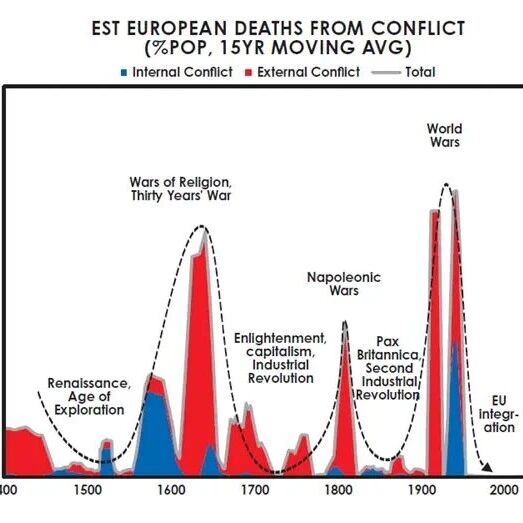
大周期第六阶段

Search documents
突发!巴拿马正式抢走港口,李嘉诚求神庇佑
Xin Lang Cai Jing· 2026-02-24 11:06
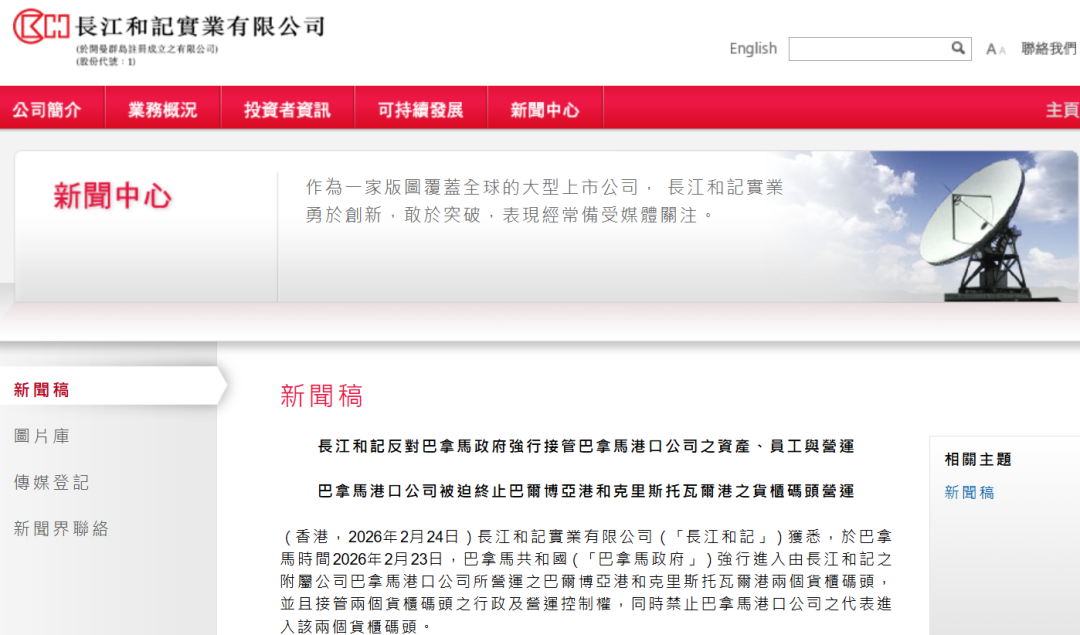
Core Viewpoint - The Panama government has forcibly taken control of two ports operated by Cheung Kong, leading to significant operational disruptions and potential long-term implications for trade routes and investments in the region [1][2]. Group 1: Company Impact - Cheung Kong's operations at the Balboa and Cristobal ports have been halted, with the government seizing assets and employees, which the company strongly opposes [2]. - The loss of control over these ports signifies a broader risk for all vessels passing through Panama, potentially impacting trade with South America if tensions escalate [3]. Group 2: Industry Context - The recent actions in Panama reflect a shift in global order, as highlighted by Ray Dalio, indicating a return to a "jungle law" environment where traditional international norms are eroding [3]. - Dalio's analysis suggests that the current geopolitical climate is reminiscent of pre-World War II conditions, where economic and capital wars precede actual military conflicts [3]. - The implications of asset freezes, market access restrictions, and embargoes are critical for companies operating internationally, as these tactics can severely disrupt business operations [4][5][6]. Group 3: Investment Strategy - Investors are advised to be cautious with debt assets during periods of conflict, as governments may resort to printing money, leading to currency devaluation [6]. - Gold is recommended as a stable store of wealth, as it is not reliant on any country's credit, making it a safer investment during turbulent times [6].

达利欧万字长文:旧秩序已死,贸易战和资本战将成常态
凤凰网财经· 2026-02-16 10:48
Core Viewpoint - The world has entered the sixth stage of a "big cycle," characterized by chaos, lack of rules, and power as the primary principle, marking the end of the post-World War II order established in 1945 [1][10][12]. Group 1: Global Order and Geopolitical Dynamics - Major global leaders have reached a rare consensus on the "end of the old order," with significant figures like German Chancellor Friedrich Merz and French President Emmanuel Macron acknowledging the failure of the previous security architecture [1][2]. - The international relations will now follow the "law of the jungle," where conflicts between major powers will not seek legal resolutions but will escalate through threats or warfare [1][12]. Group 2: Capital Markets and Economic Warfare - The current phase signifies a period of extreme uncertainty for capital markets, with historical evidence suggesting that military parity between opposing powers increases the risk of war [2][5]. - Economic tools will be weaponized, and traditional safe-haven strategies may fail, leading to significant transfers of wealth and power [2][9]. Group 3: Types of Warfare and Power Struggles - There are five primary forms of warfare: trade/economic war, technology war, geopolitical war, capital war, and military war, with the first four often escalating before military conflict occurs [3][13]. - The current global situation reflects a "prisoner's dilemma," where opposing sides are trapped in a cycle of escalation due to mutual distrust [3][21]. Group 4: Historical Context and Lessons - The article draws parallels with the 1930s, where economic turmoil led to the rise of populism and authoritarianism, ultimately culminating in World War II [5][27]. - Historical examples illustrate that economic warfare often precedes military conflict, as seen in the lead-up to World War II, where nations engaged in trade wars and sanctions before open hostilities [39][40]. Group 5: Capital Warfare Strategies - Capital warfare strategies include asset freezes, market access restrictions, and trade embargoes, which can severely impact financial security during conflicts [6][8][40]. - The use of these strategies is expected to increase, posing significant risks to traditional financial assets [8][9]. Group 6: Economic Policies During War - During wartime, governments typically impose strict controls over the economy, including rationing, price controls, and capital controls, often leading to significant debt issuance and currency devaluation [9][46]. - Historical evidence suggests that gold remains a preferred asset for wealth preservation during war, as credit often becomes unreliable [9].