
技术战

Search documents
达利欧万字长文:旧秩序已死,贸易战和资本战将成常态
凤凰网财经· 2026-02-16 10:48
Core Viewpoint - The world has entered the sixth stage of a "big cycle," characterized by chaos, lack of rules, and power as the primary principle, marking the end of the post-World War II order established in 1945 [1][10][12]. Group 1: Global Order and Geopolitical Dynamics - Major global leaders have reached a rare consensus on the "end of the old order," with significant figures like German Chancellor Friedrich Merz and French President Emmanuel Macron acknowledging the failure of the previous security architecture [1][2]. - The international relations will now follow the "law of the jungle," where conflicts between major powers will not seek legal resolutions but will escalate through threats or warfare [1][12]. Group 2: Capital Markets and Economic Warfare - The current phase signifies a period of extreme uncertainty for capital markets, with historical evidence suggesting that military parity between opposing powers increases the risk of war [2][5]. - Economic tools will be weaponized, and traditional safe-haven strategies may fail, leading to significant transfers of wealth and power [2][9]. Group 3: Types of Warfare and Power Struggles - There are five primary forms of warfare: trade/economic war, technology war, geopolitical war, capital war, and military war, with the first four often escalating before military conflict occurs [3][13]. - The current global situation reflects a "prisoner's dilemma," where opposing sides are trapped in a cycle of escalation due to mutual distrust [3][21]. Group 4: Historical Context and Lessons - The article draws parallels with the 1930s, where economic turmoil led to the rise of populism and authoritarianism, ultimately culminating in World War II [5][27]. - Historical examples illustrate that economic warfare often precedes military conflict, as seen in the lead-up to World War II, where nations engaged in trade wars and sanctions before open hostilities [39][40]. Group 5: Capital Warfare Strategies - Capital warfare strategies include asset freezes, market access restrictions, and trade embargoes, which can severely impact financial security during conflicts [6][8][40]. - The use of these strategies is expected to increase, posing significant risks to traditional financial assets [8][9]. Group 6: Economic Policies During War - During wartime, governments typically impose strict controls over the economy, including rationing, price controls, and capital controls, often leading to significant debt issuance and currency devaluation [9][46]. - Historical evidence suggests that gold remains a preferred asset for wealth preservation during war, as credit often becomes unreliable [9].

报告:中国汽车行业淘汰赛已进入深化阶段
Zhong Guo Xin Wen Wang· 2026-01-09 12:05
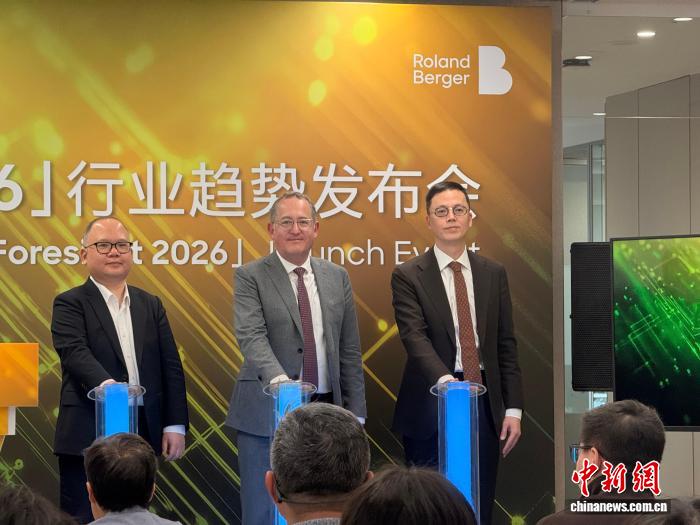
Core Insights - The report by Roland Berger highlights significant transformations in the Chinese automotive industry, projecting a total vehicle sales of approximately 34 million units in 2025, with around 7 million units expected to be exported, showcasing a strong shift towards new energy vehicles with penetration rates exceeding 50% monthly from mid-year and surpassing 60% in December [3][4] Group 1: Industry Trends - The Chinese automotive market is anticipated to undergo a balance restructuring phase in the next three to five years, driven by ecological innovation and global market dynamics [3] - Six key transformative themes for 2026 have been identified: elimination competition, deepening transformation battles, further internationalization, technology competition, capital competition, and AI competition [4] Group 2: Market Dynamics - The competitive landscape will increasingly favor leading companies, with a market structure evolving into a few top-tier firms, several mid-tier firms, and a large number of lower-tier companies [4] - The automotive sector is transitioning from traditional transportation to smart devices, necessitating cross-industry collaborations with sectors such as chips, software, energy, and cloud computing [5] Group 3: Technological and Capital Considerations - The core product capabilities of vehicles will shift from traditional transport functions to AI-driven intelligent forms, including advancements in autonomous driving and new materials [5] - In a context of pressured overall profit margins, the ability to leverage capital effectively and enhance core operational efficiency will be crucial for distinguishing the positioning of various companies [5]
2025汽车行业十大年度金句 | 精进2025——汽车行业10个十大年度盘点
Jing Ji Guan Cha Wang· 2026-01-07 09:32
Core Insights - The automotive industry in 2025 has experienced significant growth driven by proactive policies that enhance consumption, tap into incremental potential, and improve the competitive environment, leading to a collaborative effort to combat unhealthy competition [2] - The "Cover Story" titled "Progress 2025 - Ten Major Annual Reviews of the Automotive Industry" has been launched, marking the sixth consecutive year of such comprehensive reporting [2] Group 1: Industry Trends - The automotive sector is focusing on innovation and collaboration to achieve steady progress while addressing challenges such as unhealthy competition [2] - A series of ten thematic reports have been published, covering various aspects of the automotive industry, including annual highlights, new policies, personnel changes, and significant events [2] Group 2: Leadership Perspectives - Industry leaders emphasize the importance of face-to-face interactions to reduce misunderstandings and foster collaboration, as highlighted by Chery's chairman [6] - The call for open communication among industry leaders is seen as essential for addressing challenges and promoting a healthy competitive environment [6][7] Group 3: Safety and Technology - Geely's establishment of a world-class safety center aims to enhance automotive safety through shared resources and data accumulation, reflecting a commitment to industry-wide safety standards [7][8] - The focus on safety is underscored by the need for responsible innovation that prioritizes user safety over mere technological advancement [10][11] Group 4: Market Dynamics - BYD's chairman advocates for a leadership role that respects competitors while pushing for technological excellence, emphasizing the importance of consumer trust and respect within the industry [9][10] - The shift towards a more collaborative industry ethos is seen as vital for fostering innovation and maintaining a competitive edge [10] Group 5: Innovation and Responsibility - The automotive industry is urged to prioritize necessary technological advancements that align with user safety and regulatory requirements, as articulated by Great Wall's chairman [11] - The call for innovation driven by real user needs rather than mere technological prowess reflects a shift towards more responsible and inclusive practices in the industry [13] Group 6: Global Trade and Cooperation - BMW's chairman stresses the importance of open markets and clear rules over trade barriers, advocating for mutual support in the face of geopolitical challenges [15][16] - The emphasis on cooperation and shared prosperity highlights the need for a unified approach to global trade within the automotive sector [16] Group 7: Strategic Reflections - Volkswagen's CEO acknowledges the need for self-reflection and adaptability in response to industry changes, emphasizing the importance of proactive engagement [17][18] - Toyota's chairman highlights the significance of preparing for uncertainties rather than making predictions, advocating for a responsive strategy to market changes [18][19]





把稀土技术管起来,谁私卖,谁就是出卖国家安全和利益!
Sou Hu Cai Jing· 2025-10-10 05:01
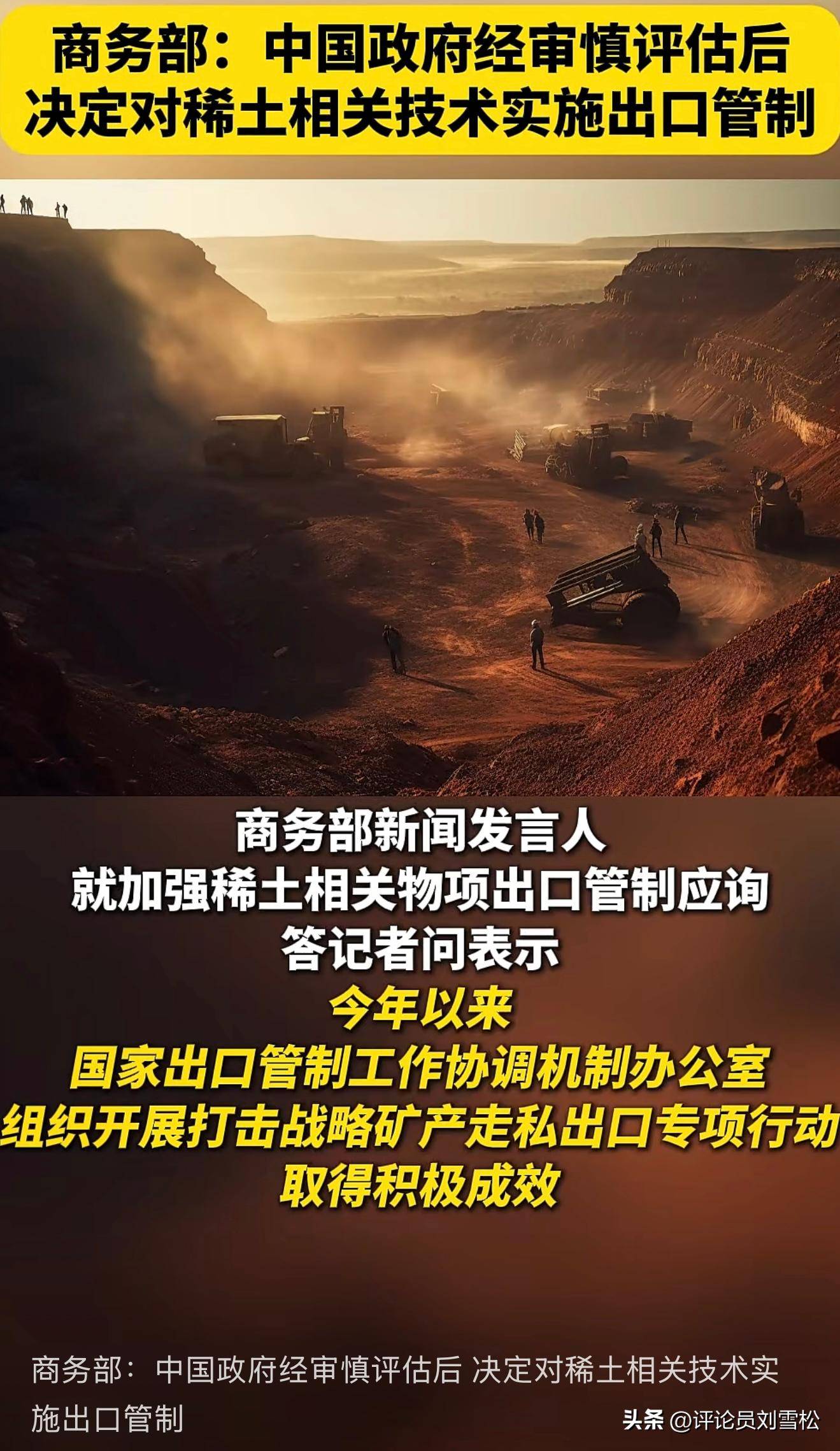
Core Viewpoint - The announcement of China's export controls on rare earth technologies coincides with the G7 and EU's plans to impose taxes on Chinese rare earths, highlighting a complex geopolitical landscape where Western nations seek to limit China's advantages while also desiring access to its resources and technologies [1][5]. Group 1: China's Export Control Measures - On October 9, China announced export controls on rare earth-related technologies to safeguard national security and interests, emphasizing that any unauthorized disclosure of these technologies will face severe legal consequences [7][11]. - The export controls encompass various technologies related to rare earth mining, smelting, metal processing, and magnet manufacturing, including installation, debugging, and maintenance of production lines [11]. Group 2: China's Technological Advantage - China holds over 90% of the global rare earth refining capacity, achieving remarkable efficiency and purity levels exceeding 99.99%, making it difficult for other countries to catch up [5][9]. - The development of China's rare earth refining technology has been a gradual process since the 1980s, where it took on challenging tasks and overcame technical bottlenecks to achieve a leading position in the industry [9]. Group 3: Geopolitical Implications - The export control measures are seen as a response to Western nations' strategic attempts to undermine China's technological capabilities in various sectors, including semiconductors and lithography [11]. - This move serves as a strategic defense in the ongoing trade war and supply chain tensions, emphasizing that technological control is crucial for maintaining competitive advantages in the global market [11].
美国商会对我们非常愤怒!美国商会表示,必须对中国来硬的,不能轻信中国了
Sou Hu Cai Jing· 2025-10-09 15:16
Core Viewpoint - The article critiques the U.S. Chamber of Commerce's report, arguing that it reflects a long-standing narrative of blaming China for U.S. economic issues, while ignoring the complexities of trade relationships and the evolution of global markets [3][10]. Group 1: U.S.-China Trade Relations - The U.S. Chamber of Commerce claims that China has systematically undermined its commitments made upon joining the WTO, advocating for a tougher stance against China [3][5]. - The article highlights that the U.S. has imposed tariffs on Chinese goods, resulting in American companies paying over $90 billion in tariffs by 2020, which did not benefit China but rather filled U.S. government coffers [3][5]. - The report's focus on China's retaliatory tariffs on U.S. agricultural products is questioned, emphasizing that trade is reciprocal and not one-sided [5]. Group 2: U.S. Domestic Policies - The article points out that the U.S. employs aggressive industrial policies and national security laws, similar to the accusations it levels against China, such as the exclusion of Huawei from the market and substantial subsidies for domestic renewable energy companies [6][10]. - The U.S. has restricted exports of semiconductors and other technologies to China, which contradicts the narrative of advocating for free trade [6][10]. Group 3: Perception of the Chinese Market - Despite claims of a challenging business environment in China, U.S. investments in China remain significant, with over $160 billion in foreign investment in 2023, of which 4% is from U.S. companies [8]. - The article suggests that U.S. companies, including Tesla, continue to expand operations in China, indicating a recognition of the market's potential despite the criticisms [8]. Group 4: Global Trade Dynamics - The article argues that the U.S. Chamber of Commerce's frustrations stem from a loss of control over global trade rules, as the dynamics have shifted and China has evolved from a manufacturing hub to a competitor in high-tech industries [10][11]. - The narrative of maintaining a one-sided trade relationship is outdated, as global trade patterns have changed significantly, with China no longer merely an assembly line for U.S. companies [10][11]. Group 5: Future Implications - The article questions what further measures the U.S. can take against China, given that trade wars and technology restrictions have already been implemented, and global supply chains are increasingly independent [13]. - It concludes that the U.S. Chamber of Commerce's criticisms may not lead to any substantial changes in reality, as companies continue to navigate the complexities of the Chinese market [13].
中美密谈3天,美国想要的,中方没全给,临走前留下一句话,话音刚落,特朗普关税被裁定非法
Sou Hu Cai Jing· 2025-09-03 06:17
Group 1 - The atmosphere in Washington was tense during the recent talks, with the Chinese delegation emphasizing mutual respect and cooperation, while the U.S. was reluctant to acknowledge its urgent need for negotiations [1][9] - The U.S. aims to lift restrictions on rare earth exports and increase agricultural purchases from China, but China is cautious and has not fully agreed to U.S. demands [3][6] - The U.S. is attempting to restrict Chinese access to AI chips, viewing this as a critical aspect of a broader technological and political struggle [3][5] Group 2 - The U.S. tariffs imposed under Trump's administration have negatively impacted American consumers and businesses, leading to a decline in domestic car sales and increased production costs for products like iPhones [5][6] - China has shifted its market dynamics, relying less on U.S. agricultural products due to competitive pricing from countries like Brazil and Argentina [6][8] - The recent court ruling against Trump's tariffs highlights internal divisions within the U.S. government, contrasting with China's strategic stability and resilience [9]
吉利控股李东辉:坚守反内卷,坚持打价值战、技术战、企业道德战
Xin Lang Ke Ji· 2025-08-14 11:26
Core Viewpoint - Geely Auto emphasizes its commitment to a value-driven, technology-focused, quality-oriented, service-centric, brand-conscious, and ethically responsible approach in the automotive industry, advocating for open and healthy competition [1] Group 1: Company Strategy - Geely aims to play a leading role in supporting high-quality development within the industry by standardizing supplier payment terms to within 60 days, ensuring stability in the supply chain [1] - The company prioritizes user satisfaction and advocates for safety equity, making safety the top priority while achieving mass production of AI technology applications in vehicles [1] - Geely is committed to steady operations and high levels of integration and collaboration, guided by the "Taizhou Declaration," and is focused on deep resource integration and efficient synergy [1] Group 2: Industry Perspective - The advancement of anti-involution in the industry is expected to lead to more rational and orderly competition, with companies like Geely that adhere to long-termism and focus on enhancing comprehensive strength gaining a competitive edge in the future [1]
价格厮杀收效甚微 麦肯锡称消费者不再单纯地被价格竞争所左右
Zhong Guo Jing Ying Bao· 2025-04-21 16:31
Core Insights - The ongoing "price war" in the Chinese automotive market has reached a new phase where it is no longer effectively stimulating demand, with a net stimulation effect of only 3.6% [1] - Consumers show a much higher enthusiasm for new models and technologies, with a net stimulation effect of 10.8%, indicating a shift from price competition to technology competition [1][5] Group 1: Price War Dynamics - The price war has led to diminishing returns for car manufacturers, with many companies unable to sustain operations due to relentless price competition [2] - The scale of price reductions in 2024 has significantly increased, affecting 227 models compared to 148 in 2023 and 95 in 2022, with conventional fuel vehicles being the primary contributors [3] - The profit margins in the automotive industry have been severely compressed, with the net profit of 18 listed car companies in China for the first half of 2024 totaling 48.8 billion yuan, only 39% of Toyota's profit during the same period [4] Group 2: Shift to Technology Competition - The "technology war" is proving to be three times more effective in stimulating new car sales compared to the price war, as consumers are more willing to pay for innovative technologies [5] - Companies are encouraged to adopt a "stable price and quality improvement" strategy rather than engaging in price competition, aligning better with consumer expectations and protecting brand positioning [7] - The focus on technology should be tailored to consumer needs and driving scenarios, avoiding excessive feature stacking while enhancing user experience [8] Group 3: Brand and Market Trends - Chinese brands are gaining recognition in the electric vehicle sector, while foreign brands struggle to convert their established reputations into sales premiums in the electric vehicle market [9] - As electric vehicle technology matures, brand importance will become increasingly significant, necessitating a focus on both technological strength and brand recognition [9] - There is a growing trend of consumers returning to fuel vehicles due to dissatisfaction with electric vehicle charging experiences, highlighting the rising preference for hybrid and extended-range vehicles [10] Group 4: Intelligent Driving and Consumer Behavior - Consumer attitudes towards intelligent driving have evolved, with increased awareness and satisfaction regarding various smart driving features [10] - The advancement of intelligent driving technology in the past 12-18 months has laid a solid foundation for the "equalization" of technology, which will be crucial for differentiation in the market [10] - China is at the forefront of the transition to electric and intelligent vehicles, influencing both domestic consumer preferences and the global automotive market [11][12]