
大模型即服务(MaaS)

Search documents
“全球大模型第一股”智谱正式上市!
Zhong Guo Ji Jin Bao· 2026-01-08 03:41
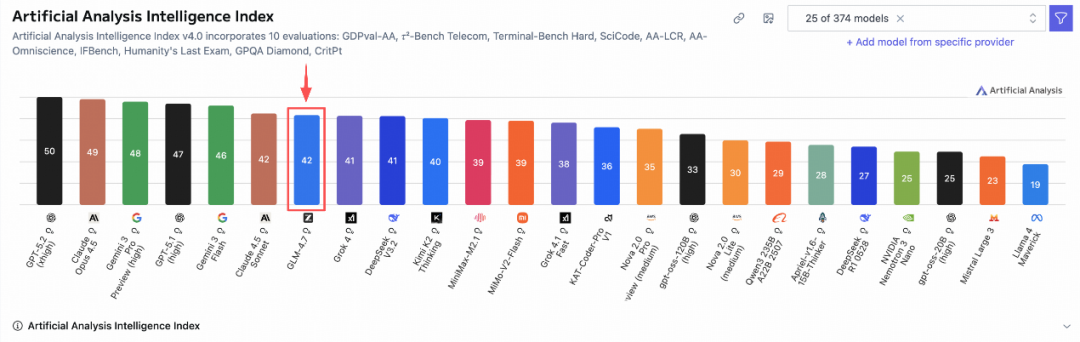
Core Viewpoint - Beijing Zhiyu Huazhang Technology Co., Ltd. (02513.HK) has officially listed on the Hong Kong Stock Exchange, becoming the world's first publicly traded company focused on General Artificial Intelligence (AGI) foundational models, marking a significant milestone for China's independent large model manufacturers [1][2]. Group 1: Company Overview - Zhiyu is recognized as "China's OpenAI" and has attracted significant long-term investment from international funds and notable industry capital, with cornerstone investors subscribing a total of 2.98 billion HKD [2]. - The company has completed eight rounds of financing prior to its IPO, raising over 8.3 billion RMB, with participation from major industry players such as Meituan, Ant Group, Alibaba, Tencent, and Xiaomi [2]. - Zhiyu is actively promoting the international expansion of its original large models and solutions, leading the establishment of the "International Alliance for Autonomous Large Models" with ten countries along the Belt and Road [2]. Group 2: Business Model and Revenue - Zhiyu has developed a highly defensible business model, primarily based on a MaaS (Model as a Service) approach, which has shown exponential growth in revenue [10]. - The company has achieved an annual recurring revenue (ARR) of over 100 million RMB (approximately 14 million USD) within three months, gaining over 150,000 paid developer users [3][10]. - Revenue projections indicate a compound annual growth rate (CAGR) of 130% from 2022 to 2024, with revenues of 57.4 million RMB, 125 million RMB, and 312 million RMB respectively [11]. Group 3: Technological Advancements - Zhiyu has established a comprehensive AGI technology roadmap covering stages L1 to L5, positioning itself as a long-term foundational model developer rather than a short-term application company [1][5]. - The GLM (General Language Model) technology has been recognized as a competitive architecture against the GPT system, demonstrating advantages in robustness, controllability, and hallucination rate management [5]. - The newly released flagship model GLM-4.7 has achieved top rankings in global open-source model assessments, indicating its strong performance in the competitive landscape [6][8]. Group 4: Financial Performance - The company has reported significant revenue growth, with a revenue of 191 million RMB in the first half of 2025, representing a year-on-year increase of 325% [11]. - Despite high revenue growth, Zhiyu has faced substantial net losses due to significant R&D investments, with adjusted net losses of 974 million RMB, 621 million RMB, and 2.466 billion RMB from 2022 to 2024 [11][12]. - The company's R&D expenditures have increasingly focused on purchasing computing power, which accounted for over 70% of R&D costs from 2023 onwards, highlighting the strategic importance of computational resources [12].

中国MaaS服务紧追美国云厂商:加速度缩小差距
Xin Lang Cai Jing· 2025-12-28 11:11
Core Insights - The global AI industry is undergoing a significant transformation, particularly in the Model as a Service (MaaS) sector, with a notable shift in the competitive landscape between China and the U.S. [1] - Chinese companies like Alibaba Cloud and Volcano Engine are rapidly closing the gap with U.S. giants such as OpenAI and Google Cloud in the MaaS market [1][2] Market Dynamics - As of October 2025, the daily average token usage for major MaaS providers is as follows: OpenAI at approximately 70 trillion, Google Cloud at 43 trillion, and Volcano Engine at over 30 trillion [3] - By the end of December 2025, Volcano Engine's daily token usage surged to 50 trillion, surpassing Google Cloud's previous levels [2][3] - The MaaS market is projected to grow tenfold in the coming year, driven by explosive growth in the Chinese market [2] User Segmentation - The user base for MaaS services is predominantly composed of individual users (80%), but enterprise users account for 80% of the token consumption [3] - The early growth of MaaS services was primarily in the consumer sector, but the enterprise market is rapidly emerging [2] Competitive Landscape - Chinese companies are achieving significant advancements in specific AI applications, such as video generation, where they are competitive with global counterparts [4][5] - The gap in foundational large language models remains, with U.S. companies like OpenAI having a head start [5] Strategic Approaches - Chinese firms are shifting focus from pure parameter competition to creating user-friendly, efficient, and commercially viable service ecosystems [5][6] - The MaaS market in China is characterized by a collaborative approach among local firms, aiming to expand the overall market rather than compete against each other [6] Differentiated Development Paths - The U.S. model emphasizes computational power and general large models, while the Chinese approach focuses on application, deployment, and industry penetration [6] - The market concentration in large models is expected to narrow down to a few key players, while smaller models tailored for specific industries are anticipated to see significant growth [6] Business Model Evolution - The MaaS pricing model is evolving from a token-based system to a more value-driven "Agent as a Service" model, allowing clients to purchase specific AI solutions [6] - This shift is expected to expand the MaaS market into the broader Business Process Outsourcing (BPO) sector, which is valued in the trillions [6] Challenges Ahead - The foundational large model sector still presents challenges due to existing technological barriers established by early movers like OpenAI [7] - Addressing concerns regarding the neutrality of Chinese MaaS platforms, especially those linked to large internet companies, remains a critical issue for the industry [7]



美团、金山办公、喜马拉雅、360等头部企业接入华为云MaaS平台
news flash· 2025-06-20 08:44
Group 1 - Major domestic companies such as Meituan, Kingsoft Office, Ximalaya, and 360 have integrated with Huawei's cloud ModelArts Studio, a large model as a service platform (MaaS) [1]

