GLM模型

Search documents
超预期!大模型第一股智谱交出首份“中国Anthropic”式财报
财联社· 2026-03-31 13:54
Core Viewpoint - The article highlights the successful financial performance of Zhipu, which has demonstrated its commercial viability in the Chinese market for the MaaS (Model as a Service) model, achieving significant growth in its API business and profitability amidst a competitive landscape [1][4]. Group 1: Financial Performance - Zhipu's API business achieved an Annual Recurring Revenue (ARR) of 1.7 billion yuan, marking a 60-fold increase over the past year [1]. - The gross profit of Zhipu rose from 1.759 billion yuan in 2024 to 2.967 billion yuan in 2025, representing a growth rate of 68.7% [4]. - The company's gross margin for its MaaS API platform improved nearly fivefold to 18.9% year-on-year, indicating a significant enhancement in profitability [1]. Group 2: Market Position and Strategy - Zhipu's API platform has over 4 million registered enterprises and users, serving more than 218 countries and regions globally [1]. - Nine out of the top ten internet companies in China are utilizing Zhipu's GLM model, indicating strong market penetration and demand [2]. - The GLM-5 model was integrated by major platforms like ByteDance and Alibaba within 24 hours of its release, showcasing its differentiated advantages in real-world applications [2]. Group 3: Pricing Power and Market Dynamics - Zhipu raised its API prices by 83% in the first quarter of 2026, a move that defied market trends but was supported by the model's technological advantages [3]. - The increase in API prices did not lead to a decrease in usage; instead, there was a surge in demand, highlighting that customers are willing to pay for effective solutions [3]. - Analysts noted that the pricing power of Zhipu reflects the monetization of its intelligent capabilities, with improved gross margins attributed to enhanced model efficiency and a higher proportion of high-value clients [3]. Group 4: Business Model Transformation - The revenue structure of Zhipu has shifted from service-driven to standardized API service-driven, indicating a significant transformation in its business model [7]. - The concept of Token Architect Capability (TAC) was introduced, defined as the product of the quantity of intelligent calls, the quality of intelligence, and the efficiency of converting that into economic value [7][8]. - This new framework positions Zhipu not just as a model company but as a foundational infrastructure provider in the intelligent economy, with its value measured by the economic outcomes generated through its platform [8].


深度|MaaS竞争下半场,谁能掌握智能的定价权
Z Potentials· 2026-03-31 13:20
Core Viewpoint - The domestic MaaS (Model as a Service) industry is transitioning from a price-driven competition to a layered market structure, where the quality of models and their integration into workflows are becoming more critical than just low pricing [2][4]. Group 1: Financial Performance - The first financial report post-IPO of Zhipu shows significant growth, with an ARR of over 1.7 billion RMB, a 60-fold increase year-on-year, and a total revenue of 724.3 million RMB, representing a 131.9% increase [2][4]. - The platform's gross margin improved nearly fivefold to 18.9%, with an overall gross margin of 41% [2][4]. - Despite a net loss of 4.7 billion RMB, the adjusted net loss was 3.2 billion RMB, indicating a 29.1% increase year-on-year [4]. Group 2: Market Segmentation - Companies in the foundational model space are no longer selling the same products; they are divided into two categories: those offering general capabilities at low costs and those providing task completion rates and organizational capabilities [5][6]. - The first category focuses on affordability and speed, while the second emphasizes the delivery of comprehensive organizational capabilities, as seen with companies like Anthropic [5][6]. Group 3: Pricing Power - The prevailing belief that foundational models lack pricing power is being challenged by Zhipu's experience, where an 83% price increase in API services did not reduce demand but instead led to a 400% increase in usage [7][8]. - High-quality tokens are becoming a scarce resource, and companies that integrate models deeply into workflows can justify higher costs due to the value generated [7][8]. Group 4: Evolution of Tasks - The nature of tasks has evolved from simple Q&A to complex, multi-step processes that require sustained engagement from models, indicating a shift towards long-term task management [8][9]. - The development of models like GLM-5 reflects this evolution, moving from mere code generation to capabilities akin to those of engineers, capable of handling long-horizon tasks [9][10]. Group 5: Future Growth and Market Dynamics - The concept of Token Architect Capability (TAC) is emerging, focusing on an organization's ability to leverage AI for economic outcomes rather than just the strength of the models themselves [12][13]. - The market is beginning to value sustained usage and the ability to integrate models into real production environments over mere parameter size or pricing strategies [13].

智谱与MiniMax上市:AI大模型“告别草莽”
Sou Hu Cai Jing· 2026-01-13 13:13
Core Insights - The article discusses the transition of the AI large model industry from a phase of intense competition to a period focused on commercial validation, highlighting the distinct paths taken by two companies, Zhiyu and MiniMax, as they went public in the Hong Kong market [2][17]. Group 1: Business Models and Strategies - Zhiyu adopts a "MaaS" (Model as a Service) approach, focusing on becoming a foundational infrastructure for various industries, emphasizing stability and long-term value [3][5]. - MiniMax, on the other hand, pursues a global C-end strategy, leveraging product innovation and market speed to establish a competitive edge, with a significant portion of its revenue coming from overseas markets [3][5][27]. - Both companies' paths reflect their strategic judgments regarding different stages of AI commercialization, with no absolute superiority between the two approaches [4][6]. Group 2: Financial Performance - Zhiyu's revenue grew from 57.4 million yuan in 2022 to 312.4 million yuan in 2024, with a compound annual growth rate of 130%, and a projected revenue of 738 million yuan in 2025 [7][8]. - MiniMax's revenue surged from 3.5 million USD in 2023 to 30.5 million USD in 2024, marking a year-on-year growth rate of 782.2% [8]. - Both companies face significant losses, with Zhiyu accumulating over 6.2 billion yuan in losses from 2022 to mid-2025, and MiniMax's losses reaching approximately 9.3 billion yuan during the same period [9][10]. Group 3: Industry Trends and Market Dynamics - The successful IPOs of Zhiyu and MiniMax signify a shift in the AI large model industry, moving away from the "parameter competition" era towards a more rational investment landscape [17][21]. - The market is witnessing a clear differentiation among AI companies, with some exiting direct competition in favor of niche markets, while others, like Zhiyu and MiniMax, demonstrate viable business models and growth potential [18][22]. - Major internet companies are entering the AI space, altering the competitive landscape with their resources and strategies, which creates a disparity in competition between established giants and startups [23][24]. Group 4: Future Outlook - The article concludes that the paths of Zhiyu and MiniMax illustrate the diverse possibilities within the AI industry, with both companies facing similar challenges of high operational costs and the need for sustainable profitability [29][30]. - The successful listings of these companies mark a new beginning in the AI competition, emphasizing the importance of technological assets and ecosystem potential in valuation [30][31].

智谱与MiniMax上市:从“讲故事”到“交报表” | AI系列
Sou Hu Cai Jing· 2026-01-12 12:41
Core Insights - The article discusses the transition of the AI large model industry from a phase of intense competition to a period focused on commercial validation, marked by the recent IPOs of two major players, Zhiyu and MiniMax [2][17]. Group 1: Business Models and Strategies - Zhiyu adopts a "MaaS" (Model as a Service) approach, focusing on becoming a foundational infrastructure for various industries, emphasizing stability and long-term value [3][5]. - MiniMax, on the other hand, pursues a global C-end strategy, leveraging its innovative product offerings and aiming for rapid market penetration [3][5]. - Both companies' paths reflect their foundational philosophies and strategic judgments regarding the commercialization of AI [4]. Group 2: Financial Performance - Zhiyu's revenue is projected to grow from 57.4 million yuan in 2022 to 312.4 million yuan in 2024, with a compound annual growth rate of 130% [7]. - MiniMax's revenue is expected to surge from 3.5 million USD in 2023 to 30.5 million USD in 2024, reflecting a staggering growth rate of 782.2% [8]. - Despite high revenue growth, both companies face significant losses, with Zhiyu accumulating over 6.2 billion yuan in losses from 2022 to mid-2025, and MiniMax around 9.3 billion yuan during the same period [9][10]. Group 3: Industry Dynamics - The successful IPOs of Zhiyu and MiniMax signify a shift in the AI large model industry, moving away from the "parameter competition" era towards a more structured commercial phase [17][22]. - The competitive landscape is evolving, with major internet companies like ByteDance, Alibaba, and Tencent entering the market, leveraging their resources and ecosystems [23][25]. - The article highlights a growing recognition among investors regarding the importance of clear business models and growth potential in the AI sector [21][22]. Group 4: Future Outlook - The article concludes that the paths taken by Zhiyu and MiniMax illustrate the diverse possibilities within the AI industry, with both companies facing similar challenges of high operational costs and the need for sustainable profitability [26][27]. - The successful listings of these companies mark a new beginning in the competition for AI development, emphasizing the importance of continuous iteration and adaptation in the industry [27].

人工智能强基“筑”高地
Hang Zhou Ri Bao· 2026-01-09 02:32
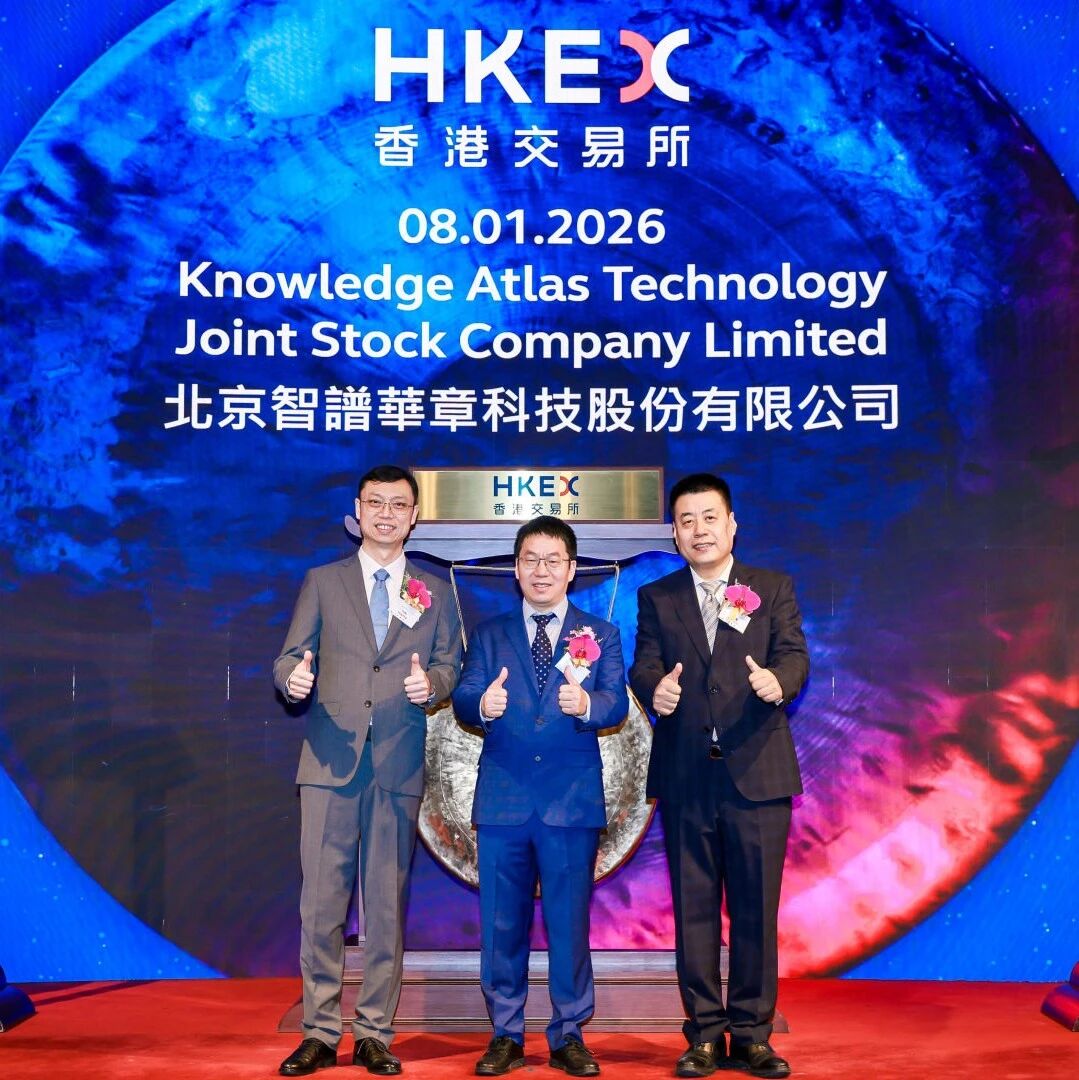
Group 1 - Beijing Zhiyu Huazhang Technology Co., Ltd. (智谱) officially listed on the Hong Kong Stock Exchange on January 8, becoming the world's first publicly traded company focused on General Artificial Intelligence (AGI) foundational models [1] - Founded in 2019 and originating from Tsinghua University's computer science achievements, Zhiyu is recognized as a significant innovator in China's large model development field and is one of the "Six Little Tigers" [1] - The company has developed a comprehensive technology ecosystem covering foundational large models, dialogue interaction, code generation, multimodal understanding, and intelligent agents, launching models with parameters in the hundreds of billions and trillions [1] Group 2 - Zhiyu's listing highlights the maturity of China's industrial chain and policy support in the foundational AI model sector, injecting capital vitality into domestic large model development [1] - The company is actively promoting the application of large model technology in various sectors such as government affairs, education, and cross-border e-commerce, supported by strategic collaboration with Shangcheng Capital Group [2] - Shangcheng Capital Group's investment strategy has successfully facilitated Zhiyu's listing, showcasing its investment capabilities and effectiveness in incubating AI enterprises [1][2] Group 3 - The local government of Shangcheng District is committed to advancing artificial intelligence innovation and building a modern industrial system, aiming to establish itself as a leading city in AI development [2] - Future collaboration between Shangcheng Capital Group and Zhiyu will focus on deepening strategic cooperation and supporting Zhiyu's local development and technology application [3] - Zhiyu aims to leverage its Zhejiang headquarters to enhance its industrial ecosystem and contribute to Shangcheng's goal of becoming a new high ground for AI industry innovation [3]
市值超570亿 “中国OpenAI”上市首日涨约12%
Ge Long Hui· 2026-01-08 04:09
Core Viewpoint - Zhiyuan (02513.HK), referred to as "China's OpenAI," has officially listed today, becoming the "world's first large model stock" with a market capitalization exceeding 57 billion HKD and a stock price increase of approximately 12% to 130 HKD [1] Company Summary - Zhiyuan is one of the earliest companies in China to engage in large model research and development, having pioneered the general pre-training paradigm GLM based on autoregressive fill-in-the-blank [1] - The company has released several significant models, including China's first hundred-billion model, the first open-source trillion model, the first dialogue model, the first multimodal model, and the world's first device control intelligent agent, establishing a comprehensive model system [1] - Zhiyuan is recognized for maintaining a synchronous development of original technology with global leaders, marking it as a rare domestic firm in this regard [1] Industry Summary - The global AI competition is intensifying, and Zhiyuan's listing as the "world's first large model stock" injects capital vitality into the development of domestic large models [1] - This event signifies that Chinese AGI companies have officially entered the capital market, marking a new phase of competition with international giants [1]
“全球大模型第一股”智谱正式上市!
Zhong Guo Ji Jin Bao· 2026-01-08 03:41
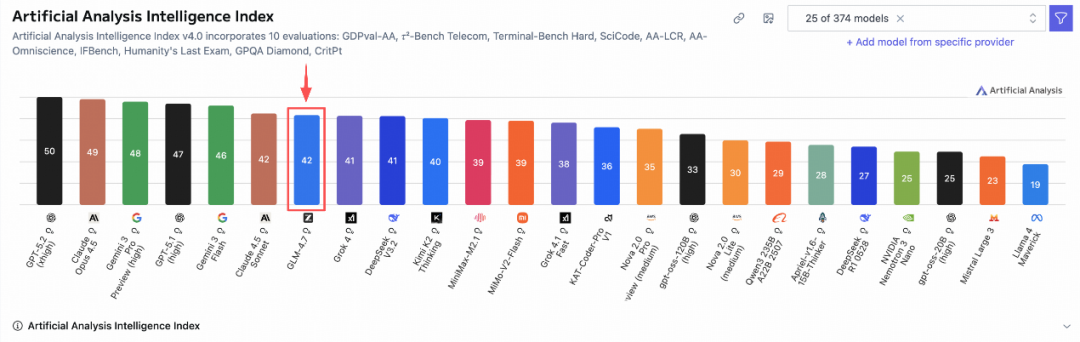
Core Viewpoint - Beijing Zhiyu Huazhang Technology Co., Ltd. (02513.HK) has officially listed on the Hong Kong Stock Exchange, becoming the world's first publicly traded company focused on General Artificial Intelligence (AGI) foundational models, marking a significant milestone for China's independent large model manufacturers [1][2]. Group 1: Company Overview - Zhiyu is recognized as "China's OpenAI" and has attracted significant long-term investment from international funds and notable industry capital, with cornerstone investors subscribing a total of 2.98 billion HKD [2]. - The company has completed eight rounds of financing prior to its IPO, raising over 8.3 billion RMB, with participation from major industry players such as Meituan, Ant Group, Alibaba, Tencent, and Xiaomi [2]. - Zhiyu is actively promoting the international expansion of its original large models and solutions, leading the establishment of the "International Alliance for Autonomous Large Models" with ten countries along the Belt and Road [2]. Group 2: Business Model and Revenue - Zhiyu has developed a highly defensible business model, primarily based on a MaaS (Model as a Service) approach, which has shown exponential growth in revenue [10]. - The company has achieved an annual recurring revenue (ARR) of over 100 million RMB (approximately 14 million USD) within three months, gaining over 150,000 paid developer users [3][10]. - Revenue projections indicate a compound annual growth rate (CAGR) of 130% from 2022 to 2024, with revenues of 57.4 million RMB, 125 million RMB, and 312 million RMB respectively [11]. Group 3: Technological Advancements - Zhiyu has established a comprehensive AGI technology roadmap covering stages L1 to L5, positioning itself as a long-term foundational model developer rather than a short-term application company [1][5]. - The GLM (General Language Model) technology has been recognized as a competitive architecture against the GPT system, demonstrating advantages in robustness, controllability, and hallucination rate management [5]. - The newly released flagship model GLM-4.7 has achieved top rankings in global open-source model assessments, indicating its strong performance in the competitive landscape [6][8]. Group 4: Financial Performance - The company has reported significant revenue growth, with a revenue of 191 million RMB in the first half of 2025, representing a year-on-year increase of 325% [11]. - Despite high revenue growth, Zhiyu has faced substantial net losses due to significant R&D investments, with adjusted net losses of 974 million RMB, 621 million RMB, and 2.466 billion RMB from 2022 to 2024 [11][12]. - The company's R&D expenditures have increasingly focused on purchasing computing power, which accounted for over 70% of R&D costs from 2023 onwards, highlighting the strategic importance of computational resources [12].
“全球大模型第一股”智谱正式上市!
中国基金报· 2026-01-08 03:36
Core Viewpoint - The article highlights the listing of Beijing Zhiyu Huazhang Technology Co., Ltd. (智谱) on the Hong Kong Stock Exchange, marking it as the world's first publicly traded company focused on General Artificial Intelligence (AGI) foundational models, thus becoming the "first stock of global large models" [4][5]. Group 1: Company Overview - Zhiyu Huazhang, referred to as "China's OpenAI," has attracted significant investment from international long-term funds and notable industry capital as cornerstone investors, raising a total of 2.98 billion HKD from 11 cornerstone investors [7]. - Prior to its IPO, Zhiyu completed eight rounds of financing, accumulating over 8.3 billion CNY (approximately 1.2 billion USD) with participation from major industry players like Meituan, Ant Group, Alibaba, Tencent, and Xiaomi [8]. - The company is actively promoting the international expansion of its original large models and solutions, leading the establishment of the "International Co-construction Alliance for Autonomous Large Models" with ten countries along the Belt and Road [8]. Group 2: Business Model and Growth - Zhiyu has developed a highly defensible business model, primarily based on a Model-as-a-Service (MaaS) approach, which has shown exponential growth, with paid traffic revenue surpassing all domestic models combined [15][16]. - The company has established itself as the largest large model startup in China, with a customer base that includes nine of the top ten internet companies in China using its GLM large model [15]. - The MaaS model allows for flexible and scalable delivery of "general intelligence," enabling rapid scaling of model usage across various applications [15]. Group 3: Financial Performance - Zhiyu's revenue from 2022 to 2024 is projected to grow from 57.4 million CNY to 312 million CNY, with a compound annual growth rate (CAGR) of 130%, and a revenue of 191 million CNY in the first half of 2025, reflecting a year-on-year growth of 325% [18]. - The gross margins for the same period are expected to be 54.6%, 64.6%, and 56.3%, with a gross margin of 50% in the first half of 2025 [18]. - The company has incurred adjusted net losses of 97.4 million CNY, 621 million CNY, and 2.466 billion CNY from 2022 to 2024, primarily due to substantial R&D investments, particularly in computing power [18]. Group 4: Competitive Positioning - Zhiyu's GLM technology is recognized as one of the few domestic architectures that can compete directly with the GPT system, demonstrating advantages in robustness, controllability, and hallucination rate control [11]. - The flagship model GLM-4.7 has achieved top rankings in global open-source model assessments, indicating its competitive edge in the market [12][11]. - The company is positioned to benefit from anticipated declines in computing power costs, which could improve its profitability and operational efficiency in the future [19].
中国开源AI逆袭,美国围堵失效,半数美企为何集体倒戈?
Sou Hu Cai Jing· 2025-12-27 06:11
Core Viewpoint - The article discusses the unexpected shift in the U.S. tech landscape, where many American startups are increasingly adopting Chinese open-source AI models despite previous restrictions and concerns about China's AI development [2][10][24]. Group 1: U.S. Companies' Adoption of Chinese AI Models - Over half of U.S. startups are now choosing Chinese open-source AI models as their primary development tools, indicating a significant change in preference [4][10]. - Companies like Perplexity and Airbnb are openly utilizing Chinese models, with Airbnb's CEO stating their AI customer service system heavily relies on Alibaba's Qwen model [6][10]. - The cost-effectiveness of Chinese models is a major factor, with one U.S. entrepreneur noting a switch from a closed-source model that cost $400,000 annually to Qwen, which significantly reduced expenses [10][12]. Group 2: Advantages of Open-Source Models - The annual cost of closed-source models exceeds $1,000 per user, while Chinese open-source models are nearly free, providing a substantial financial incentive for companies [12]. - Open-source models offer greater control and transparency, allowing companies to modify the code as needed without the risk of sudden changes in service terms, as experienced with ChatGPT [12][14]. - The shift from closed to open-source models reflects market dynamics, where companies prioritize economic and security considerations [14][16]. Group 3: Impact of U.S. Restrictions on Chinese AI Development - U.S. restrictions on high-end GPU supplies forced Chinese teams to innovate and optimize algorithms to achieve better performance with limited resources, exemplified by the DeepSeek team [18][20]. - Chinese models are evolving from mere tools to essential infrastructure, similar to the Android system, with millions of developers building applications on these platforms [22][28]. - The competitive edge of Chinese open-source models lies in their low cost, high efficiency, and freedom, challenging the notion that technological progress can be stifled by restrictions [26][29].

对华禁令收紧,字节腾讯旗下AI编程工具移除Claude模型
Guan Cha Zhe Wang· 2025-11-06 10:26
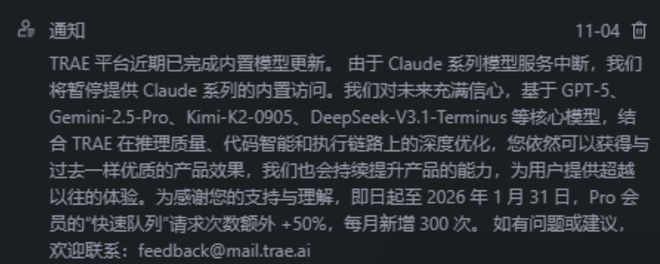
Core Insights - The article discusses the impact of Anthropic's ban on the Claude model for Chinese companies, leading to the removal of Claude from AI programming tools like Trae and CodeBuddy [1][3][8] - The ban has created opportunities for domestic AI models to fill the gap left by Claude, with companies like Zhiyu and Kimi launching migration plans for developers [9][12] Group 1: Company Actions - ByteDance's Trae international version has removed access to the Claude model as of November 4, following a service adjustment notification to users [1][4] - Tencent's CodeBuddy international version had already removed the Claude model by October 1, replacing it with models like OpenAI's GPT-5 and Gemini-2.5-Pro [3][8] - Trae has offered Pro members an additional 50% request quota as compensation for the removal of Claude, valid until January 31, 2026 [6] Group 2: Market Response - The removal of Claude has accelerated the development of domestic AI models, with companies like Zhiyu and Kimi quickly introducing alternatives [9][12] - Zhiyu has launched a "migration plan" for Claude API users, promoting its GLM model as a cost-effective alternative, priced at one-seventh of Claude's cost [9][12] - Kimi updated its model on the same day the ban was announced, positioning it as a competitor to Claude at a significantly lower price point [12] Group 3: Industry Trends - The ban on Claude has prompted a shift in the AI programming landscape, with domestic models gaining traction and attracting attention from both local developers and international companies [9][12] - Major Chinese tech firms are increasingly focusing on developing their own integrated development environments (IDEs) to compete in the AI space, with products like Trae, CodeBuddy, and Alibaba's Qoder emerging [12][13] - ByteDance has restricted internal use of third-party AI development tools, promoting its own Trae tool among employees, which has seen over 1 million monthly active users [13]