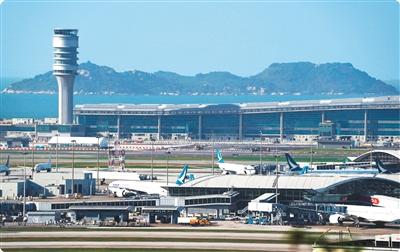
大湾区世界级机场群

Search documents
世界级机场群落下“关键一子”,将带来什么?
2 1 Shi Ji Jing Ji Bao Dao· 2025-10-30 06:50
Core Points - The opening of Guangzhou Baiyun International Airport's T3 terminal and fifth runway marks a significant milestone in the development of a world-class airport cluster in the Greater Bay Area, enhancing its status as a major international aviation hub [1][4][6] Infrastructure and Design - T3 terminal features innovative designs, including a panoramic viewing platform, a large public art system, and an ancient tree park, setting new standards for airport construction in China [2][4] - The airport's capacity can accommodate 120 million passengers and 3.8 million tons of cargo annually, positioning it among the world's leading airports [4][10] Connectivity and Network Expansion - Baiyun Airport aims to enhance its international and domestic flight networks, focusing on routes to countries involved in the Belt and Road Initiative and emerging markets, facilitating global connectivity from Guangzhou [5][10] - The airport's expansion will integrate multiple transportation modes, including high-speed rail and metro, contributing to the creation of a "one-hour living circle" in the Greater Bay Area [6][10] Economic Impact - The airport cluster, comprising seven airports, is transforming the Greater Bay Area into a unified market, enhancing resource allocation and economic development through improved connectivity [7][15] - The cargo capacity of Baiyun Airport is expected to double by 2030, with advanced operational models enhancing its role in global supply chains [10][11] Future Outlook - The Greater Bay Area's airport cluster is projected to handle over 210 million passengers and 9.3 million tons of cargo by 2024, reflecting the region's growing significance in global aviation [9][11] - The ongoing expansion of airports in the region indicates a strategic focus on increasing capacity and connectivity to meet rising aviation demand [13][15]

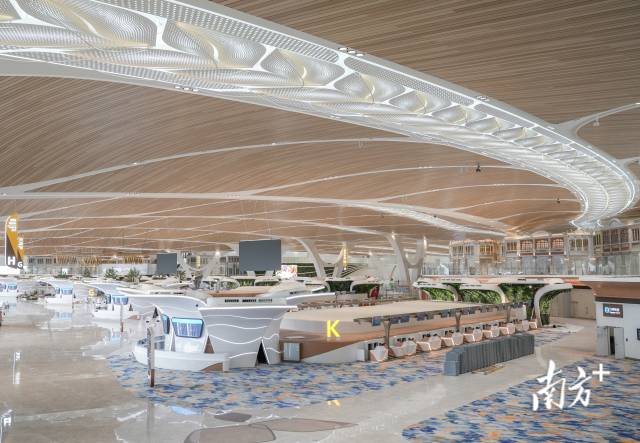
数据见证“硬实力”!7座机场,一年间!大湾区“世界级机场群”蓝图日渐清晰
Yang Shi Wang· 2025-09-12 09:08
Core Insights - The Greater Bay Area is experiencing a significant expansion in airport infrastructure, driven by increasing passenger and cargo traffic growth in the first half of the year [1][6] - Major projects include the construction of the T2 terminal at Shenzhen Airport and the expansion of Guangzhou Baiyun International Airport to become the first airport in the country with five runways [3][6] Infrastructure Development - The T2 terminal project at Shenzhen Airport is a complex undertaking, with a total length of 420 meters and construction challenges due to its proximity to the metro system [3][4] - Advanced technologies such as GPS positioning and modular construction methods are being utilized to ensure safety and quality during the construction process [4] Cargo and Passenger Growth - The cargo throughput for Hong Kong, Guangzhou, and Shenzhen airports is projected to reach 9.2 million tons by 2024, accounting for 7.2% of global cargo volume [7] - Shenzhen Airport's international and regional cargo volume increased by 16.3% year-on-year, reaching nearly 500,000 tons in the first half of 2025 [11] International Demand - The demand for international passenger travel is also on the rise, with over 4.5 million people traveling through Shenzhen Bao'an International Airport since 2025, marking a 24.4% increase year-on-year [13]

蓝图变实景——大湾区“世界级机场群”呼之欲出
Bei Jing Ri Bao Ke Hu Duan· 2025-09-06 01:42
Core Viewpoint - The Guangdong-Hong Kong-Macao Greater Bay Area is rapidly developing into a world-class airport cluster, with significant expansions and upgrades to its airport infrastructure, enhancing its global connectivity and economic potential [3][4]. Group 1: Airport Infrastructure Development - The Greater Bay Area is set to become one of the regions with the highest airport runway density globally, with the successful trial flights of the fifth runway at Guangzhou Baiyun International Airport and the completion of flight checks for the third runway at Shenzhen Bao'an International Airport [3]. - By November 2024, the Hong Kong International Airport will officially open its third runway, bringing the total number of operational runways in the Greater Bay Area to 15 [3]. - The area currently has three major hub airports (Guangzhou, Shenzhen, Hong Kong) and several other airports, with a network covering over 200 cities worldwide [3]. Group 2: Passenger Volume and Economic Impact - In 2024, the total passenger throughput of the seven airports in the Greater Bay Area is expected to exceed 200 million, reflecting the region's increasing vitality and economic stability [4]. - The expansion of airport infrastructure is supported by the growing demand for air travel and the region's enhanced openness to international markets [4]. Group 3: Transportation Connectivity - The development of a multi-dimensional transportation network, including high-speed rail and cross-border infrastructure, is crucial for the integration of the Greater Bay Area's airports [5]. - The Guangzhou Baiyun International Airport's new T3 terminal will connect with six high-speed rail lines and three intercity rail lines, facilitating seamless transfers for passengers [5]. - The Shenzhen Airport East Station will become a key hub, allowing quick access to major areas within the Greater Bay Area [5]. Group 4: Collaborative Mechanisms - A differentiated positioning system for the airport cluster has been established, promoting cooperation among the five major airports in the Pearl River Delta [6]. - The implementation of the "Jing Zhu Gang Fei" policy allows travelers to bypass Hong Kong immigration procedures, enhancing connectivity [6]. - The airport cluster is evolving from a focus on scale advantages to quality advantages, with a projected demand of 387 million passengers and 20 million tons of cargo by 2030 [6].