大湾区协同创新

Search documents
聚力创新再攀高峰
Jing Ji Ri Bao· 2026-02-24 22:15
Group 1 - The Guangdong-Hong Kong-Macao Greater Bay Area is becoming one of the most open and economically vibrant regions in China, supported by national strategies, favorable policies, and practical cooperation among the regions [1] - The collaborative progress in the Greater Bay Area is driven by continuous deepening of institutional innovation, with improved rules and mechanisms facilitating cross-regional cooperation [1] - The innovation development in the Greater Bay Area is supported by a cluster of platforms, forming a complete ecological chain for innovation from basic research to technology breakthroughs and results transformation [1] Group 2 - The prosperity of industries in the Greater Bay Area is largely attributed to the advancement of high-tech industries, with significant growth in emerging sectors such as information technology, new energy, and artificial intelligence [1] - The Greater Bay Area's technological innovation practices highlight the importance of effective government-market interaction, cross-regional cooperation, and industry upgrades driven by new productive forces [2] - The strategic goals for the Greater Bay Area include deepening institutional innovation and enhancing collaboration among industry, academia, and research to ensure smoother flow of innovation elements and more efficient industrial upgrades [2]
“早上在香港做实验,下午到深圳聊产业”
Xin Lang Cai Jing· 2026-01-07 23:23
Group 1 - The research team from City University of Hong Kong (Dongguan) has developed advanced amorphous alloys for foldable phone hinges, benefiting from the pulse neutron source in Dongguan, which enhances experimental efficiency [1] - The Guangdong-Hong Kong-Macao Greater Bay Area is becoming a hub for technological innovation, with a focus on integrating technology and industry, as highlighted in the 14th Five-Year Plan [1] - The "Shenzhen-Hong Kong-Guangzhou" innovation cluster ranked first globally in the Global Innovation Index 2025, showcasing the area's innovation capabilities [1] Group 2 - The Greater Bay Area is characterized by its unique governance structure, which includes one country, two systems, and three customs zones, facilitating unprecedented collaboration in technology innovation [2] - The opening of the Shenzhen-Zhongshan Bridge has significantly improved traffic flow, with an average daily traffic of over 86,400 vehicles, accounting for about 20% of the total traffic across the Pearl River Estuary [2] - The launch of cross-border payment systems has streamlined transactions across the Greater Bay Area, enhancing convenience for residents and businesses [2] Group 3 - The establishment of the Hong Kong Youth Entrepreneurship Dream Factory in Qianhai, Shenzhen, supports young entrepreneurs with tax incentives and a robust support system [3] - Guangdong has implemented a cross-border funding mechanism for scientific research, allowing for efficient movement of research materials and personnel across the Greater Bay Area [3] - The region has introduced various "Bay Area Standards" to facilitate cross-border administrative services, promoting scientific collaboration [3] Group 4 - The Greater Bay Area's collaborative innovation ecosystem is strengthened by the complementary advantages of Hong Kong, Macau, and mainland cities, leading to more efficient industrial cooperation [4] - Companies in the region benefit from simplified customs processes and enhanced access to global talent, fostering a conducive environment for innovation [4] - The area is positioned to become a world-class innovation hub due to its complete industrial chain and collaborative ecosystem [4] Group 5 - The unveiling of the Science and Technology Innovation Achievement Transfer and Transformation Base at Hong Kong University of Science and Technology (Guangzhou) marks a significant step in regional cooperation [5] - The base supports various innovative projects, including underwater robots and emotional companion robots, facilitating the transition from research to market [5] - The South China region is developing a bridge connecting academia and industry, enhancing collaboration between Hong Kong and mainland China [5] Group 6 - The Greater Bay Area is advancing in collaborative innovation, with multiple research institutions and laboratories established to enhance scientific cooperation [6] - The collaboration includes the construction of the first synchrotron radiation source in the region, further integrating research capabilities [6] Group 7 - The opening of the Hong Kong Park in the Lok Ma Chau Loop signifies a historic moment for cross-border innovation cooperation [7] - The regulatory framework established for the Shenzhen Park promotes efficient flow of technology innovation elements, including personnel and goods [7] - The new regulations support collaborative research projects between Shenzhen and Hong Kong, enhancing the region's research capabilities [7] Group 8 - The Shenzhen Park allows for cross-border funding for research projects, facilitating international collaboration and innovation [8] - The establishment of a fault-tolerant mechanism encourages innovation by providing exemptions for qualifying entities [8] - The park focuses on cutting-edge fields such as life sciences and information technology, aiming to become a world-class research hub [8]
科技全运 精彩纷呈
Ren Min Ri Bao· 2025-11-21 23:31
Core Insights - The Guangdong Provincial Committee for the 15th National Games recently held a press conference focusing on "Technology for the National Games," showcasing over 130 high-tech products aimed at enhancing sports through technology [1] - The integration of technology spans four key areas: opening ceremony, smart venues, event support, and technology for assisting the disabled, creating a new paradigm of technology-enabled sports [1] Group 1: Technological Innovations - High-tech elements include deep-sea fire retrieval by the "Haimai" submersible, humanoid robots for torch relay, and naked-eye 3D displays, highlighting the role of technology in enriching the event [1] - Smart features are evident in the Guangzhou venue with nano-modified rubber tracks that are both practical and environmentally friendly, while the Shenzhen venue employs a comprehensive sensing network that captures football trajectories in 0.05 seconds [1] - Technologies such as 5G, artificial intelligence, and the Internet of Things are enhancing venue operations, showcasing Guangdong's innovative capabilities [1] Group 2: Social Impact and Sustainability - Over 20 assistive technology products will be featured at the Special Olympics, including smart stair-climbing wheelchairs and brain-controlled devices, aimed at providing support for athletes [1] - Innovations like energy-saving cooling coatings developed by Hong Kong University of Science and Technology and recyclable bamboo-plastic award platforms demonstrate a commitment to sustainability [1] - The advancements in food traceability and spectator experiences through technology are making progress tangible and accessible [1] Group 3: Economic and Collaborative Development - The integration of technology and sports is being positioned as a new engine for urban development, as stated by the Deputy Director of Shenzhen's Cultural, Radio, Television, Tourism, and Sports Bureau [1] - The 15th National Games serves not only as a testing ground for sports technology but also as a vivid practice of collaborative innovation within the Greater Bay Area [1]
广州南沙:南沙北站赋能大湾区创新发展
Huan Qiu Wang· 2025-11-13 07:47
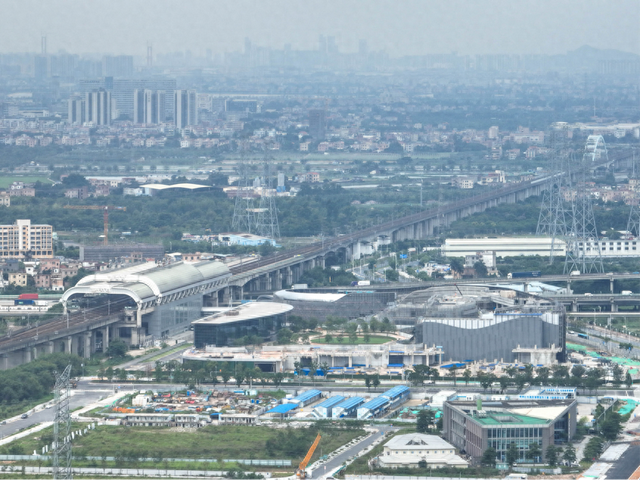
Core Insights - The development of the Qingsheng Hub area is enhancing connectivity between Hong Kong and Nansha, facilitating a dual-city model where work and life can be integrated across borders [1][3][4] - The Nansha North Station serves as a critical gateway to the national high-speed rail network, significantly reducing travel times and promoting resource flow and collaborative innovation within the Greater Bay Area [3][6] - The establishment of various infrastructure and services in the Qingsheng Hub is attracting Hong Kong youth and enterprises, creating a vibrant innovation ecosystem [5][6] Group 1: Transportation and Connectivity - The Qingsheng Hub area is part of the "Nansha Plan" and is optimizing its rail network to reshape the economic geography of the Greater Bay Area [3] - Nansha North Station connects to Shenzhen Futian in 30 minutes and Hong Kong West Kowloon in 50 minutes, providing physical support for the flow of talent, technology, capital, and information [3][6] - The increased frequency of high-speed rail services between Nansha and Hong Kong enhances the integration of financial, research, and professional services [3][4] Group 2: Infrastructure Development - The Qingsheng Hub has seen the establishment of key facilities such as the Hong Kong University of Science and Technology (Guangzhou) and various community services, supporting the development of Hong Kong enterprises in the region [4][5] - The construction of the New World TOD complex and other community amenities is accelerating the integration of Hong Kong-style services, including dining and healthcare, into the Nansha area [5][6] Group 3: Innovation and Collaboration - A dynamic youth innovation community is forming around the Hong Kong University of Science and Technology (Guangzhou), which is central to the technology transfer and innovation ecosystem [6][7] - The Qingsheng Hub has attracted 39 high-tech incubation projects, with about half being technology transfer projects from Hong Kong and Macau, indicating a strong collaborative innovation chain [6][7] - Future plans include creating an innovation park that integrates production, ecology, and living, further enhancing the collaborative innovation chain in the Greater Bay Area [7]

广州发布十五运会场景机会清单,邀请全球创新主体“揭榜”
2 1 Shi Ji Jing Ji Bao Dao· 2025-08-08 11:57
Group 1 - The core idea of the article is the integration of technology into the 15th National Games and the Special Olympics, enhancing the overall experience for participants and spectators through innovative applications [1][3][7] - The event will serve as a "super scene test field" for new technologies, products, and models, aiming to transform the event into a platform for urban innovation [1][3][7] - The technology empowerment scene opportunity list includes 18 specific scenarios focusing on high value, feasibility, and potential for transformation, inviting global innovators to participate [3][4] Group 2 - The professional experience scenarios include advanced diagnostic systems for athletes, assistive technologies for disabled athletes, and intelligent monitoring systems, showcasing the deep integration of technology and humanity [4][5] - The public interaction scenarios aim to make the event accessible and engaging for everyone, featuring initiatives like the "Metaverse All Sports Village" and drone light shows [4][5] - The event will also focus on ensuring efficient and safe operations through AI-driven decision-making and a network of service robots, enhancing the overall event experience [5][6] Group 3 - The collaboration between the event and technology companies is described as a "two-way rush," where the event seeks technological support while providing a platform for technology validation and long-term transformation [5][6][8] - The event is expected to stimulate the local economy and urban development by integrating scientific and technological solutions into the city's infrastructure post-event [7][8] - A series of follow-up activities, including technology roadshows and storytelling initiatives, will be organized to ensure the long-term impact of technological advancements on urban development [8]