大电芯

Search documents
2.4GWh项目落地!7MWh+大容量储能系统迎关键节点
行家说储能· 2026-01-29 10:40
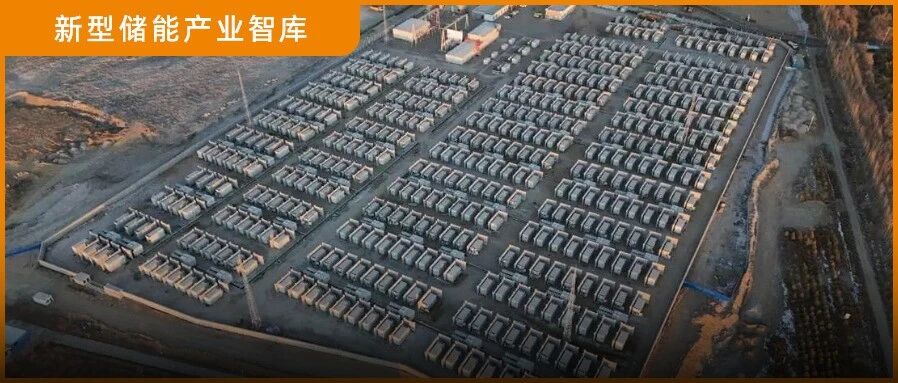
Core Insights - The article highlights the acceleration of large-capacity energy storage systems, particularly focusing on the deployment of 7MWh+ modular systems, which are expected to become mainstream by 2026 [4][9]. Group 1: Project Developments - A 400MW/2400MWh energy storage project utilizing 587Ah super-large capacity cells has been officially put into operation, marking a significant milestone for large-capacity storage systems in China [3][4]. - The project, located in Inner Mongolia, features a 6-hour long-duration storage design and incorporates an AI panoramic perception system for stable operation under extreme conditions [6][8]. - Two additional projects in Inner Mongolia, with capacities of 500MW/2000MWh and 500MW/3000MWh, have also commenced operations, bringing the total capacity of large storage systems by the company to over 7GWh [8]. Group 2: Industry Trends - The industry is shifting towards large-capacity energy storage systems to reduce costs and improve efficiency, as larger cells allow for more compact systems, thereby lowering costs per unit of electricity [9]. - By 2025, several leading energy storage companies are expected to achieve mass production and delivery of large-capacity systems, with 2026 projected to be a peak period for production [9]. Group 3: Technical Specifications - The new energy storage systems are designed to enhance efficiency, with some systems achieving over 90% grid connection efficiency and online rates exceeding 99.5% [8]. - Various manufacturers are developing systems with capacities ranging from 6.25MWh to 20MWh, featuring advanced technologies such as modular designs and improved energy density [10][11]. Group 4: Challenges Ahead - The industry faces challenges in mass production, certification, transportation, and practical implementation of large-capacity energy storage systems, which require consistent performance and safety verification [13][14]. - The need for standardized global and regional certifications adds complexity to the development and deployment of these systems, increasing research and compliance costs [15].

海辰储能 林日:大电芯时代 户用储能直流侧技术重构与成本突破
Xin Lang Cai Jing· 2025-12-19 12:48
Core Viewpoint - The energy storage industry is experiencing significant growth, particularly in residential storage, driven by the increasing demand for large-capacity batteries and favorable policies in regions like North America and Australia [5][13]. Industry Overview - The 2025 User-side Energy Storage and Battery Technology Forum was held in Shenzhen, focusing on commercial, portable, and residential energy storage, as well as AIDC battery technologies, with over 800 attendees [1][9]. - The residential energy storage market is evolving, with batteries transitioning from mere devices to energy assets that can be owned by everyone [5][13]. Market Trends - The demand for large-capacity storage batteries is increasing, particularly in North America due to frequent power outages and fluctuating electricity prices, while Australia benefits from generous subsidy policies [5][13]. - Current battery capacities have evolved from 20Ah and 50Ah to widely used 100Ah, with larger cells like 280Ah and 314Ah being adopted in residential storage [6][14]. Technological Advancements - Large cells offer higher energy density, significantly reducing the cost per watt-hour and overall system costs, making them advantageous for space-sensitive installations [6][14]. - The 314Ah cell has been successfully implemented in residential storage, with future prospects for even larger capacities like 587Ah [6][14]. Cost Reduction Strategies - The cost reduction for the 314Ah cell is attributed to shared materials and production lines, leading to a 30% decrease in cost per watt-hour compared to 100Ah cells [6][14]. - System integration costs are reduced by 32% due to fewer cells and connection points, while user costs decrease by 25% over the lifecycle due to lower maintenance and repair rates [6][14]. Company Initiatives - The company, Haicheng Energy Storage, is actively promoting the application of large cells in residential and portable storage, with products designed for both high-capacity and portable solutions [7][15]. - The company has established four production bases globally and focuses on the development of large-capacity storage cells, with products ranging from 218Ah to over 1000Ah [7][16]. Vision for the Future - The ultimate goal of residential storage is to achieve energy equity, with a call for continuous optimization of costs and technology to enable more users to enjoy energy freedom [8][17].
海辰储能 林日:大电芯时代 户用储能直流侧技术重构与成本突破
起点锂电· 2025-12-19 12:17
Core Viewpoint - The article discusses the rapid development of the energy storage industry, particularly focusing on household energy storage and the transition to larger battery cells, emphasizing the cost reduction and technological advancements in this sector [1][5][9]. Group 1: Market Overview - The energy storage industry is experiencing significant growth, with household storage showing high long-term growth potential despite short-term challenges such as regional tensions and energy price fluctuations [5]. - In North America, frequent power outages have made battery capacity a key factor for safety, while in Australia, generous subsidy policies are driving the household storage market, leading users to opt for larger systems of 30-40 kWh [5]. - The trend indicates that household storage batteries are evolving from mere devices to energy assets that can be owned by everyone [5]. Group 2: Battery Cell Development - Battery cell capacities have evolved from early models of 20Ah and 50Ah to the more commonly used 100Ah, with larger cells like 280Ah and 314Ah now being applied at scale in household storage [5][6]. - Larger battery cells offer higher energy density, significantly reducing the cost per watt-hour and overall system costs, which is crucial for users with limited installation space [5][7]. - The current focus is on 314Ah cells, which have shown a 30% reduction in cost per watt-hour compared to 100Ah cells, and a 25% decrease in lifecycle electricity costs for users [7]. Group 3: Cost and Technical Challenges - The primary driver for the transition to larger battery cells is cost reduction, as the current 100Ah cells face limited cost-cutting opportunities due to mature material systems and optimized processes [6]. - Smaller cells lead to more connection points and increased complexity in battery management systems (BMS), raising maintenance and after-sales costs [6]. - The 314Ah cells are expected to pave the way for even larger capacities, such as 587Ah, which will further enhance cost efficiency and system integration [7]. Group 4: Company Initiatives - The company, 海辰储能, established in 2019, has four production bases globally and focuses on the development of large battery cells for energy storage, with products ranging from 218Ah to over 1000Ah [8]. - The company is actively promoting the application of large battery cells in both household and portable energy storage solutions, aiming to meet daily power needs in regions with weak power infrastructure [7][8]. - The ultimate goal of household storage is to achieve energy equity, with a call for continuous optimization of costs and technology to enable more users to enjoy energy freedom [9].