587Ah电芯

Search documents
GGII:国内储能锂电池市场六大变化、四大趋势
高工锂电· 2026-02-17 11:08
Core Viewpoint - The Chinese energy storage lithium battery market is expected to experience explosive growth in 2025, followed by a phase of high-quality development in 2026, driven by demand exceeding expectations, price recovery, technological iteration, and innovative business models [3][4]. Group 1: Market Performance and Trends - In 2025, the Chinese energy storage lithium battery market will see a shipment volume of 630 GWh, representing an 85% year-on-year increase, significantly surpassing industry expectations [6]. - Despite the cancellation of mandatory energy storage policies, the independent energy storage market will achieve unexpected growth, marking a new phase of market-driven development [6]. - The demand for energy storage batteries will be primarily driven by power storage, which will account for 84% of the market, with independent energy storage entering the power market and diversifying revenue sources [9]. Group 2: Competitive Landscape - The competitive landscape of the energy storage lithium battery market in 2025 will show a slight decrease in market concentration, with the top ten companies' market share dropping from 95% in 2024 to 90%, indicating increased market vitality [14]. - Mid-tier companies will see significant growth, particularly in large-capacity cells and cost control, with notable performances from companies like Hubei Chuangneng and Penghui Energy, which will double their shipment volumes compared to 2024 [14]. Group 3: Technological Advancements - The industrialization of large-capacity batteries will accelerate, with the second-generation 314 Ah cells becoming mainstream in 2025, and third-generation 500 Ah+ cells being released in small batches [17]. - By 2026, the market share of 500+ Ah large cells is expected to reach 20%, as both leading and emerging companies increase their R&D investments in this area [19]. Group 4: Supply and Demand Dynamics - The demand surge will create a persistent capacity gap, with some companies extending order schedules into the first half of 2026, leading to high capacity utilization rates and premium pricing for certain products [19]. - The industry will see a significant increase in outsourcing as leading battery manufacturers seek to alleviate capacity pressures by collaborating with contract manufacturers [19]. Group 5: Pricing Trends - The energy storage lithium battery supply chain will enter a price recovery phase in 2025, driven by significant increases in raw material prices, such as battery-grade lithium carbonate, which will rise from 58,400 CNY/ton in June to approximately 120,000 CNY/ton by year-end [20]. - The shortage of battery cells will lead to a "high price wins" scenario, with downstream companies accepting price increases to secure capacity, resulting in an average price increase of around 15% for products [20]. Group 6: Strategic Shifts - In 2025, many energy storage lithium battery companies will extend their operations downstream, increasing investments in energy stations and related services to enhance customer loyalty and profitability [21]. - The industry will focus on a comprehensive model of "battery supply + station investment + operation services," laying the groundwork for future value creation [21]. Group 7: Outlook for 2026 - The core themes for 2026 will include ensuring delivery, expanding capacity, differentiating large and small capacity cells, and innovating business models [22][23][24][25]. - The industry will shift from a focus on scale competition to value competition, with technological innovation, operational service capabilities, and global expansion becoming new competitive barriers [26].



锂电池供需偏紧 电芯厂加速扩产
经济观察报· 2026-02-12 04:50
Core Viewpoint - The lithium battery industry in China is experiencing significant growth, with a projected total investment exceeding 820 billion yuan by 2025, marking a year-on-year increase of over 74% [1][2]. Group 1: Industry Expansion and Investment - By 2025, there will be over 282 publicly announced investment projects across the entire lithium battery supply chain in China, including lithium batteries, key materials, solid-state batteries, and sodium batteries [1][2]. - Major manufacturers like CATL and Guoxuan High-Tech are accelerating their expansion plans, with Guoxuan High-Tech aiming to raise 5 billion yuan for a 60GWh lithium battery capacity project [2]. - The overall capacity utilization rate in the lithium battery industry is expected to exceed 80% by Q2 2026, indicating a recovery from previous overcapacity issues [3]. Group 2: Market Dynamics and Supply Constraints - The supply of lithium battery cells is currently tight, with many manufacturers having initiated expansion plans that will come online in the latter half of 2025 [3][6]. - The demand for lithium batteries is projected to grow significantly, with total sales expected to reach 1,700.5 GWh in 2025, a year-on-year increase of 63.6% [7]. - The transition to larger cell formats, such as the shift from 300Ah to 314Ah cells, is underway, with future upgrades to even larger cells anticipated [11]. Group 3: Competitive Landscape and Technological Advancements - The iteration of battery cell production lines is becoming a core competitive advantage for manufacturers, with Guoxuan High-Tech benefiting from the introduction of its third-generation cells [8][9]. - The third-generation cells utilize a manganese iron phosphate chemistry, which can reduce costs by 10%-15% and improve low-temperature performance [9]. - The competitive landscape is intensifying as leading battery manufacturers strive to meet the growing demands of the market while optimizing their production capabilities [9]. Group 4: Cautious Outlook from Energy Storage Integrators - Energy storage integrators are approaching their battery expansion plans with caution, despite the increasing demand for storage batteries [14][15]. - Many integrators are facing challenges in securing battery supplies, leading to a reliance on high-priced purchases from external sources [15][16]. - The overall sentiment among energy storage companies is that while demand will continue to rise, the rapid increase in lithium battery production capacity may outpace demand growth, making further investments in battery production potentially unwise [16].

储能产业迈向价值增长新阶段
Zheng Quan Ri Bao· 2026-01-12 17:13
Core Insights - The global energy transition is entering a critical phase, with energy storage becoming a core infrastructure to balance the volatility of renewable energy and ensure energy system security [1] - The storage industry is experiencing a fundamental transformation driven by AI computing power and energy structure changes, marking a key turning point for value growth [1] - By 2025, China's energy storage industry is expected to initiate a high-quality transformation cycle, with structural growth opportunities emerging in 2026 [1] Group 1: Technological Foundations - Technological innovation is the core engine for high-quality development in the energy storage industry, with three main characteristics emerging in battery cell technology by the second half of 2025: large cells over 500Ah becoming mainstream, stacking technology accelerating to replace winding technology, and breakthroughs in long-duration storage technology [2] - The industry consensus indicates that by 2026, the development characteristics will include large cells, liquid cooling, long-duration capabilities, and multiple technological routes coexisting [2] - Major companies are leading the technological iteration wave, establishing a solid technical foundation for industry value enhancement [2] Group 2: Demand Drivers - The global energy storage market demand is expected to maintain strong growth, with projections of 150GWh and 203GWh of new installations in China for 2025 and 2026, respectively, and approximately 290GWh globally in 2025 [4] - AI computing infrastructure is becoming a new growth engine, with significant electricity demand from AI data centers, which also increases the need for renewable energy and storage solutions [5] - The share of long-duration storage systems (≥4 hours) is expected to rise significantly by 2026, driven by increasing demand for cross-day and cross-season adjustments in renewable energy [5] Group 3: Value Enhancement - The energy storage industry is transitioning from "scale expansion" to "value growth," with optimized business models and improved supply-demand dynamics driving continuous value elevation [6] - The mainstream business model of "spot arbitrage + capacity compensation + ancillary services" is becoming replicable in regions like Guangdong and Shandong, enhancing investment return capabilities [6] - By 2026, the market is anticipated to enter a new phase of "volume and price increase + quality supremacy," with a focus on smart solutions for various application scenarios and a more diverse business model [6] Group 4: Global Market Opportunities - The global energy storage market is entering an explosive growth phase, with predictions of lithium battery shipments for data centers exceeding 69GWh by 2027 and reaching 300GWh by 2030 [7] - Companies like CATL, Haicheng Energy, and others are accelerating their internationalization strategies, with overseas markets becoming a core growth engine [7] - The focus on localization in overseas markets is expected to enhance customer responsiveness and loyalty, transitioning from "Made in China" to "localized global operations" [7]

海辰储能 林日:大电芯时代 户用储能直流侧技术重构与成本突破
Xin Lang Cai Jing· 2025-12-19 12:48
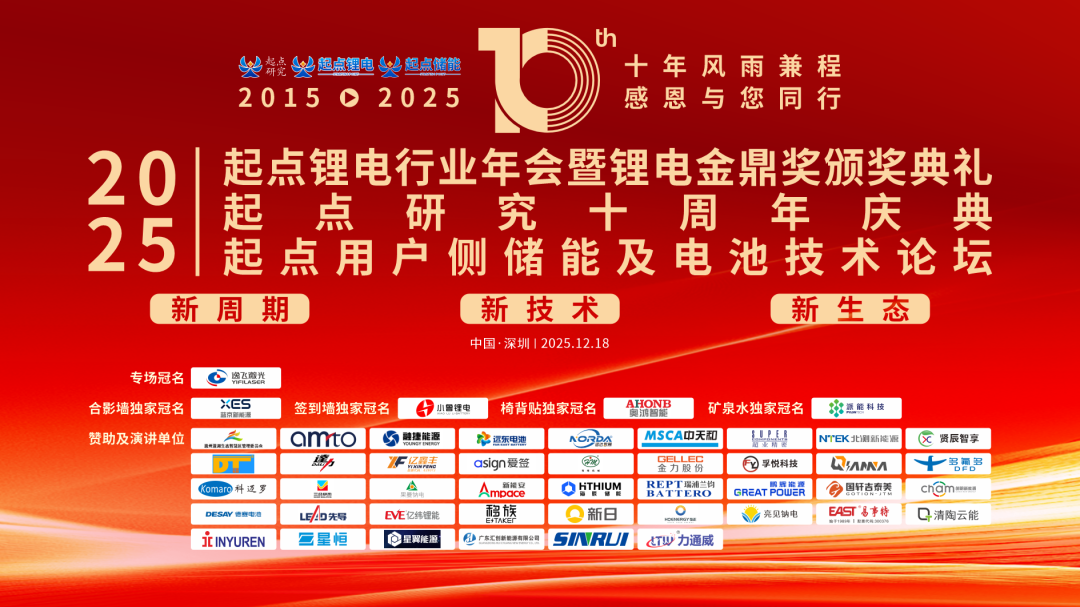
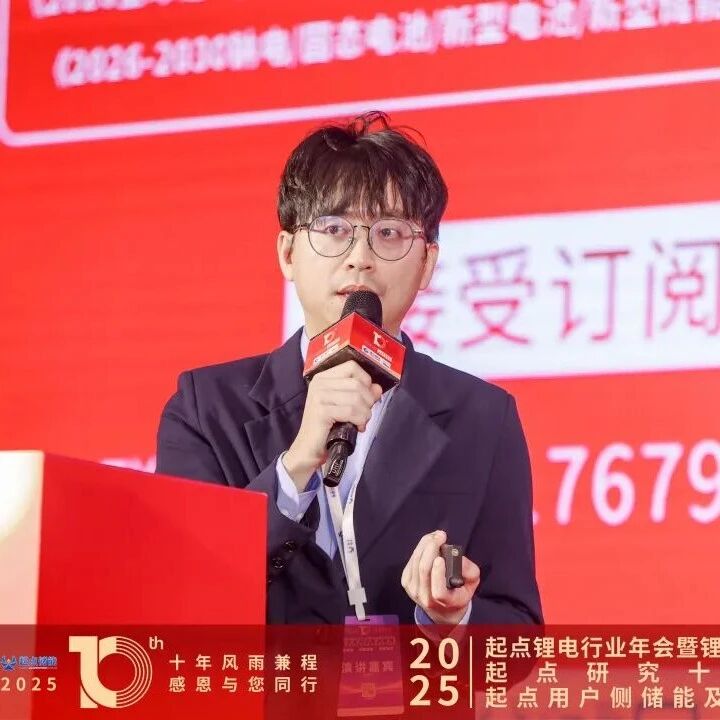
Core Viewpoint - The energy storage industry is experiencing significant growth, particularly in residential storage, driven by the increasing demand for large-capacity batteries and favorable policies in regions like North America and Australia [5][13]. Industry Overview - The 2025 User-side Energy Storage and Battery Technology Forum was held in Shenzhen, focusing on commercial, portable, and residential energy storage, as well as AIDC battery technologies, with over 800 attendees [1][9]. - The residential energy storage market is evolving, with batteries transitioning from mere devices to energy assets that can be owned by everyone [5][13]. Market Trends - The demand for large-capacity storage batteries is increasing, particularly in North America due to frequent power outages and fluctuating electricity prices, while Australia benefits from generous subsidy policies [5][13]. - Current battery capacities have evolved from 20Ah and 50Ah to widely used 100Ah, with larger cells like 280Ah and 314Ah being adopted in residential storage [6][14]. Technological Advancements - Large cells offer higher energy density, significantly reducing the cost per watt-hour and overall system costs, making them advantageous for space-sensitive installations [6][14]. - The 314Ah cell has been successfully implemented in residential storage, with future prospects for even larger capacities like 587Ah [6][14]. Cost Reduction Strategies - The cost reduction for the 314Ah cell is attributed to shared materials and production lines, leading to a 30% decrease in cost per watt-hour compared to 100Ah cells [6][14]. - System integration costs are reduced by 32% due to fewer cells and connection points, while user costs decrease by 25% over the lifecycle due to lower maintenance and repair rates [6][14]. Company Initiatives - The company, Haicheng Energy Storage, is actively promoting the application of large cells in residential and portable storage, with products designed for both high-capacity and portable solutions [7][15]. - The company has established four production bases globally and focuses on the development of large-capacity storage cells, with products ranging from 218Ah to over 1000Ah [7][16]. Vision for the Future - The ultimate goal of residential storage is to achieve energy equity, with a call for continuous optimization of costs and technology to enable more users to enjoy energy freedom [8][17].
海辰储能 林日:大电芯时代 户用储能直流侧技术重构与成本突破
起点锂电· 2025-12-19 12:17
Core Viewpoint - The article discusses the rapid development of the energy storage industry, particularly focusing on household energy storage and the transition to larger battery cells, emphasizing the cost reduction and technological advancements in this sector [1][5][9]. Group 1: Market Overview - The energy storage industry is experiencing significant growth, with household storage showing high long-term growth potential despite short-term challenges such as regional tensions and energy price fluctuations [5]. - In North America, frequent power outages have made battery capacity a key factor for safety, while in Australia, generous subsidy policies are driving the household storage market, leading users to opt for larger systems of 30-40 kWh [5]. - The trend indicates that household storage batteries are evolving from mere devices to energy assets that can be owned by everyone [5]. Group 2: Battery Cell Development - Battery cell capacities have evolved from early models of 20Ah and 50Ah to the more commonly used 100Ah, with larger cells like 280Ah and 314Ah now being applied at scale in household storage [5][6]. - Larger battery cells offer higher energy density, significantly reducing the cost per watt-hour and overall system costs, which is crucial for users with limited installation space [5][7]. - The current focus is on 314Ah cells, which have shown a 30% reduction in cost per watt-hour compared to 100Ah cells, and a 25% decrease in lifecycle electricity costs for users [7]. Group 3: Cost and Technical Challenges - The primary driver for the transition to larger battery cells is cost reduction, as the current 100Ah cells face limited cost-cutting opportunities due to mature material systems and optimized processes [6]. - Smaller cells lead to more connection points and increased complexity in battery management systems (BMS), raising maintenance and after-sales costs [6]. - The 314Ah cells are expected to pave the way for even larger capacities, such as 587Ah, which will further enhance cost efficiency and system integration [7]. Group 4: Company Initiatives - The company, 海辰储能, established in 2019, has four production bases globally and focuses on the development of large battery cells for energy storage, with products ranging from 218Ah to over 1000Ah [8]. - The company is actively promoting the application of large battery cells in both household and portable energy storage solutions, aiming to meet daily power needs in regions with weak power infrastructure [7][8]. - The ultimate goal of household storage is to achieve energy equity, with a call for continuous optimization of costs and technology to enable more users to enjoy energy freedom [9].
宁德时代稳步拓展全球化布局 助力“零碳未来”建设
Zhong Guo Jin Rong Xin Xi Wang· 2025-11-19 12:09
Core Insights - The chairman of CATL, Zeng Yuqun, stated that the new energy industry is transitioning from "localized breakthroughs" to a "global incremental era" [1][3] - CATL plans to establish 1,000 battery swap stations by the end of the year, with a global expansion target of 30,000 stations [1][5] - In the first three quarters of 2025, China's lithium battery exports reached nearly 200 GWh, with CATL contributing nearly 60% [1][3] Group 1: Industry Achievements and Future Strategy - Zeng Yuqun highlighted the achievements of the Chinese new energy industry over the past decade, emphasizing the role of electric vehicles, lithium batteries, and photovoltaics as new export pillars [3] - The total export value of the "new three items" exceeded 900 billion yuan, with lithium batteries contributing nearly 400 billion yuan, accounting for over 40% [3] - CATL's global battery output reached nearly 200 GWh, creating approximately 150,000 jobs across 13 production bases, with the Yibin base alone employing 30,000 people [3][5] Group 2: Financial Performance and Production Capacity - In the first three quarters of 2025, CATL reported cumulative revenue of 283.1 billion yuan and a net profit of 49 billion yuan, maintaining strong growth [5] - The battery shipment volume was approximately 180 GWh, with energy storage batteries accounting for about 20%, and an annual production target of 730-750 GWh, representing a 40% year-on-year increase [5] - CATL's production capacity is expected to exceed 1 TWh by 2026 [5] Group 3: Technological Innovations and Global Expansion - CATL's fifth-generation lithium iron phosphate battery has achieved mass production, and its solid-state battery research and development is among the global leaders [6] - The company plans to mass-produce its second-generation sodium-ion battery by the end of 2025, with large-scale preparations for a 587 Ah cell for energy storage [6] - CATL's global production and research layout is advancing, with factories in Hungary, Germany, Spain, and Indonesia, and a market share of over 46% in the European power battery market [6][7] Group 4: Sustainability and Resource Recycling - CATL's resource recycling rates are impressive, with nickel-cobalt-manganese recovery at 99.6% and lithium recovery at 96.5% [6] - The company is actively involved in various energy storage scenarios, including grid-side peak shaving and frequency regulation, commercial distributed energy storage, and renewable energy systems [6]
储能电芯价格维持高位 业内预计头部厂商高位排产维持至明年
Di Yi Cai Jing· 2025-10-21 09:28
Core Insights - The demand for square lithium iron phosphate energy storage cells is strong, with prices remaining high across various capacities [2][4] - Major manufacturers are focusing on next-generation products, leading to supply tightness for current mainstream products [3][4] - Global energy storage cell shipments are expected to see significant growth, with a projected increase of 106.1% year-on-year in the first half of 2025 [4] Pricing and Market Trends - The price range for 100 Ah energy storage cells is between 0.340-0.410 RMB per watt-hour, with an average of 0.375 RMB per watt-hour; for 280 Ah, the range is 0.260-0.335 RMB, averaging 0.298 RMB; and for 314 Ah, the range is 0.260-0.340 RMB, averaging 0.300 RMB [2] - The prices for 280 Ah cells remained stable month-on-month, while the transaction focus for 100 Ah and 314 Ah cells has slightly increased [2] - The increase in prices is attributed to rising costs of upstream materials such as electrolytes and petroleum coke [4] Supply and Production Capacity - Major manufacturers are experiencing high production levels, with some companies reporting full capacity and order schedules extending to 2026 [2][3] - The transition from 300+ Ah to 500+ Ah and larger capacity products is intensifying, with many manufacturers concentrating resources on next-generation product development [3] - Companies like Ningde Times are accelerating production capacity expansion to meet market demand, particularly for the 587 Ah product [4] Demand Drivers - Demand is primarily driven by multiple GWh-level projects in China and the rapid release of global orders from leading overseas integrators [3] - The export ratio of energy storage cells for some companies exceeds 50%, indicating strong international demand [3] - The upcoming fourth quarter is expected to see a surge in grid connection activities, further supporting demand [4] Future Outlook - The global energy storage cell shipment scale is projected to reach 240.21 GWh in the first half of 2025, marking a historical peak [4] - The high demand from downstream terminals is anticipated to continue supporting prices in the supply chain [3]
储能电芯价格维持高位,业内预计头部厂商高位排产维持至明年
Di Yi Cai Jing· 2025-10-21 09:21
Group 1 - The price range for square lithium iron phosphate energy storage cells is reported, with 100 Ah priced at RMB 0.340-0.410 per watt-hour, averaging RMB 0.375; 280 Ah priced at RMB 0.260-0.335, averaging RMB 0.298; and 314 Ah priced at RMB 0.260-0.340, averaging RMB 0.300 [1] - Demand for energy storage cells in China is strong, with prices remaining high; the 280 Ah cell price is stable, while 100 Ah and 314 Ah cells have seen slight increases [1] - Major manufacturers are expected to maintain high production levels until January-February 2026, with actual transaction prices stabilizing at high levels [1] Group 2 - Demand is driven by domestic GWh-level project deliveries and rapid order releases from overseas integrators; over 50 GWh of energy storage cells are expected to be delivered by mid-2025, with over 50% of exports [2] - The supply side is transitioning from 300+ Ah to 500+ Ah and larger capacity products, leading to increased supply tightness for mainstream 300+ Ah cells [2] - Rising prices of upstream materials, such as electrolyte and petroleum coke, are supporting cell costs; the fourth quarter sees a concentration of grid connection deadlines, and overseas markets remain stable despite uncertainties in the US [2] Group 3 - Contemporary Amperex Technology Co., Ltd. (CATL) is experiencing saturated production capacity and is accelerating expansion efforts, particularly for the 587 Ah product, which is expected to increase its market share [2] - Global energy storage cell shipments are projected to reach 240.21 GWh in the first half of 2025, a year-on-year increase of 106.1%, with the second quarter alone reaching 136.78 GWh, surpassing the previous peak [2]
宁德时代日赚超2亿,超1300人接入业绩会
2 1 Shi Ji Jing Ji Bao Dao· 2025-10-21 03:10
Core Insights - In the third quarter, CATL (Contemporary Amperex Technology Co., Limited) reported an average daily revenue exceeding 200 million yuan, indicating strong financial performance [2] - The company achieved a total revenue of 283.07 billion yuan for the first three quarters of 2025, marking a year-on-year increase of 9.28%, while net profit rose by 36.20% to 49.03 billion yuan [2][3] - The third quarter alone saw revenue of 104.19 billion yuan, a growth of 12.90%, and net profit of 18.55 billion yuan, reflecting a significant increase of 41.21% [3] Financial Performance - Revenue for the first three quarters: 283.07 billion yuan, up 9.28% year-on-year [3] - Net profit for the first three quarters: 49.03 billion yuan, up 36.20% year-on-year [3] - Third quarter revenue: 104.19 billion yuan, up 12.90% year-on-year [3] - Third quarter net profit: 18.55 billion yuan, up 41.21% year-on-year [3] - Basic earnings per share for the third quarter: 4.10 yuan, up 37.23% [3] Operational Highlights - The company has a strong cash reserve, with over 360 billion yuan in cash and financial assets as of September 30, 2025 [3] - Inventory increased by 34.05% to 80.21 billion yuan, attributed to business scale expansion [3] - Financial expenses improved significantly, with a reduction in losses by 142.41% due to increased foreign exchange gains and interest income [3] Capacity Expansion - CATL is actively expanding its global production capacity to meet surging customer demand, with significant expansions in domestic bases across various provinces [4] - The German factory has been operational since 2024 and is continuously profitable, while the Hungarian factory is expected to reduce costs by 20% compared to the German facility [4] - The company anticipates that its energy storage business will see increased output, with a projected addition of over 100 GWh of energy storage capacity by 2026 [4] Market Performance - As of October 20, CATL's A-shares rose by 2.33%, with a market capitalization of 1.69 trillion yuan, while its Hong Kong shares increased by 1.25% [4]

宁德时代
数说新能源· 2025-10-21 02:25
Core Viewpoint - The company is experiencing significant growth in both the power battery and energy storage sectors, with a strong focus on expanding production capacity and enhancing product competitiveness through technological innovation [1][6][19]. Group 1: Operational Aspects - In Q3, the company shipped approximately 180 GWh, with a domestic to overseas shipment ratio of 70% to 30% [1][11]. - The commercial vehicle segment is seeing a 100% growth rate, particularly in logistics vehicles, driven by economic factors and infrastructure support [1][16]. - Energy storage capacity is under pressure due to production constraints, but future growth is expected as the market stabilizes [1][17]. Group 2: Technological Developments - New technologies such as Shenxing, Qilin, and sodium-ion batteries account for 60% of shipments, with sodium-ion batteries being tested in commercial vehicles [2][18]. - The company has introduced NP3.0 technology to enhance battery safety and performance, particularly for intelligent driving applications [7][23]. Group 3: Financial Performance - In Q3 2025, total revenue reached 140.1 billion yuan, a 12.9% year-on-year increase, with net profit growing by 41.2% to 18.55 billion yuan [6][10]. - Inventory levels increased to over 80 billion yuan, primarily due to business expansion and products in transit [9][15]. Group 4: Market Demand and Trends - The energy storage market is expected to maintain high growth due to favorable policies and increasing demand from data centers [3][19]. - The company anticipates a continued rise in single vehicle battery capacity, driven by consumer demand for longer ranges [21][27]. Group 5: Customer Relationships - The company is building long-term partnerships with clients, focusing on meeting genuine demand rather than short-term supply fluctuations [4][24]. - The introduction of new products is expected to enhance customer satisfaction and market share [23][25]. Group 6: Policy and Regulatory Environment - Export control policies have minimal impact on the company, with ongoing communication with the government ensuring smooth operations [5][13]. - The company is well-positioned in Europe, with ongoing projects in Hungary and Spain, which are expected to enhance local market share [22][13]. Group 7: Competitive Landscape - The energy storage market has high technical barriers, and the company is confident in maintaining its competitive edge despite emerging competitors [20][14]. - The company’s comprehensive supply chain strategy is designed to mitigate risks associated with raw material price fluctuations [14][20].