天人关系

Search documents
考古专家:红山文化奠基后世礼制 开启“天人关系”最初探索
Zhong Guo Xin Wen Wang· 2025-12-17 03:25
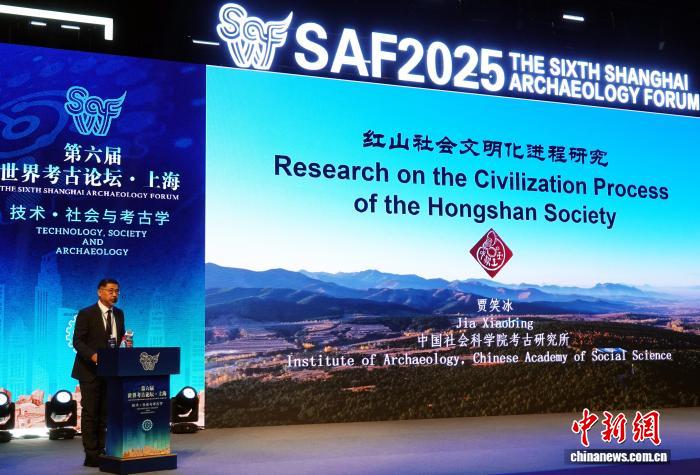
Core Viewpoint - The "Hongshan Culture" is recognized as a foundational element in the development of later ceremonial systems and the initial exploration of the "relationship between heaven and humanity" in Chinese civilization [1][3]. Group 1: Research Findings - The Hongshan culture dates back 6,500 to 4,800 years and is characterized by two types of sites: ritual and residential, reflecting a society that emphasizes rituals over secular life [3]. - Archaeological findings indicate a complex social structure within the Hongshan culture, showcasing a multifaceted society that provides critical insights into the development of ancient state systems [4]. - The integration of local traditions and shamanistic practices into a cohesive belief system laid the groundwork for a unified social order, which was essential for the establishment of the "Hongshan Ancient State" [4]. Group 2: Ritual and Governance - The ritual system that emerged during the mid-Hongshan period, characterized by "respect for heaven, earth, and ancestors," established a hierarchical order that was widely accepted within the region [4]. - The "Niuhuangliang site" is identified as the highest-level multifunctional ritual center of the Hongshan culture, comparable to state-level sacrificial sites, reinforcing its significance in the cultural and social order [5]. - The development of a ritual-based governance model facilitated cultural identity and social order, marking a significant step towards civilization in ancient China [5].

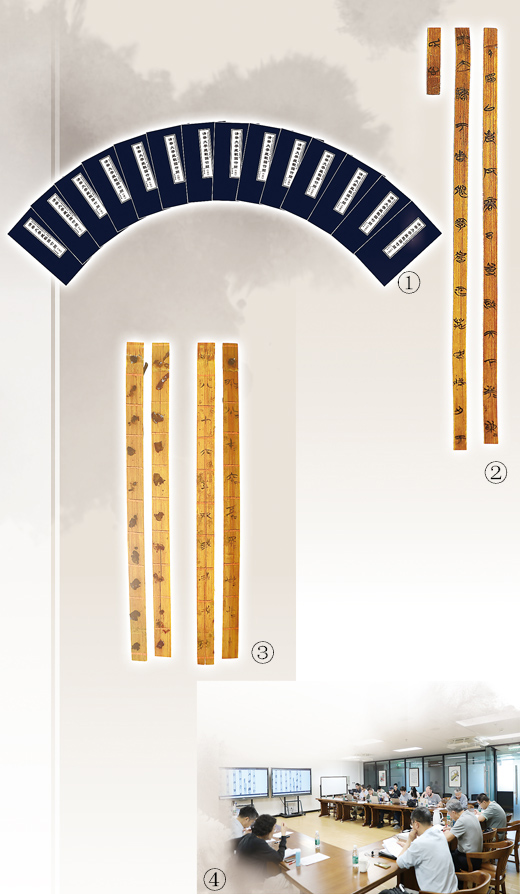
破译战国典籍中的文化密码(文化中国行·人文观察)
Ren Min Ri Bao· 2025-08-02 22:01
Core Insights - The research team at Tsinghua University has made significant progress in deciphering the Tsinghua Bamboo Slips, which include over 70 texts, many of which have been lost for over 2000 years, filling historical gaps in Chinese civilization [3][4][5] - The latest report, the 15th volume, focuses on ancient equestrian practices and governance, providing insights into early Chinese societal management and the importance of horses in ancient life [6][7] Group 1: Research Achievements - The Tsinghua Bamboo Slips contain important historical texts, including the lost historical book "Chronicles" and various poems not included in the "Book of Songs" [4][5] - The "Multiplication Table" found among the slips is recognized as the earliest mathematical document in China, certified by Guinness World Records as the world's first decimal calculator [4][5] - The research has revealed new materials related to the Xia Dynasty, supporting the historical existence of this period and addressing scholarly doubts [5][6] Group 2: Research Challenges - The research team faced significant challenges in categorizing and restoring the fragmented bamboo slips, which lacked sequence numbering and titles [8][9] - Deciphering the ancient characters was complex, as some characters had not been previously documented, requiring extensive cross-referencing with existing literature [8][9] - The collaborative nature of the research involved multiple disciplines, leading to diverse interpretations and requiring consensus on findings [9][10] Group 3: Cultural Impact and Public Engagement - The research team emphasizes the importance of making ancient knowledge accessible to the public, particularly the youth, through various outreach programs and educational initiatives [11][12] - Popularization efforts include the production of simplified versions of research reports and engaging cultural programs that depict the historical significance of the bamboo slips [11][12] - The Tsinghua Bamboo Slips have sparked interest among students, leading to increased enrollment in related courses and a new generation of scholars in the field of ancient texts [12]