
礼制

Search documents
爵位?酒器?关于“爵”的这些知识,你了解吗
Xin Lang Cai Jing· 2025-12-20 05:45
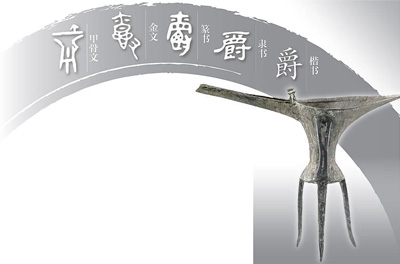
Group 1 - The character "爵" originally referred to an ancient drinking vessel, symbolizing status and identity in early Chinese civilization [3][4] - The archaeological site at Erlitou has revealed over ten bronze jugs, showcasing advanced bronze casting techniques of the time, with the most notable being a 26.5 cm tall jug with intricate designs [3] - The transition from using bronze for tools and weapons to creating ceremonial vessels like the bronze jug marks a significant advancement in early metal casting technology [3] Group 2 - The formation and development of the ritual system in ancient China is reflected in the use of bronze jugs, which played a crucial role in establishing early ceremonial practices [4] - The ancient system of ranks and titles was linked to the use of jugs, laying the groundwork for more comprehensive ritual systems in later periods [4]

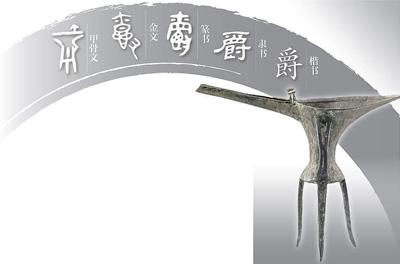
爵:从盛酒于皿到藏礼于器(文物有话说·文物里的汉字)
Ren Min Ri Bao· 2025-12-19 22:10
Group 1 - The character "爵" originally referred to an ancient drinking vessel, symbolizing status and identity in early Chinese civilization [2] - The Erlitou site in Henan has yielded over 10 bronze jugs, showcasing advanced bronze casting techniques of the time, with the most notable being a 26.5 cm tall and 31.5 cm long bronze jug with a unique design [2] - The complex composite mold technology used during the Erlitou period represents a significant advancement in early metal casting, differing from the simpler tools and weapons of the Longshan period [2] Group 2 - The formation and development of ritual systems in ancient China are reflected in the use of bronze jugs, which played a crucial role in early ceremonial practices [3] - The ancient system of ranks and titles was based on the use of jugs, establishing a foundation for the development of more comprehensive ritual systems in later periods [3]
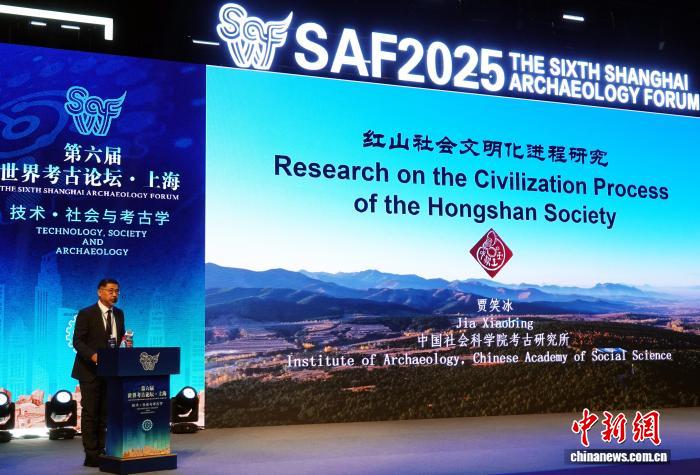
考古专家:红山文化奠基后世礼制 开启“天人关系”最初探索
Zhong Guo Xin Wen Wang· 2025-12-17 03:25
Core Viewpoint - The "Hongshan Culture" is recognized as a foundational element in the development of later ceremonial systems and the initial exploration of the "relationship between heaven and humanity" in Chinese civilization [1][3]. Group 1: Research Findings - The Hongshan culture dates back 6,500 to 4,800 years and is characterized by two types of sites: ritual and residential, reflecting a society that emphasizes rituals over secular life [3]. - Archaeological findings indicate a complex social structure within the Hongshan culture, showcasing a multifaceted society that provides critical insights into the development of ancient state systems [4]. - The integration of local traditions and shamanistic practices into a cohesive belief system laid the groundwork for a unified social order, which was essential for the establishment of the "Hongshan Ancient State" [4]. Group 2: Ritual and Governance - The ritual system that emerged during the mid-Hongshan period, characterized by "respect for heaven, earth, and ancestors," established a hierarchical order that was widely accepted within the region [4]. - The "Niuhuangliang site" is identified as the highest-level multifunctional ritual center of the Hongshan culture, comparable to state-level sacrificial sites, reinforcing its significance in the cultural and social order [5]. - The development of a ritual-based governance model facilitated cultural identity and social order, marking a significant step towards civilization in ancient China [5].
郭大顺对红山文化与中华文明的36个回答(下篇)
Jing Ji Guan Cha Bao· 2025-11-11 03:49
Core Insights - The article discusses the contributions of Guo Dashun to the study of Hongshan culture, emphasizing his role in archaeological discoveries and his academic lineage from Su Bingqi, a prominent figure in Chinese archaeology [1][2][3]. Group 1: Contributions to Hongshan Culture - Guo Dashun is recognized as the leading figure in Hongshan culture, having led significant archaeological excavations that revealed important artifacts, establishing Hongshan as one of the three major sources of Chinese civilization over 5,000 years ago [1]. - He proposed a new understanding that there should be a structure of higher significance than the "Goddess Temple" within the Hongshan culture [1]. - Recent discoveries in Hebei, including a large number of Hongshan cultural relics, suggest that the culture may have migrated southward during its peak [2]. Group 2: Academic Influence and Legacy - Guo Dashun, a disciple of Su Bingqi, continues to advocate for the idea that Hongshan culture is a direct root of Chinese civilization, emphasizing the importance of Su's academic thoughts in contemporary archaeology [1][2]. - The article highlights the significance of Su Bingqi's theories, particularly the continuity of Chinese civilization and the importance of ritual systems, which Guo Dashun elaborates on in his discussions [5][6]. - Guo Dashun's reflections on Su Bingqi's legacy indicate that his academic contributions remain relevant in current archaeological discourse, particularly in understanding the origins of Chinese civilization [17][18]. Group 3: Archaeological Methodology and Perspectives - The article discusses the need for a combination of archaeological findings and historical texts to reconstruct ancient history, emphasizing that archaeological evidence should validate historical narratives [29][30]. - Guo Dashun advocates for a collaborative approach between archaeologists and historians to enhance the understanding of ancient cultures, suggesting that archaeological methods should be applied to historical research [36]. - The discussion includes the importance of diverse perspectives in archaeology, encouraging a "hundred schools of thought" approach to foster deeper insights into ancient civilizations [28].