
天然甜味剂

Search documents
莱茵生物(002166) - 002166莱茵生物投资者关系管理信息20250831
2025-08-31 15:10
Group 1: Raw Material Prices and Trends - The acquisition prices for core products, Luo Han Guo and Stevia, are expected to remain stable this year due to stable planting areas and yields [2][3] - The price of Stevia products has slightly decreased due to increased competition, but this is viewed as a short-term trend as raw material costs have limited downward potential [3][4] - Luo Han Guo extract prices are anticipated to rise further based on raw material price fluctuations [4][6] Group 2: RM2 Product Overview - RM2 is a unique steviol glycoside that offers superior taste, stability, and solubility compared to existing products like RD and RM [4][6] - RM2 has excellent compatibility with other sweeteners, allowing for diverse applications in baking and other food products [4][6] - The production cost of RM2 is controllable due to the advantages in raw material production, providing a cost advantage over traditional extraction methods [4][6] Group 3: Market Position and Competitive Advantage - RM2 is currently exclusive to the company, with significant barriers for competitors due to the need for specific technology and lengthy safety reviews [6][10] - The company has made substantial progress in product development and market expansion, particularly in emerging markets like pet nutrition and animal feed [10][11] - The company aims to leverage continuous innovation and differentiation to maintain a competitive edge in the natural sweetener market [10][11] Group 4: Production Capacity and Future Outlook - The new production facility in Indiana is expected to meet market demand over the next 2-3 years, with production capacity utilization projected to reach 40-50% by year-end [11][12] - The company anticipates a sales revenue growth of over 15% in the first half of the year, despite pressure on profits from competition and tariffs [12] - The outlook for the second half of the year is optimistic, with expectations of improved operational conditions as new products are launched [12]

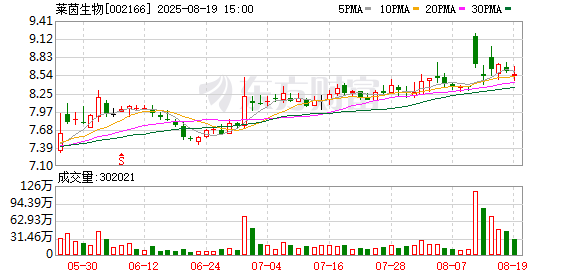
莱茵生物:RebM2目前已在乳制品、饮料、烘焙、调味品等多个应用场景完成实证研究
Mei Ri Jing Ji Xin Wen· 2025-08-19 14:18
Core Insights - The company has developed RebM2, a natural sweetener that overcomes the taste limitations of traditional steviol glycosides, offering "zero calories, high safety, and a taste close to sucrose" as its main advantages [1]. Product Development - RebM2 has successfully passed the public announcement period for new food additives in China, distinguishing itself from other steviol glycosides [3]. - The product can be combined with low-intensity sweeteners like erythritol and allulose, as well as high-intensity sweeteners such as RA and monk fruit glycosides, to create customized sweetening solutions [1]. Market Application - RebM2 has been validated in various application scenarios, including dairy products, beverages, baking, and seasonings, indicating a promising future market potential [1].

阿洛酮糖专题报告解读
2025-05-21 15:14
Summary of Key Points from the Conference Call on Allulose Industry Overview - Allulose is gaining recognition as a natural sweetener due to its similar taste to sucrose and its physiological benefits, including blood sugar reduction and antioxidant properties [1][2] - The global market for allulose is expanding, with significant applications in special medical foods, health supplements, and drug synthesis [1] Core Insights and Arguments - Allulose has been approved for use in the US, Japan, South Korea, Australia, and New Zealand, with expectations for rapid market penetration in China and Europe once approved [1][4] - The estimated demand for allulose in China post-approval is projected to reach 100,000 tons, with a market size of approximately $142 million [1][7] - The production technology for allulose primarily utilizes bioconversion methods, specifically using fructose as a substrate and Bacillus subtilis for catalytic conversion [1][6] Production Capacity and Key Players - Major domestic producers include Bailong Chuangyuan, Sanyuan Bio, and Baolingbao, with plans for capacity expansion [1][5] - Bailong Chuangyuan currently has a capacity of 15,000 tons and plans to build an additional 20,000 tons in Thailand for export [5] - Baolingbao has a current capacity of 7,000 tons, aiming to expand to 20,000 tons, while Sanyuan Bio plans to increase from 10,000 tons to 20,000 tons [5] Market Demand and Growth Potential - The US market for sugar substitutes was valued at $619 million in 2022, with allulose accounting for $78 million [7] - The demand for allulose is expected to grow significantly in China and Europe, driven by increasing health-conscious consumer behavior and dietary preferences [10] Company Strategies and Governance - The company has adopted a professional management model to optimize governance and product structure, focusing on dietary fibers and allulose [8][9] - The introduction of technological improvements has led to significant cost optimization and profit enhancement for products like resistant dextrin and allulose [9] Consumer Trends and Market Impact - There is a growing consumer demand for food safety and health, which is positively impacting the market for sweeteners like allulose [10] - Allulose's safety profile and functional health benefits are expected to drive its demand in the Chinese and European markets once approved [10]
莱茵生物(002166) - 002166莱茵生物投资者关系管理信息20250417
2025-04-17 14:06
Group 1: Business Performance - In 2024, the company's main plant extraction business achieved a revenue of 1.725 billion yuan, with a gross margin of 28.09% [3] - The revenue ratio of stevia and monk fruit extract products is approximately 2:1 [3] - The company plans to distribute a cash dividend of 1 yuan (including tax) for every 10 shares, with a total expected payout of 72.6334 million yuan, representing 69.21% of the net profit attributable to shareholders over the past three years [4] Group 2: Market Strategy and Product Development - The company focuses on natural sweeteners and tea extracts as core products, implementing a "big product + N" strategy [3] - The company has made significant breakthroughs in synthetic biology technology, addressing supply instability and taste issues in monk fruit and stevia products [3] - The company is enhancing its domestic market presence for natural sweeteners, with a growing revenue share from domestic operations [9] Group 3: Impact of Tariffs and Trade Policies - Key products like stevia glycosides and monk fruit sweeteners have been included in the U.S. tariff exemption list, minimizing the impact of tariffs on the company [3][7] - The company is actively monitoring global trade policy changes and has initiated upgrades to its Indiana plant to mitigate tariff impacts [9][10] Group 4: Investor Relations and Shareholder Engagement - The company has a high response rate of over 98% to investor inquiries, emphasizing its commitment to transparency and communication [5] - A share repurchase plan has been implemented, with over 100 million yuan invested to buy back 15.2757 million shares, representing 2.06% of total shares [4][5] Group 5: Future Outlook and Industry Trends - The plant extraction industry is expected to experience robust growth due to rising health awareness and supportive government policies [17][18] - The company anticipates that its synthetic biology production line will achieve an annual output value exceeding 1 billion yuan once fully operational [19]