
罗汉果提取物

Search documents
晨光生物20260202
2026-02-03 02:05
Summary of the Conference Call for Morning Bio Company Overview - **Company**: Morning Bio (晨光生物) - **Industry**: Natural and synthetic colorants, plant extracts Key Points Business Performance - The plant extract business showed steady growth, with sales of chili red pigment and chili extract increasing by 27% and 65% year-on-year, respectively, despite a decline in product prices. The company maintained stable profits through cost-plus pricing [2][4] - Revenue from tiered products (e.g., steviol glycosides, Sichuan pepper extract) grew rapidly from 600 million to 800 million, with a growth rate close to 30%. The duty-free business turned profitable, achieving profits of approximately 70-80 million [2][4] - The company plans to expand its monk fruit extract processing business, with an initial expected revenue of about 100 million from a new factory in Guilin [3][19] Market Trends - There is a clear trend towards natural colorants replacing synthetic ones, with the potential market size in the U.S. reaching 2 billion USD. The company has developed alternatives like Temptation Red, Sunset Yellow, and Lemon Yellow, expecting to gradually replace a market space worth 100 billion over the next five years [2][5][6] - The average cost of natural colorants is about ten times that of synthetic ones, but downstream companies prioritize color consistency and stability over cost [2][8] Strategic Adjustments - The company is adjusting its lutein strategy by actively controlling sales to guide price recovery, expecting a slight decline in sales volume in 2026 but an improvement in profit margins [2][7][12] - The company emphasizes R&D investment and team building to provide application solutions, enhancing customer stickiness and extending the industrial chain downstream [2][10] Future Outlook - The operating environment in 2026 is expected to remain stable compared to 2025, with a focus on maintaining profit stability through cost-plus pricing and managing raw material costs [7][12] - The company aims to achieve a sales target of 1 billion grams, which is expected to drive overall profit margins up. The product structure changes, with higher margins from products like tomato red compared to lower-margin products like chili red, will contribute to long-term profit margin increases [17][18] Expansion Plans - The company plans to invest 80 million in building a monk fruit factory to reduce transportation costs and enhance production efficiency. The initial expected revenue from this investment is around 100 million [19] - The company is also looking to expand its overseas bases, particularly in Myanmar, despite political instability affecting expansion plans [15] Competitive Positioning - Morning Bio differentiates itself from competitors by focusing on technical service and customer solutions rather than just logistics and supply flexibility. This approach enhances service quality and product development [10][11] Risks and Challenges - The company faces challenges in the lutein market, where supply exceeds demand, keeping prices under pressure. The management of raw material inventory and strategic stock levels will be crucial for maintaining profitability [12][14] Conclusion - Morning Bio is positioned to capitalize on the growing demand for natural colorants while managing the challenges of pricing and supply dynamics in the industry. The strategic focus on R&D, customer service, and product diversification is expected to enhance its competitive edge and profitability in the long term [2][17]

002166,控制权或生变!停牌!
Zhong Guo Ji Jin Bao· 2025-12-10 01:23
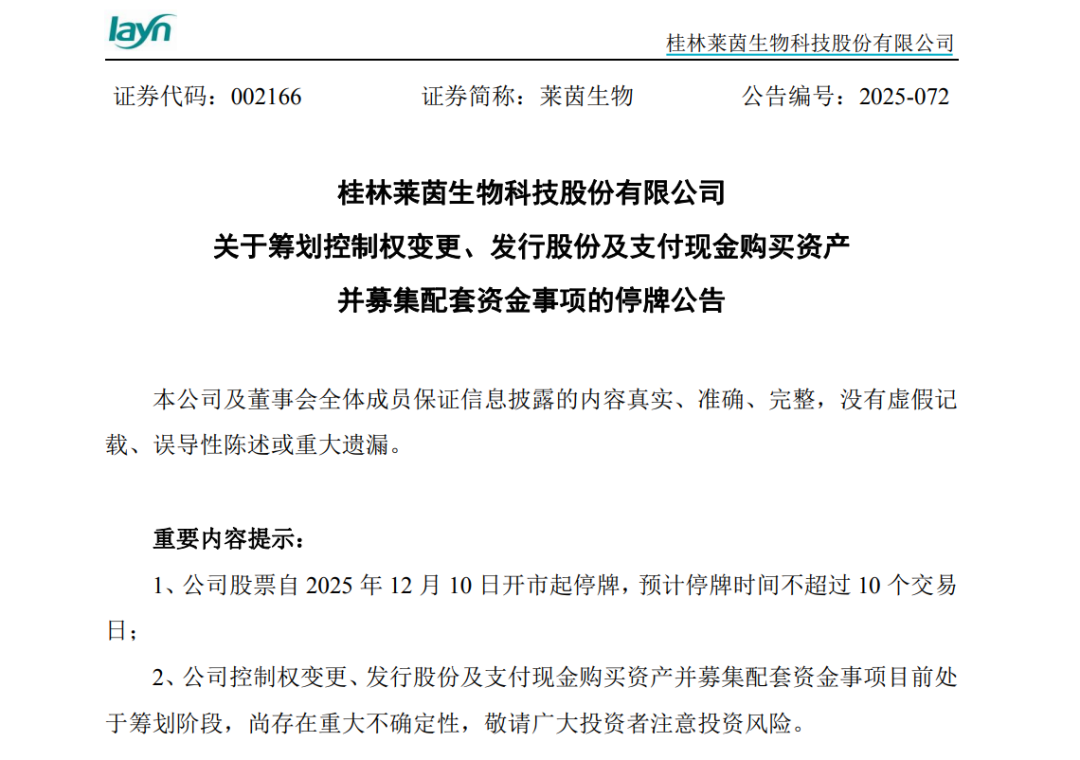
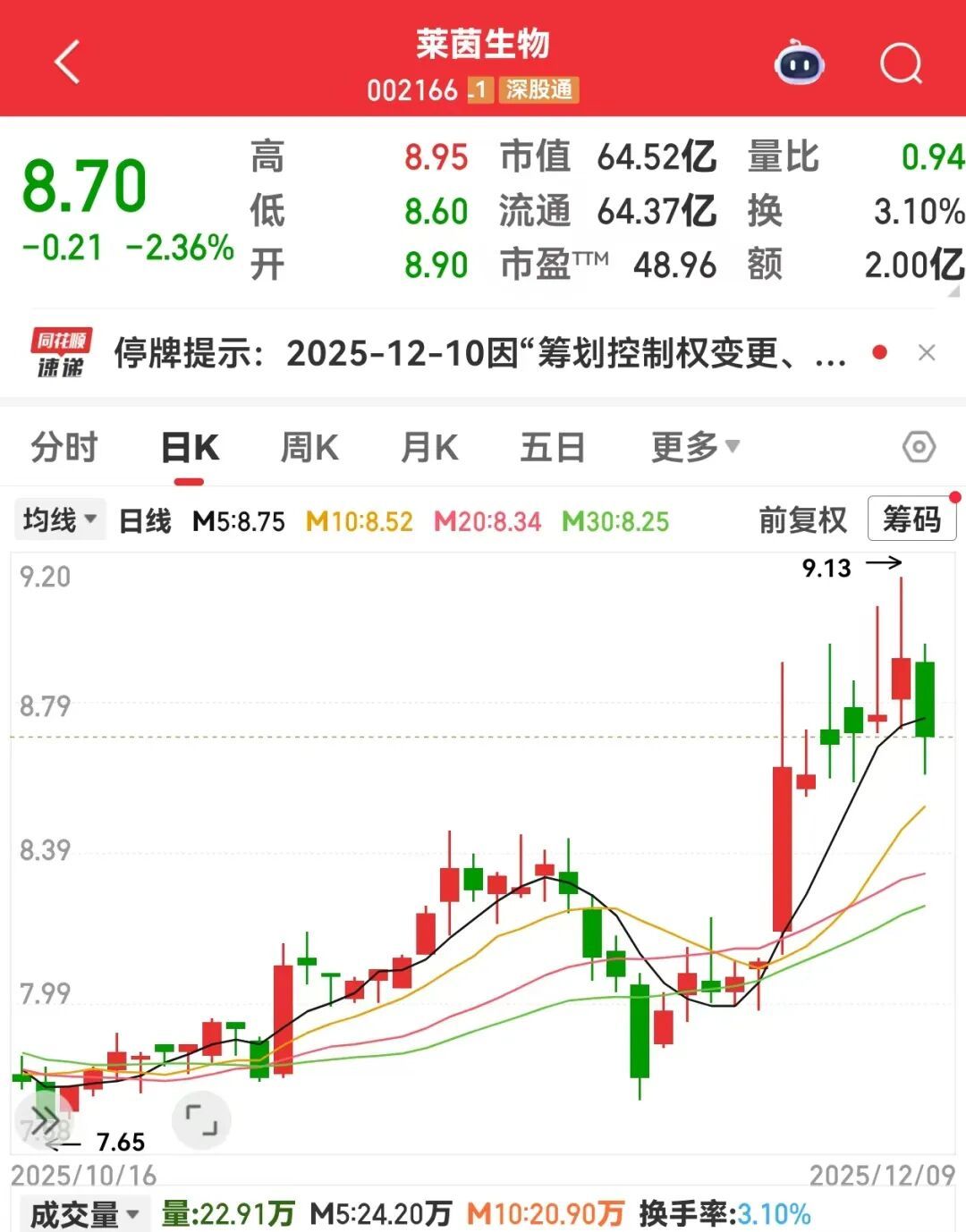
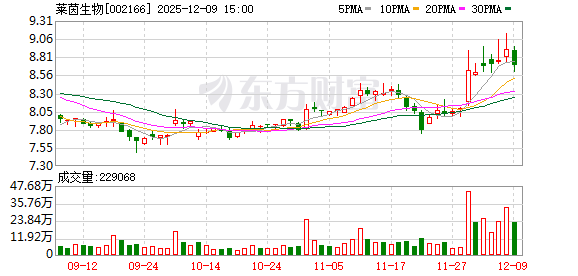
Core Viewpoint - The actual controller of Rhein Biotech, Qin Benjun, is planning a change in the company's control, leading to a stock suspension and a potential acquisition of at least 80% of Beijing Jinkangpu Food Technology Co., Ltd. [1][2][5] Group 1: Control Change - Qin Benjun is preparing to transfer part of his shares and relinquish voting rights, indicating a potential change in control of Rhein Biotech [2][5] - A "Control Change Intent Agreement" has been signed by relevant parties, but specific transaction details are still under negotiation [5] - The transaction may result in a change of the controlling shareholder and actual controller of the company [5] Group 2: Acquisition Details - Rhein Biotech plans to acquire at least 80% of Beijing Jinkangpu, which will become a subsidiary and included in the consolidated financial statements [5][9] - The acquisition aims to enhance Rhein Biotech's capabilities in food and health product development, leveraging synergies between the two companies [9] Group 3: Company Background - Rhein Biotech specializes in the research, production, and sales of natural health products and is a leading player in the global plant extraction industry [12] - As of the end of the third quarter, Qin Benjun holds 271.39 million shares, representing 36.59% of the company [10][11] - The company's stock price was reported at 8.7 yuan per share, with a total market value of 64.52 billion yuan as of December 9 [13]


002166,控制权或生变!停牌!
中国基金报· 2025-12-10 01:12
Core Viewpoint - The actual controller of Rhein Biotech, Qin Benjun, is planning a change in the company's control, leading to a stock suspension and a proposed acquisition of at least 80% of Beijing Jinkangpu Food Technology Co., Ltd. [2][4][9] Group 1: Control Change - Rhein Biotech announced that Qin Benjun is preparing to transfer part of his shares and relinquish some voting rights [4][7] - A "Control Change Intent Agreement" has been signed, but specific transaction details are still under negotiation [7][8] - The change may result in a new controlling shareholder and actual controller for the company [7] Group 2: Acquisition Details - The company plans to acquire at least 80% of Beijing Jinkangpu, which will become a subsidiary and included in the consolidated financial statements [7][14] - The acquisition aims to leverage synergies between Rhein Biotech and Beijing Jinkangpu, enhancing R&D capabilities and market coverage [14] - Beijing Jinkangpu's parent company has extensive experience in the infant food and health supplement sectors, collaborating with well-known dairy companies [11][14] Group 3: Shareholding Structure - As of the end of Q3, Qin Benjun holds 271.39 million shares, representing 36.59% of Rhein Biotech [15][16] - The total market value of Qin's shares is approximately 2.15 billion [16] - The company’s stock price was reported at 8.7 yuan per share, with a total market capitalization of 6.45 billion as of December 9 [18]

本月以来8股获机构密集评级,这个行业最被看好
Zheng Quan Shi Bao· 2025-12-10 00:19
Group 1: Company Developments - Rhein Biotech plans to acquire at least 80% of Beijing Jinkangpu Food Technology Co., enhancing its capabilities in food and beverage and health products, while not constituting a major asset restructuring [1] - The acquisition will allow Rhein Biotech to leverage synergies in business operations, improving its R&D capabilities and market coverage [1] - The company’s major products in the natural sweetener sector include stevia and monk fruit extracts, ranking among the top three global suppliers [1] Group 2: Shareholder Changes - The controlling shareholder, Qin Benjun, is planning to transfer part of his shares and relinquish voting rights, which may lead to a change in control of the company [2] - A control change intention agreement has been signed, but specific transaction details are still under negotiation [2] - The stock will be suspended from trading for up to 10 trading days starting December 10, 2025, due to this potential change [2] Group 3: Financial Performance - Rhein Biotech reported a net profit of 70 million yuan for the first three quarters, a year-on-year decline of 30.73%, indicating pressure on performance [2] - The stock price has increased by 17.94% year-to-date, with a 7.41% rise in December alone, despite facing net selling of 30.5 million yuan over five consecutive trading days [2] Group 4: Industry Insights - The food and beverage sector has seen a decline of 3.6% in its index this December, underperforming the CSI 300 index by approximately 5 percentage points, yet it has attracted a net inflow of 1.209 billion yuan [7] - The white liquor industry is expected to benefit from favorable policies, including measures to support sales and exports [7] - Analysts are optimistic about the recovery of demand in the liquor sector post-adjustment, with expectations for accelerated revenue growth in consumer goods as CPI improves [7] Group 5: Institutional Ratings - In December, 49 institutions conducted 222 "buy" ratings covering 185 stocks, with notable interest in companies like BYD and Shanxi Fenjiu, each receiving five ratings [4][5] - Eight stocks received ratings from three or more institutions, with four of them belonging to the food and beverage sector [7] - The electronics sector has emerged as the most favored area among institutions, with eight stocks receiving attention, followed by machinery and automotive sectors [8]
莱茵生物停牌筹划控制权变更 交易对手方拟注入关联资产
Shang Hai Zheng Quan Bao· 2025-12-09 18:53
Group 1 - The company announced a suspension of trading due to a planned change in control and the issuance of shares to acquire assets [1] - The controlling shareholder, Qin Benjun, is negotiating to transfer part of his shares and relinquish voting rights, with agreements signed with major counterparties [1][2] - The transaction will result in Beijing Jinkangpu becoming a subsidiary of the company, included in the consolidated financial statements, and is expected to be an affiliated transaction [2] Group 2 - Guangzhou Defu Nutrition, the acquiring party, was established on December 2, 2025, and has a capital contribution of 1.35 billion yuan, with a significant majority from Guangzhou Defu Investment Management [2] - Beijing Jinkangpu, the target of the acquisition, specializes in food nutrition fortifiers and has been operational since 2004, serving various sectors including infant food and health supplements [2] - The company focuses on the production and operation of natural health products, with expertise in over 300 standardized plant extraction technologies and a range of products including monk fruit and stevia extracts [3] Group 3 - In the first three quarters of the year, the company reported revenue of 1.272 billion yuan, an increase of 8.73%, while net profit attributable to shareholders decreased by 30.73% to 70.3953 million yuan [3] - The transaction is expected to enhance the company's capabilities in product formulation and core competitiveness in the food and health supplement sectors, leveraging synergies between the two entities [3] - The collaboration aims to ensure a supply of natural raw materials and enhance global marketing capabilities, fostering a mutually beneficial development model [3]
莱茵生物筹划重大事项 今日起停牌
Zheng Quan Shi Bao· 2025-12-09 17:42
Core Viewpoint - The company, Rhein Biotech, is planning a change in control and has announced a suspension of trading due to the potential transfer of shares and voting rights by its controlling shareholder, Qin Benjun [1][2]. Group 1: Control Change Announcement - On December 8, the company received a notification from its controlling shareholder, Qin Benjun, regarding the planned change in control [1]. - Qin Benjun intends to transfer part of his shares to Guangzhou Defu Nutrition and will voluntarily relinquish voting rights for some of his shares [2]. - A "Control Change Intent Agreement" has been signed, but specific transaction details are still under negotiation [1][2]. Group 2: Transaction Details - The company plans to issue shares to acquire an 80% stake in Beijing Jinkangpu from Defu Jinkangpu Holdings and Xiamen Defu Jinkangpu Investment Partnership [2]. - The transaction aims to integrate Beijing Jinkangpu into the listed company structure, enhancing business synergies [2]. Group 3: Financial Performance - For the first three quarters of the year, the company reported a revenue of 1.272 billion yuan, representing a year-on-year increase of 8.73% [3]. - The net profit attributable to shareholders was 70.3953 million yuan, showing a year-on-year decline of 30.73% [3].
002166 筹划重大事项:易主、增发、并购!明起停牌
Zheng Quan Shi Bao Wang· 2025-12-09 13:45
Group 1 - The company, Rhine Biology, announced a suspension of trading on December 10, 2025, due to plans for a change in control and the issuance of shares to acquire assets [2][4] - The controlling shareholder, Qin Benjun, is planning to transfer part of his shares and relinquish voting rights, with a control change agreement already signed with key parties [4] - The company intends to acquire 80% of Beijing Jinkangpu's shares through share issuance and raise matching funds from Guangzhou Defu Nutrition [4][5] Group 2 - The transaction aims to integrate Beijing Jinkangpu into the listed company, enhancing synergy in the food and beverage and health product sectors, thereby improving R&D capabilities and market coverage [5] - Rhine Biology specializes in the production of natural health products, focusing on the R&D and production of plant functional ingredients, with over 300 standardized extraction technologies [5] - In the first three quarters of this year, the company reported revenue of 1.272 billion yuan, an increase of 8.73%, while net profit attributable to shareholders fell by 30.73% to 70.3953 million yuan [5]
无糖茶的苦,年轻人不想咽了
3 6 Ke· 2025-11-20 09:57
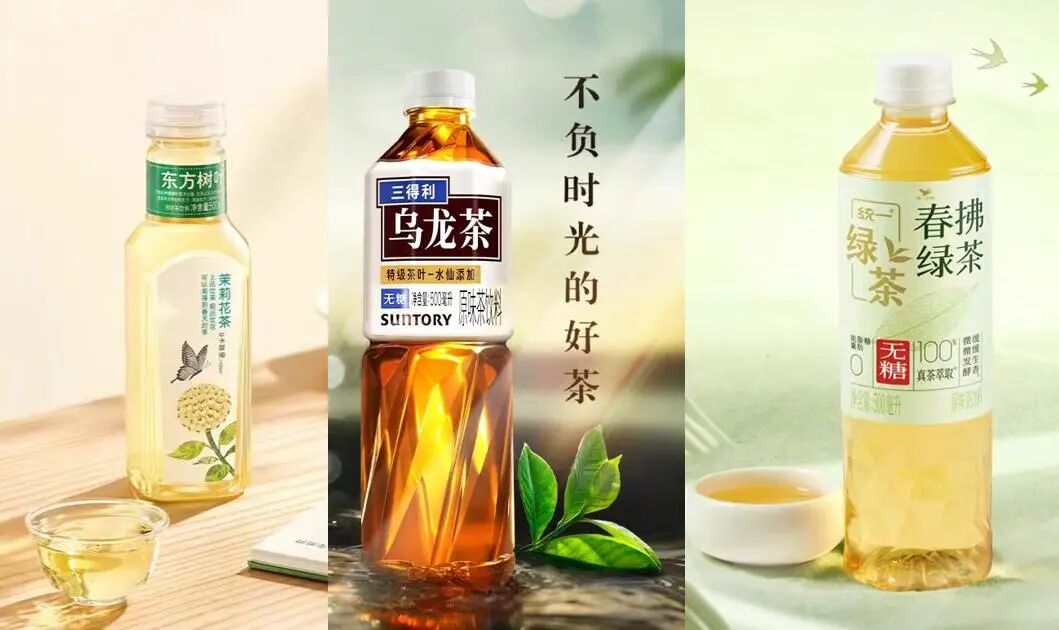
Core Insights - The trend of young consumers moving away from "sugar-free" products is evident, with a noticeable slowdown in the growth of sugar-free tea sales and a decline in the popularity of sugar substitutes [5][12][14] Industry Overview - Sugar-free tea sales growth has significantly decreased, with sales growth rates from April to September 2023 being 3.9%, 7%, 19.9%, 19.5%, 8.5%, and 6.3%, all lower than the same periods in the previous year [2] - The average price of sugar-free tea has been on the rise, increasing from 5.1 yuan per piece in 2023 to 5.6 yuan per piece by 2025, indicating that despite higher prices, total sales growth is slowing [2] - The market is dominated by established brands like Nongfu Spring and Suntory, which together hold 87.3% market share as of September 2023, up 6.4% from the previous year [7] - The second-tier brands' market share has decreased from 11.3% to 7.4%, while the third-tier brands' share has shrunk from 5.1% to 3.4%, highlighting the intensifying head effect in the industry [7][9] Consumer Behavior - The shift in consumer preferences indicates that the younger generation is moving away from extreme health consciousness towards a more indulgent lifestyle, seeking comfort in sugary beverages [5][12] - The demand for sugar substitutes, particularly erythritol, has also faced challenges, with a reported oversupply in the market as of May 2023, where domestic production capacity reached 380,000 tons per year against a global demand of only 173,000 tons [2][14] Product Innovation - There has been a lack of new hit products in the sugar-free tea market, with established products like unsweetened oolong and jasmine tea dominating nearly 70% of the market share [9] - The innovation in the sugar-free tea sector has stagnated, with brands focusing on minor innovations around existing products rather than developing new ones, leading to potential homogenization and price competition [9][11] - In contrast, the sugary tea segment has seen a surge in new product launches, with sugary tea products outnumbering sugar-free tea products significantly in recent months [10] Supplier Challenges - Suppliers of sugar substitutes are experiencing significant operational pressures, with major companies like San Yuan Bio reporting a 7.54% decline in total revenue and a 16.8% drop in net profit for the first three quarters of the year [14][19] - The industry is facing a broader trend of declining demand, leading to increased competition and financial strain on suppliers, many of whom are exploring alternative products and markets to mitigate losses [17][19]



最高法发布治理知识产权恶意诉讼典型案例
Xin Hua She· 2025-11-19 09:54
Group 1 - The Supreme People's Court has released five typical cases to combat malicious intellectual property lawsuits, aiming to create a fair research and innovation environment [1] - A case involving a utility model patent related to "guide rails" highlighted the issue of malicious lawsuits, where a manufacturer received a lawsuit after fulfilling an order based on provided technical drawings [1] - The court dismissed the lawsuit from the new materials company and later ruled in favor of the manufacturer, ordering compensation for economic losses due to malicious litigation [1] Group 2 - The Intellectual Property Court of the Supreme People's Court will impose severe penalties on malicious litigants and promote integrity in exercising litigation rights [2]
莱茵生物容器爆炸事故,罚款60万元
Shen Zhen Shang Bao· 2025-11-03 15:46
Core Viewpoint - The company faced a production safety incident leading to a fine of 600,000 yuan, but it claims that this will not significantly impact its operations [1]. Group 1: Incident Details - On August 21, 2025, the company experienced a general production safety responsibility accident due to an operator's failure to follow procedures, resulting in an explosion caused by high-pressure gas [1]. - The company received an administrative penalty from the Guilin City Emergency Management Bureau, imposing a fine of 600,000 yuan [1]. - Key personnel, including the workshop supervisor and safety management committee members, were held responsible and penalized according to regulations [1]. Group 2: Operational Impact - The company stated that the incident and the related penalty would not have a major impact on its normal production operations [1]. - The affected equipment and area are undergoing accelerated updates and reconstruction, expected to be operational by early 2026 [1]. - The company has other drying workshops that ensure continuity in production operations [1]. Group 3: Financial Performance - For the first three quarters of 2025, the company reported revenue of 1.272 billion yuan, an increase of 8.73% year-on-year [2]. - The net profit attributable to shareholders was 70.4 million yuan, a decrease of 30.73% year-on-year [2]. - The decline in profit is attributed to various factors, including increased depreciation costs from new capacity and a slight improvement in gross margins of core products that have not yet returned to previous levels [2].