
太空运输

Search documents
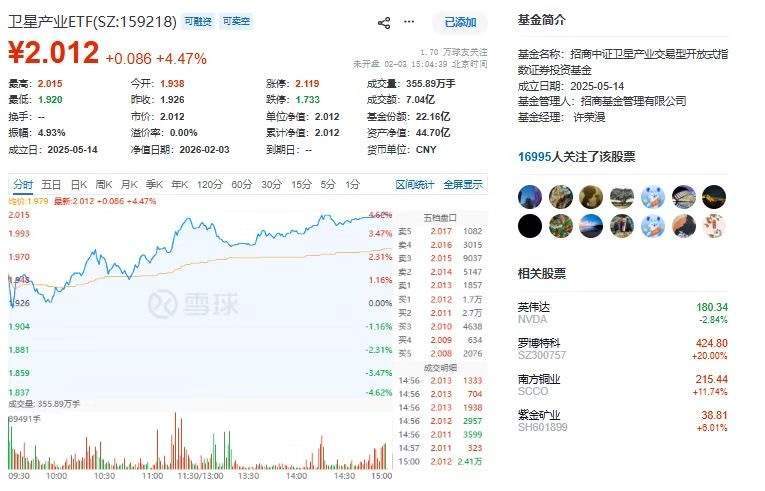
SpaceX史诗级合并震撼市场!卫星产业ETF(159218)应声大涨近4.5%,航天电子大涨6.10%!
Sou Hu Cai Jing· 2026-02-04 01:40
Group 1 - The merger between SpaceX and xAI is valued at $1.25 trillion, indicating a significant shift in the market dynamics of both the space and AI industries [1][3] - This merger represents the ultimate integration of "space transportation" and "artificial intelligence," elevating the role of space from traditional functions like communication and navigation to a core strategic infrastructure for next-generation AI supercomputing [3] - The integration of SpaceX's Starlink constellation and launch capabilities with xAI's advanced algorithms aims to create a distributed supercomputer in low Earth orbit, fundamentally reshaping the growth narrative and valuation logic of the satellite industry [3] Group 2 - The strong performance of the satellite industry ETF (159218), which rose by 4.47%, reflects the market's pricing of this significant narrative shift, encompassing satellite manufacturing, launching, and navigation communication applications [3] - Other companies in the sector also saw notable increases, with aerospace electronics rising by 6.10%, China Satellite Communications up by 5.01%, and Zhenray Technology increasing by 4.90% [1][3]


三年内达到“每年生产1万艘星舰,每小时发射1艘”!马斯克这牛吹的太大
Sou Hu Cai Jing· 2026-01-15 12:14
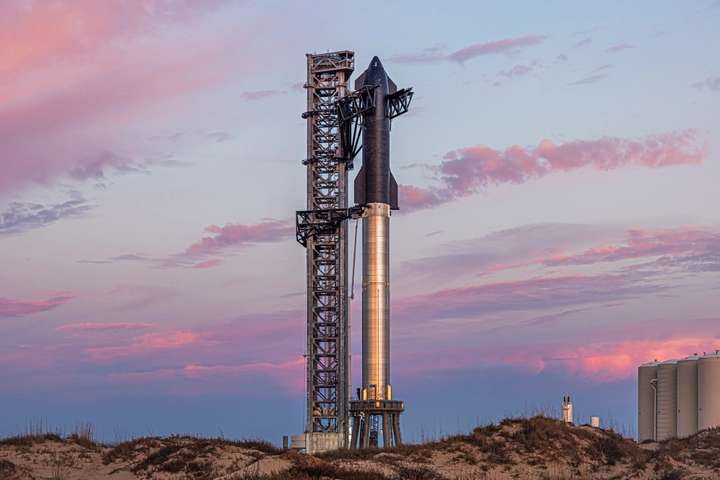
Core Viewpoint - Elon Musk's ambitious goals for SpaceX include launching a Starship every hour within three years and producing 10,000 Starships annually, which may not align with actual market demand for space transportation [1][18][20]. Group 1: Launch Frequency and Production Goals - Musk claims that SpaceX will achieve a launch frequency exceeding one per hour within three years, translating to 8,760 launches annually [12][14]. - The target of producing 10,000 Starships per year is significantly higher than the projected demand for heavy-lift space vehicles, which is estimated to be only a few hundred tons annually [12][20]. Group 2: Spacecraft Capacity and Market Demand - The Starship is currently the largest rocket tested globally, capable of carrying 100-150 tons in reusable mode and up to 250 tons in expendable mode, making it the strongest reusable launch system [4][6]. - However, the actual demand for such capacity is limited, as future space activities will focus on specific missions like lunar base construction and deep space exploration, which do not require high-frequency launches [8][10]. Group 3: Reusability and Economic Viability - The reusability of the Starship is a core advantage, allowing for multiple launches per vehicle each year, which contradicts the need for producing 10,000 units [16][18]. - If a Starship can be reused 10 times a year, only 10 Starships would be needed to meet a hypothetical global demand of 1,000 tons, indicating a potential overproduction scenario [12][18]. Group 4: Competitive Landscape - Other countries, including China and Russia, are advancing their own heavy-lift rocket capabilities, which could limit SpaceX's market share and render Musk's production goals unnecessary [18][20]. - The space exploration market is expected to be competitive, with multiple nations and companies vying for contracts, suggesting that SpaceX's ambitious targets may not be realistic [20][22]. Group 5: Conclusion on Musk's Projections - Musk's projections appear to be more of a marketing strategy to attract investment and establish a dominant narrative in the space industry rather than a reflection of actual operational needs [18][20]. - While SpaceX has made significant contributions to the aerospace industry, the gap between Musk's aspirations and practical requirements highlights the need for a more grounded approach to space transportation [22].
探索公司:筹备新一轮融资,规模超去年1.6亿美元
Sou Hu Cai Jing· 2025-11-24 07:16
Group 1 - The Exploration Company, a Franco-German joint venture, is preparing for a new round of financing to accelerate its expansion in the space industry [1] - The company aims to develop Europe's first reusable cargo capsule for transporting supplies to the International Space Station, with funding expected to exceed last year's $160 million [1] - Founded in 2021 by Helen Shubie, the company's goal is to enhance Europe's independence in space, starting with cargo transport and eventually moving to crewed missions and lunar landings [1] Group 2 - The Exploration Company is currently collaborating with the UAE to develop a lunar lander, with the objective of achieving a moon landing by 2035 [1]
