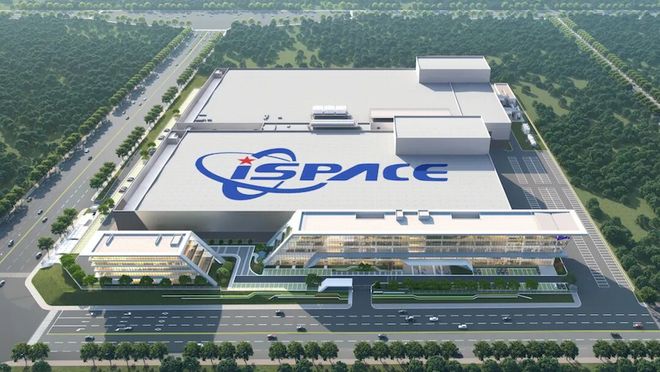
航天运载

Search documents
中国商业航天重大突破,力箭二号首飞成功
第一财经· 2026-03-30 12:38
Core Viewpoint - The successful launch of the Kuaizhou-2 rocket marks a significant advancement in China's commercial space capabilities, particularly in supporting large-scale satellite constellations and low-cost cargo missions [3][6]. Group 1: Rocket Specifications and Capabilities - The Kuaizhou-2 rocket is China's first "universal booster core" configuration, with a diameter of 3.35 meters, a total length of 53 meters, and a launch weight of 625 tons [3]. - It has a launch thrust of 753 tons, with a payload capacity of 8 tons to a 500 km sun-synchronous orbit and 12 tons to a 200 km low Earth orbit [3]. - The rocket is designed for high reliability, strong manufacturability, and ease of operation, making it suitable for various missions including low Earth orbit communication satellites and deep space exploration [3][6]. Group 2: Satellite Missions - The New Journey 01 satellite, developed by China Aerospace Science and Technology Corporation, serves as a "mini space laboratory" for various in-orbit experiments and applications [4]. - The New Journey 02 satellite, a space test vehicle, has a weight of 4.2 tons and is designed for a three-year operational life, featuring advanced technologies for autonomous rendezvous and long-term stay capabilities [5]. Group 3: Industry Challenges and Innovations - The global satellite networking trend faces challenges such as insufficient rocket payload capacity, long launch cycles, and high costs, which are bottlenecks for industry development [5]. - Reusable rocket technology is identified as a key pathway to reduce launch costs, with ongoing efforts to overcome challenges in aerodynamic thermal protection and propulsion systems [5][7]. Group 4: Development Strategies - The Kuaizhou-2 rocket employs a design strategy that balances complexity with production simplicity, facilitating rapid mass production for commercial space missions [6]. - The development model allows for shared design, testing, and production resources, significantly reducing research and development costs and timelines [6]. Group 5: Future Plans - Following its maiden flight, the Kuaizhou-2 will advance research and validation of recovery technologies, with plans to apply these technologies to larger rockets in the future [7]. - The company aims to achieve large payload recovery through a universal core bundling and clustered recovery scheme, building on successful tests of re-entry and precision landing technologies [7].

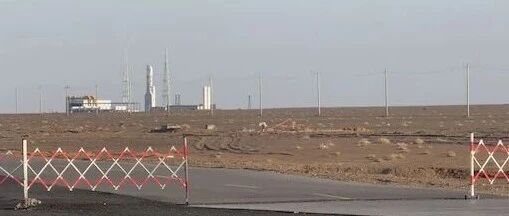
长征十二号乙运载火箭,今年上半年首飞
财联社· 2026-03-12 05:12
Core Viewpoint - The Long March 12 Y rocket is scheduled for its first launch in the first half of 2026 at the Jiuquan launch site, utilizing liquid oxygen and kerosene as propellants [1] Group 1 - The Long March 12 Y rocket represents a significant advancement in China's space launch capabilities [1] - The use of liquid oxygen and kerosene as propellants indicates a focus on efficiency and performance in rocket design [1]

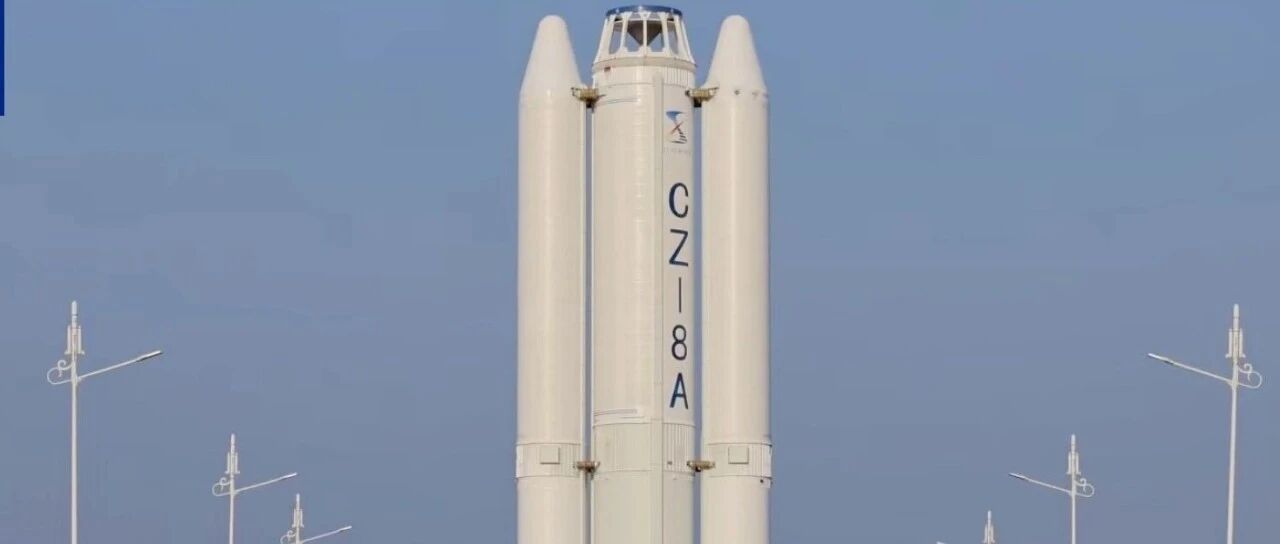
长征八号甲遥八火箭,转运至发射区
财联社· 2026-03-07 13:19
Core Viewpoint - The successful transportation of the Long March 8A rocket marks a significant step in China's commercial space endeavors, with plans for multiple launches in the near future [1][3]. Group 1: Rocket Specifications and Capabilities - The Long March 8A rocket is an improved model within the Long March 8 series, designed for high-density and rapid network deployment, with a payload capacity of 7 tons to a 700 km sun-synchronous orbit [3]. - Since its maiden flight, the Long March 8 series has executed 7 successful launch missions and is considered a core vehicle for building satellite internet constellations in China [3]. Group 2: Launch Plans and Industry Position - The Long March 8 series has approximately 15 planned launch missions for the year, including both the Long March 8A and Long March 8 rockets [3]. - The series is recognized as a new generation of medium-sized liquid launch vehicles, becoming the main model for low Earth orbit satellite launches due to its modular design, cost-effectiveness, and rapid response capabilities [3].
朱雀三号运载火箭计划今年二季度再次挑战回收试验
Zhong Guo Xin Wen Wang· 2026-02-25 07:36
Core Viewpoint - The Zhuque-3 reusable launch vehicle is set to conduct another recovery test in the second quarter of 2026, following its initial flight and recovery attempt that faced challenges [1][2]. Group 1: Launch Vehicle Details - Zhuque-3 is a self-developed reusable liquid oxygen-methane launch vehicle by Blue Arrow Aerospace, equipped with a reaction control system, grid fins, and landing legs for vertical return and recovery after orbital launch [1]. - The first flight of Zhuque-3 took place on December 3, 2025, at the Dongfeng Commercial Aerospace Innovation Test Zone, successfully placing the second stage into orbit [1]. Group 2: Recovery Test Insights - The first recovery attempt of the Zhuque-3's first stage encountered an abnormal combustion issue, preventing a soft landing at the recovery site, with debris landing at the edge of the recovery area [1]. - Despite not achieving the recovery goal, the attempt provided critical engineering data under real flight conditions, laying a significant foundation for future launches and reliable recovery of the first stage [2].
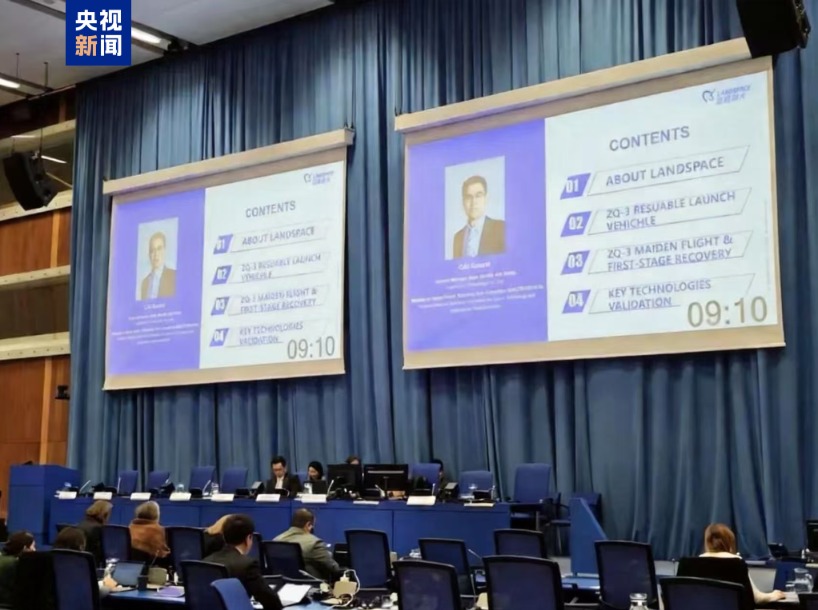
重复使用火箭朱雀三号,计划今年二季度再次挑战回收
Hua Xia Shi Bao· 2026-02-25 05:35
Core Viewpoint - Chinese commercial aerospace company Blue Arrow Aerospace announced plans to conduct recovery tests for its reusable rocket Zhuque-3 in the second quarter of this year during the 63rd meeting of the United Nations Outer Space Committee's Technology Working Group [1]. Group 1: Zhuque-3 Rocket Development - The Zhuque-3 development team is currently optimizing the rocket landing process and plans to conduct recovery tests again in the second quarter of 2026, aiming for the first recovery flight attempt in the fourth quarter of this year [3]. - If the first stage of Zhuque-3 is successfully recovered, it will be reused for the next Zhuque-3 rocket, enabling reusability [3]. Group 2: Technical Specifications and Previous Tests - Zhuque-3 is China's self-developed reusable rocket powered by liquid oxygen and methane, equipped with a reaction control system, grid fins, and landing legs for vertical return and recovery after launch [5]. - The first flight of Zhuque-3 took place on December 3, 2025, marking China's first verification of first-stage recovery technology for an orbital-class launch vehicle. During the return flight, the rocket achieved high-precision guidance control to the landing site but unfortunately failed to achieve a soft landing due to an abnormal combustion incident a few kilometers above the ground [5].
朱雀三号计划二季度再次挑战回收
Shang Hai Zheng Quan Bao· 2026-02-25 02:23
Core Viewpoint - The Chinese commercial aerospace company Blue Arrow Aerospace announced that the reusable rocket ZHUSHA 3 will conduct recovery tests again in the second quarter of this year, aiming for further advancements in reusable rocket technology [1][3]. Group 1: Project Updates - The ZHUSHA 3 development team is currently optimizing the rocket landing process and plans to conduct another recovery test in the second quarter of 2026 [3]. - Based on the results of the recovery tests, the team aims to attempt the first recovery of a reusable flight in the fourth quarter of this year, with the potential for a successful recovery of the first stage to be used in subsequent ZHUSHA 3 rockets [3]. Group 2: Technical Specifications - ZHUSHA 3 is a domestically developed reusable rocket that uses liquid oxygen and methane as propellants. It is equipped with a reaction control system, grid fins, and landing legs to facilitate vertical return and recovery after launch [5]. - The first flight of ZHUSHA 3 took place on December 3, 2025, marking China's first verification of first-stage recovery technology for an orbital-class launch vehicle. During the return flight, the rocket achieved high-precision guidance control to the landing site, but an abnormal combustion occurred a few kilometers from the ground, preventing a soft landing [5].
用尽历史遗产走捷径,美国重返月球尴尬了
Guan Cha Zhe Wang· 2026-02-24 00:29
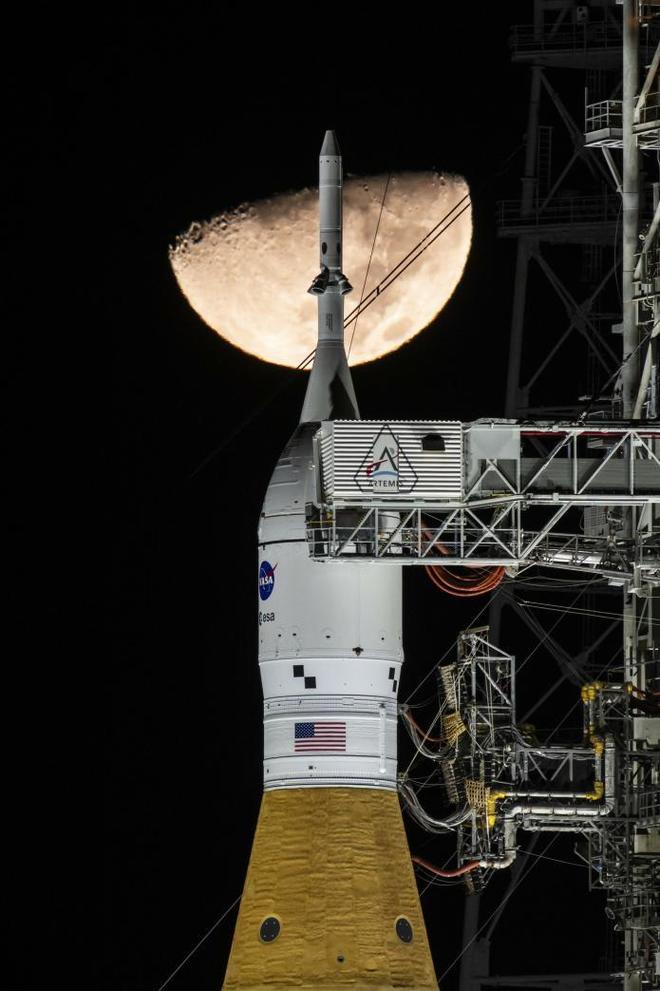
Core Viewpoint - The article discusses the challenges and implications of the Artemis program, particularly focusing on the upcoming Artemis 2 mission, which aims to send astronauts on a lunar flyby for the first time since Apollo 17 in 1972. The mission's success is seen as critical for the future of the U.S. human spaceflight program and its ability to sustain long-term deep space exploration [1][4][16]. Group 1: Mission Overview - The Artemis 2 mission was initially scheduled for launch on February 6, 2026, but has been postponed to March due to a liquid hydrogen leak during a wet dress rehearsal [1]. - The mission represents a significant milestone as it marks the first crewed lunar mission in over five decades, highlighting the symbolic importance of U.S. leadership in space exploration [1][4]. Group 2: Engineering and Technical Challenges - The SLS (Space Launch System) rocket, which supports the Artemis program, is criticized for being a product of legacy technology rather than a new, innovative design. It relies heavily on components from the Space Shuttle era, such as the RS-25 engines and solid rocket boosters [7][8][10][12]. - The SLS's reliance on outdated technology raises concerns about its long-term sustainability and ability to meet the ambitious goals of the Artemis program [4][13]. Group 3: Cost and Schedule Issues - The estimated cost for a single Artemis mission, including the SLS and Orion spacecraft, is approximately $4 billion, excluding prior development costs. This high cost limits the frequency of launches and amplifies the impact of any technical issues [16][18]. - The Artemis 2 mission has faced significant delays, with its launch date pushed back from the original target of 2022-2023 to 2026, indicating systemic issues within the overall engineering and project management [16][19]. Group 4: Political and Financial Context - The Artemis program is highly dependent on political support and budget continuity, having faced potential cuts during previous administrations. This instability raises questions about the program's long-term viability [21][22]. - The success of Artemis 2 is seen as a critical test not only for the technical aspects of the mission but also for the U.S. government's commitment to sustaining high-cost, high-uncertainty space exploration initiatives [22].
捷龙三号遥九运载火箭在阳江海域发射成功
Nan Fang Ri Bao Wang Luo Ban· 2026-02-14 07:12
Core Viewpoint - The successful launch of the Long March 3B rocket marks a significant achievement in China's space capabilities, showcasing advancements in satellite deployment and international collaboration in space technology [1] Group 1: Launch Details - The Long March 3B rocket was launched on February 12 at 14:37 from the sea near Yangjiang, Hai Ling Island, using a maritime launch method to successfully place multiple satellites into their designated orbits [1] - The mission successfully deployed a total of seven satellites, including the Pakistan PRSC-EO2 satellite, which is crucial for various applications in Pakistan [1] Group 2: Satellite Applications - The PRSC-EO2 satellite will provide remote sensing data for land surveying, agricultural classification assessment, urban and rural planning, environmental monitoring, and natural disaster management in Pakistan [1] - This launch represents a significant outcome of the China-Pakistan space cooperation, highlighting the collaborative efforts in advancing space technology for practical applications [1]
星火空间完成数千万天使+轮融资,累计融资超亿元
Jing Ji Guan Cha Wang· 2026-02-14 06:20
Core Viewpoint - Hefei Xinghuo Space Technology Co., Ltd. has completed tens of millions in angel + round financing, with total financing exceeding 100 million [1] Group 1: Financing Details - The latest round of financing was led by Xingtai Capital, with Advantage Capital participating and existing shareholder Jingsha Capital increasing its investment [1] - The funds raised will be used for the development of electric cycle rocket engines, rocket product research, talent development, and the construction of production testing bases [1] Group 2: Technological Advancements - The "Flame-2" electric cycle rocket engine has successfully completed its first round of ignition tests, with parameters such as ignition timing, thrust chamber pressure, and vibration remaining stable and meeting design expectations [1] - As one of the largest electric cycle engines in the world, "Flame-2" has achieved a thrust of 10 tons, breaking the previous international limit of approximately 2 tons through technological innovation [1] Group 3: Future Plans - Based on China's advanced battery technology, the company plans to accelerate the iteration and optimization of the next generation of electric cycle engines [1] - The goal is to build China's first and the world's largest electric cycle liquid launch vehicle, "Evolution-1," to promote the industrialization of the aerospace industry and advance humanity into the space civilization era [1]
星际荣耀完成50.37亿元D++轮融资 将用于可重复使用火箭型号研制
Zhong Guo Jing Ying Bao· 2026-02-13 14:35
Core Viewpoint - Recently, the company announced the completion of D++ round financing, raising 5.037 billion yuan [2] Financing Details - The financing was led by Tongchuang Weiye and existing shareholder Jingming Capital, with participation from several new institutions including Ganquan Capital, Chengdu Industrial Investment Group's fund, Qianlima Capital, and Dinghui Baifu [2] - The funds raised will primarily be used to accelerate the development and commercialization of the company's reusable liquid oxygen-methane launch vehicle [2] Strategic Focus - The company will focus on the "land launch, sea recovery" technology path, enhancing capabilities in key areas such as testing, assembly, launch, and recovery [2] - There will be increased investment in assembly and testing production capacity, as well as improvements in core systems including structure, electrical, and power systems [2] - The company aims to strengthen its sea recovery capabilities and actively participate in the construction of launch capacity, while continuing to enhance its industrial layout in regions such as Beijing, Shaanxi, Hainan, Sichuan, and Guangdong [2]