失温

Search documents
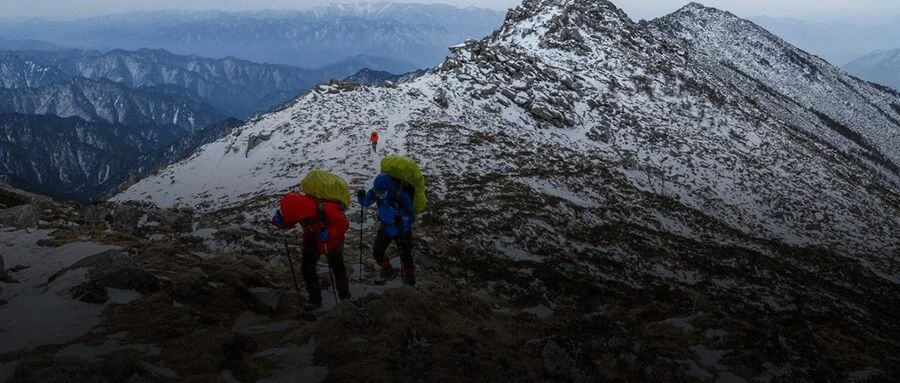
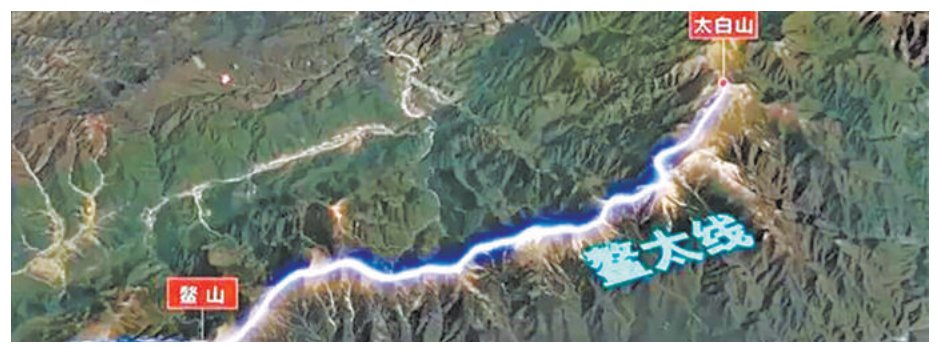
我在夺命鳌太线,见过最残忍的死法
36氪· 2026-01-24 09:09
Core Viewpoint - The article discusses the dangers of the "Ao Tai Line" in the Qinling Mountains, highlighting the high fatality rate and the challenges faced by both hikers and rescue teams [2][11][22]. Group 1: Incidents and Risks - The "Ao Tai Line" has seen over 60 deaths since its development, with memorials erected for victims [2][11]. - A recent incident involved a marathon runner who was trapped for 12 days and ultimately succumbed to hypothermia [13][20]. - The line is notorious for its deceptive accessibility, leading inexperienced hikers to underestimate its dangers [11][12]. Group 2: Rescue Operations - Rescue operations on the "Ao Tai Line" often involve large teams and advanced coordination, including helicopter support [3][25]. - Experienced rescuers must have previously traversed the line to participate in rescues, ensuring they are familiar with the terrain [25]. - The rescue process involves assessing the situation based on the last known contact and the victim's equipment, which helps determine the likely location and condition of the lost individual [26][29]. Group 3: Environmental Challenges - The unique geographical position of the "Ao Tai Line" leads to rapid weather changes, with temperature fluctuations of up to 50 degrees Celsius [20]. - The area is prone to sudden snowstorms and freezing rain, which can quickly lead to hypothermia for stranded hikers [20][21]. Group 4: Personal Experiences and Perspectives - The article features a rescuer's personal experiences, including the emotional toll of witnessing fatalities and the psychological impact of rescue missions [6][10][39]. - The rescuer reflects on the increasing number of inexperienced hikers venturing onto the line, emphasizing the need for better preparation and awareness [34][35].

冬季运动要注意哪些事项?这份安全“锦囊”请收好
Xin Lang Cai Jing· 2026-01-18 05:02
Core Insights - The article emphasizes the increasing popularity of winter sports such as skiing, ice skating, and winter swimming, while highlighting the associated safety risks in cold environments [1] Group 1: Safety Guidelines for Winter Sports - The core of protection in winter sports lies in "environment adaptation, equipment suitability, skill standardization, and emergency preparedness," with any negligence potentially leading to accidents [1] - Essential protective gear includes helmets, knee pads, and elbow pads, with beginners advised to wear hip protectors to prevent tailbone injuries [1] - In case of a collision, individuals should not rush to stand up; they must first assess for severe pain or joint dislocation before attempting to rise [1] Group 2: Eye Protection - Prolonged exposure to snow can lead to "snow blindness," caused by UV rays reflecting off the snow, resulting in corneal damage and symptoms like eye pain and blurred vision [2] - If experiencing mild discomfort without affecting vision, rest may suffice; however, severe symptoms warrant immediate medical attention [2] - It is crucial to wear high UV protection sunglasses, ideally with side protection, to shield the eyes from harmful rays [2] Group 3: Prevention of Frostbite and Hypothermia - Frostbite commonly affects extremities and initial symptoms include skin whitening and numbness, with severe cases leading to blisters or tissue necrosis [3] - Immediate action for frostbite includes moving to a warmer environment and soaking the affected area in warm water, avoiding direct heat sources [3] - Hypothermia is a critical condition that occurs when core body temperature drops below 35°C, leading to symptoms like shivering and confusion; prevention involves keeping dry and changing wet clothing promptly [4] Group 4: Emergency Response - In cases of hypothermia, it is vital to avoid rubbing the skin, as this can cause harmful substances in the blood to circulate back to the heart, potentially leading to cardiac arrest [4]
还原“鳌太线”救援始末
Xin Lang Cai Jing· 2026-01-11 08:53
Incident Overview - A tragic incident occurred on the "Ao-Tai Line," resulting in the deaths of three hikers, with the youngest being only 19 years old. This route is known for its high mortality rate among hikers [1][3] - The group of five hikers, including one female, attempted to illegally traverse the route, which is characterized by extreme weather and high altitudes [3][4] Rescue Efforts - The rescue operation began on January 3, 2023, after the families of the missing hikers reported them missing. The first rescue team was assembled shortly after midnight [3] - The rescue faced significant challenges due to the harsh weather conditions and the hikers' decision to avoid official routes [3][4] Causes of the Incident - The tragedy was attributed to a combination of ignorance and recklessness, particularly the leader's decision to switch all phones to flight mode to avoid detection by monitoring systems [4] - The extreme cold was identified as the primary cause of death, with nighttime temperatures dropping to around -20°C [6] Historical Context - Between 2012 and 2017, over 50 deaths were reported due to illegal crossings of the "Ao-Tai Line," prompting a ban on such activities in 2018 [6] - The route is known for its challenging conditions, and many hikers lack the necessary skills to navigate safely [6]
失温到底是因为穿太少还是穿太多
Xin Lang Cai Jing· 2026-01-10 16:23
Group 1 - The core viewpoint of the article discusses the misconception that hypothermia is solely caused by wearing too little clothing, highlighting a case where wearing too much clothing led to hypothermia [1] Group 2 - The article emphasizes the dilemma faced by outdoor enthusiasts during winter sports regarding appropriate clothing, balancing between wearing too little and too much [1] - It raises awareness about the risks of overheating and sweating when overdressed, which can lead to discomfort and potential hypothermia [1]
天冷玩雪赏雾凇 失温风险要注意
Xin Lang Cai Jing· 2026-01-08 00:26
Core Viewpoint - The article highlights the increasing popularity of winter tourism in Guangxi, particularly in high-altitude areas where frost and ice formations attract visitors, while also emphasizing the hidden risks of hypothermia associated with such activities [4]. Group 1: Winter Tourism Trends - The Tianhu Scenic Area in Quzhou County welcomed its first frost of 2026, drawing many tourists for photo opportunities [2]. - Many individuals are planning trips to Northeast China to enjoy snow activities, indicating a growing interest in winter tourism [4]. Group 2: Hypothermia Risks - Hypothermia can occur in any cold environment, not just in northern regions, as evidenced by incidents in southern areas like Daming Mountain [6]. - Hypothermia is categorized into three levels, with specific symptoms and necessary interventions for each stage [6]. Group 3: Safety Precautions - It is crucial to prepare adequately for winter excursions, including checking weather conditions and avoiding dangerous areas [7]. - Recommended clothing layers include moisture-wicking base layers, insulating mid-layers, and protective outer layers to combat cold and wind [7]. - Essential survival gear includes thermal blankets, high-calorie food, emergency medications, and communication devices [7]. Group 4: Self-Rescue Techniques - In case of hypothermia, individuals should seek shelter, remove wet clothing, and use thermal blankets to retain body heat [8]. - It is advised to avoid unnecessary movement in complex terrains to prevent worsening hypothermia symptoms and potential accidents [8].

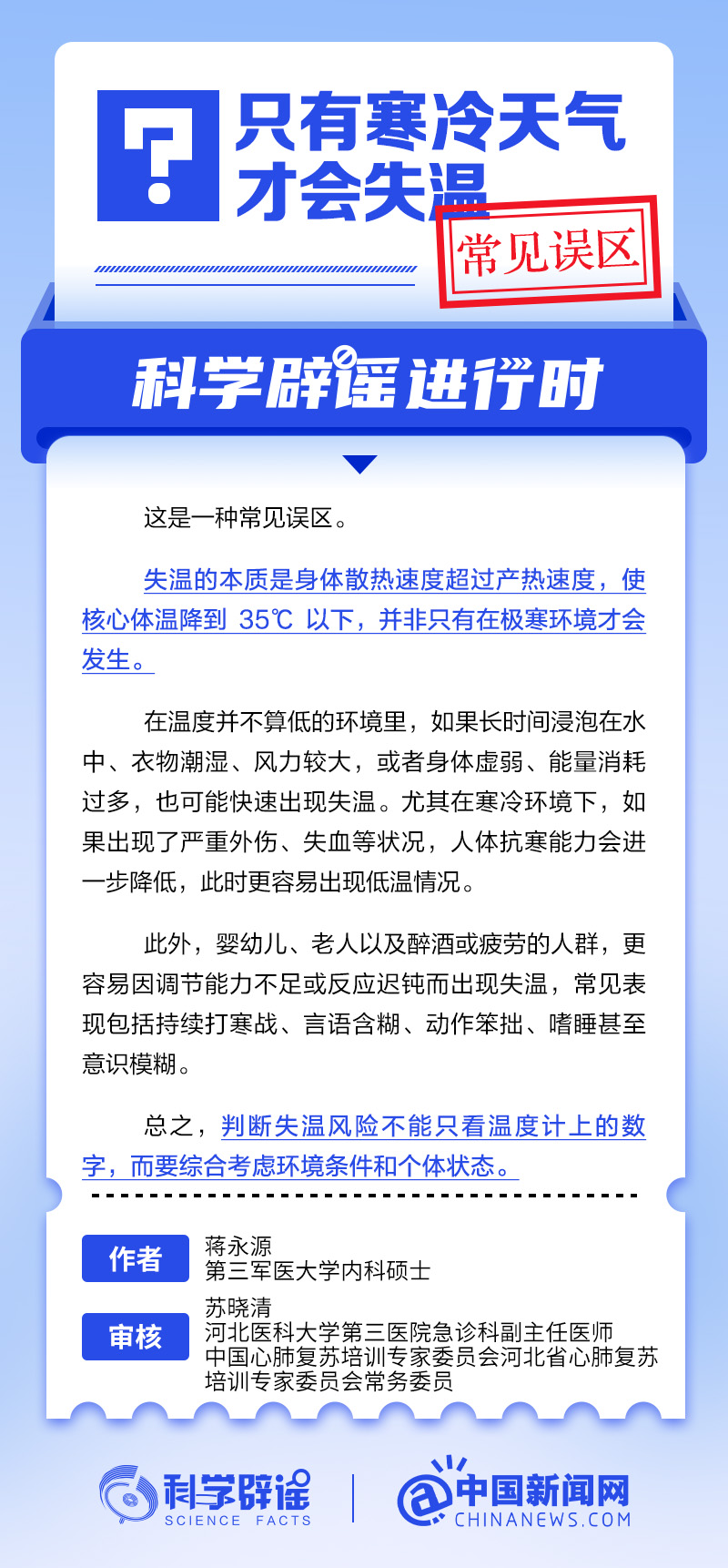
只有寒冷天气才会失温?丨中新真探
Zhong Guo Xin Wen Wang· 2025-11-12 08:31
Core Viewpoint - Hypothermia can occur not only in extremely cold environments but also in milder conditions if certain factors are present, such as prolonged immersion in water, wet clothing, strong winds, physical weakness, or excessive energy expenditure [1]. Group 1 - Hypothermia is not limited to cold weather conditions [1] - Factors contributing to hypothermia include prolonged water exposure, wet clothing, and strong winds [1] - Physical weakness and high energy consumption can also lead to rapid onset of hypothermia [1]