
套取金融机构贷款转贷

Search documents
套取银行贷款转借他人,借条被判无效
Zhong Guo Xin Wen Wang· 2026-01-15 01:15
Core Viewpoint - The case highlights the legal and financial risks associated with informal lending practices, particularly when individuals attempt to circumvent financial regulations by borrowing from banks and then lending to others, which can lead to invalid contracts and financial losses [1][4]. Group 1: Case Summary - A civil lending dispute was adjudicated by the Shenzhen Futian District People's Court, which ruled that the practice of obtaining bank loans for the purpose of relending is invalid and not protected by law [1][4]. - The lender, Qian, borrowed 160,000 yuan from a bank and lent it to Tong, who promised to pay interest. However, Tong eventually defaulted on the loan, leading to Qian's financial distress [2][3]. - Qian had to repay the bank despite not receiving the expected repayments from Tong, resulting in significant financial losses [3]. Group 2: Legal Implications - The court determined that the funds lent by Qian were not his own but derived from a bank loan, which constitutes a violation of financial regulations and disrupts normal credit order [3][4]. - The court ruled that the informal lending contract was invalid, and Tong was ordered to return over 120,000 yuan to Qian, while Qian's claims for interest were denied due to his involvement in the loan scheme [3][4]. - The ruling emphasizes the importance of adhering to legal borrowing practices and the potential consequences of engaging in informal lending arrangements that violate contractual agreements with financial institutions [4].
帮朋友“贷款”再转借,可行吗?法官解读
Xin Lang Cai Jing· 2025-12-21 08:22
Core Viewpoint - The case highlights the legal risks associated with informal lending practices, particularly when individuals attempt to circumvent financial regulations by borrowing from banks and then lending to others, which can lead to invalid contracts and financial losses [2][4]. Group 1: Case Summary - In September 2023, Tong sought financial help from his friend Qian, requesting a bank loan of 160,000 yuan, which Qian agreed to under the condition of receiving interest [1]. - After initially making repayments, Tong became increasingly negligent, ultimately refusing to repay, forcing Qian to cover the loan payments himself [1]. - Qian filed a lawsuit against Tong for the remaining principal and interest after failing to recover the funds [1]. Group 2: Court Ruling - The court ruled that the informal loan agreement was invalid because Qian's funds originated from a bank loan, which violated financial regulations [2]. - The court ordered Tong to return over 120,000 yuan to Qian, while rejecting Qian's claim for interest due to his involvement in the illegal loan scheme [3][2]. Group 3: Legal Implications - The case underscores that informal lending must adhere to legal standards, specifically that lenders must use their own funds and not engage in practices that evade financial oversight [4][5]. - The court emphasized the importance of maintaining the integrity of financial systems and warned against the risks of informal lending arrangements that could disrupt financial order [4][5].
“套现”借钱给别人,小心犯法!
Xin Hua Wang· 2025-11-22 09:12
Core Viewpoint - The practice of "cashing out" loans through platforms like Alipay and WeChat, and then lending that money to others, is illegal and can lead to the invalidation of loan contracts and potential criminal charges [1][4][5]. Group 1: Legal Implications - The Beijing Second Intermediate People's Court reported that from 2022 to September 2025, it handled 172 cases related to the illegal practice of cashing out loans, with over 70% being recognized as loan extraction and re-lending [1][3]. - Contracts formed under the practice of cashing out loans are deemed invalid, and in cases of disputes, only the principal amount may be returned without interest [5][6]. Group 2: Risk Factors - Borrowers often face financial difficulties and seek help from lenders, who may overlook legal risks due to personal trust, leading to disputes when repayments are not made [3][5]. - Lenders may engage in complex schemes involving multiple credit cards to create "time gaps" for cashing out, which complicates financial tracking and can negatively impact credit scores [4][5]. Group 3: Regulatory Recommendations - The court emphasizes the need for individuals to resist engaging in illegal lending practices and to adhere strictly to credit card usage regulations [6]. - Financial institutions and regulatory bodies are encouraged to develop comprehensive risk prevention mechanisms and improve loan management capabilities to ensure the legality of loan purposes [6].

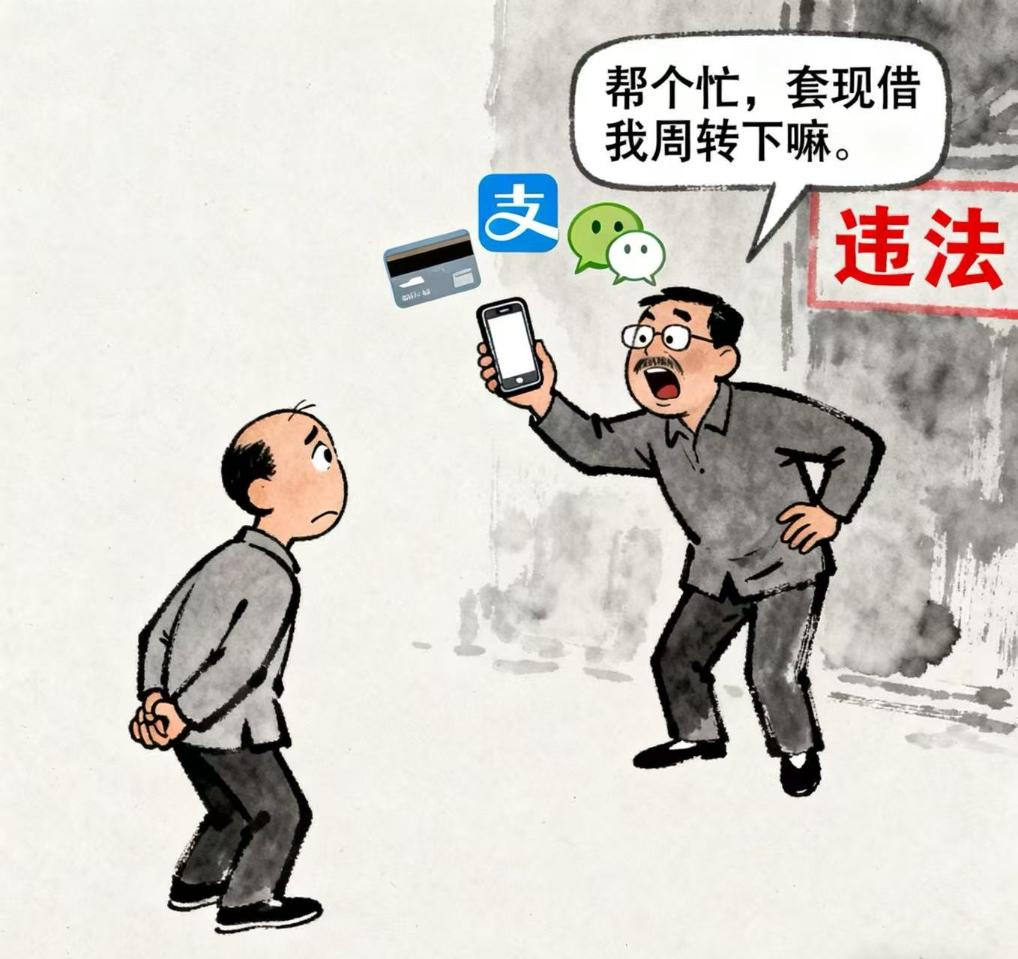
借网贷转贷赚“利息差”,法院判决无效!
Yang Zi Wan Bao Wang· 2025-10-30 06:49
Group 1 - The court ruled that borrowing funds from financial institutions to lend at a profit is invalid, as it involves using credit funds for unauthorized lending [2] - In a case where a borrower failed to repay a loan sourced from a financial institution, the court mandated the borrower to return the principal amount, emphasizing that the loan agreement was invalid [2] - The court clarified that if a civil legal act is invalid, any property obtained through that act must be returned, and interest claims by the creditor are not supported by law [2] Group 2 - The court dismissed a lawsuit regarding gambling debts, stating that such debts are illegal and not protected by law [3] - Evidence such as witness testimonies and chat records were used to determine that the debt was related to gambling, leading to the rejection of the claim [3] - The court highlighted the issue of individuals attempting to legitimize illegal debts through forged documents and emphasized strict scrutiny during legal proceedings [3]