
奢侈品二手市场

Search documents
奢侈品二手市场蓬勃发展,品牌却难以从中获利
Xin Lang Cai Jing· 2026-02-24 16:52
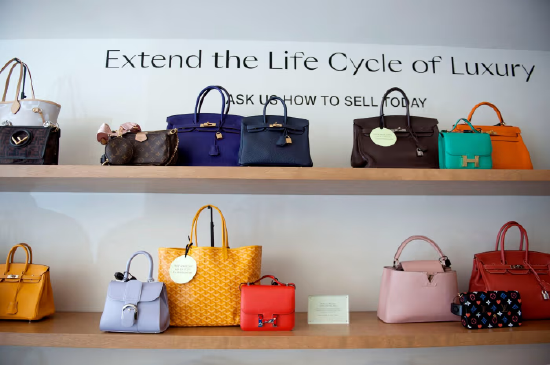
Core Insights - The luxury goods industry is facing challenges as the second-hand market reaches a critical point, with many brands uncertain about their future strategies [2][10] - The second-hand luxury market surpassed €50 billion (approximately $59 billion) last year, growing at a rate much faster than the primary market [2][10] - The scale of the second-hand market is now comparable to the total sales achieved by luxury brands through discount stores, which is their third-largest sales channel [2][10] Market Dynamics - Luxury brands maintain a fragile peace with leading second-hand platforms like Fashionphile and The RealReal, with top brands like Chanel previously using lawsuits to restrict second-hand sellers [4][12] - To avoid legal issues, second-hand sellers must limit the use of brand trademarks and cannot create the illusion of a partnership with luxury brands in their marketing [4][12] - Thousands of small second-hand sellers are emerging, making it difficult for luxury brands to control how their products are displayed on platforms like social media and C2C sites [4][12] Consumer Behavior - Since 2020, the proportion of second-hand items in consumers' wardrobes has increased by 7 percentage points, reaching 28% [4][12] - Traditional retail, rental, and subscription models are being pressured, particularly affecting high-margin products like handbags, with nearly half of Gen Z consumers purchasing bags from second-hand channels [4][12] Brand Strategies - Some luxury brands have experimented with second-hand platforms, such as Gucci's short-term collaboration with Vestiaire Collective and initiatives by Chloé and Coach to facilitate quick listings of second-hand items [6][14] - Brands like Ralph Lauren and LVMH's Rimowa have begun self-operated second-hand businesses, though on a small scale [6][14] - Rolex's certified second-hand watch program generated over $500 million in sales last year, showcasing a model where brands maintain control over operations while partnering with third-party retailers [6][14] Future Considerations - Luxury brands have historically been reluctant to engage in the second-hand market, but the growing consumer preference for second-hand goods suggests that inaction could lead to lost market share [6][14]

Gucci取消9月女装秀;爱马仕铂金包拍出天价|二姨看时尚
2 1 Shi Ji Jing Ji Bao Dao· 2025-07-14 00:08
Group 1: Industry Trends - The global fashion and luxury goods industry is experiencing diverse development, with intense capital market competition and deep brand strategy adjustments [1] - Hermes is accelerating the expansion of its Swiss watchmaking workshop to strengthen its vertical integration strategy [1][10] - Gucci has postponed its Spring/Summer 2026 women's fashion show, indicating a shift in brand strategy under new creative director Demna [1][3] Group 2: Corporate Developments - The CEO of Galeries Lafayette Group has changed, with Arthur Lemoine taking over from Nicolas Houzé [1][7] - Dynamic Treasure Group has been ordered by the Singapore High Court to return 15.5% of SMCP's shares to its parent company [1][10] - Le Coq Sportif has a new owner, with a consortium led by Swiss businessman Dan Mamane acquiring the brand [1][12] Group 3: Financial Performance - Hoka's brand popularity is declining, with a 10% growth in Q4 2025, significantly lower than previous quarters [1][8] - Hermes family has surpassed the Arnault family as the richest in France, with a wealth of €163 billion [1][5] - SMCP reported a 3.4% year-on-year increase in sales for Q1 2025, reaching €297 million [1][10] Group 4: Market Insights - The auction of Hermes' first Birkin bag prototype for €8.6 million highlights the strong growth of the luxury second-hand market [1][4] - Decathlon's acquisition of the French professional cycling team AG2R La Mondiale aims to deepen its involvement in cycling sports [1][9]
