
奶茶咖啡因含量

Search documents
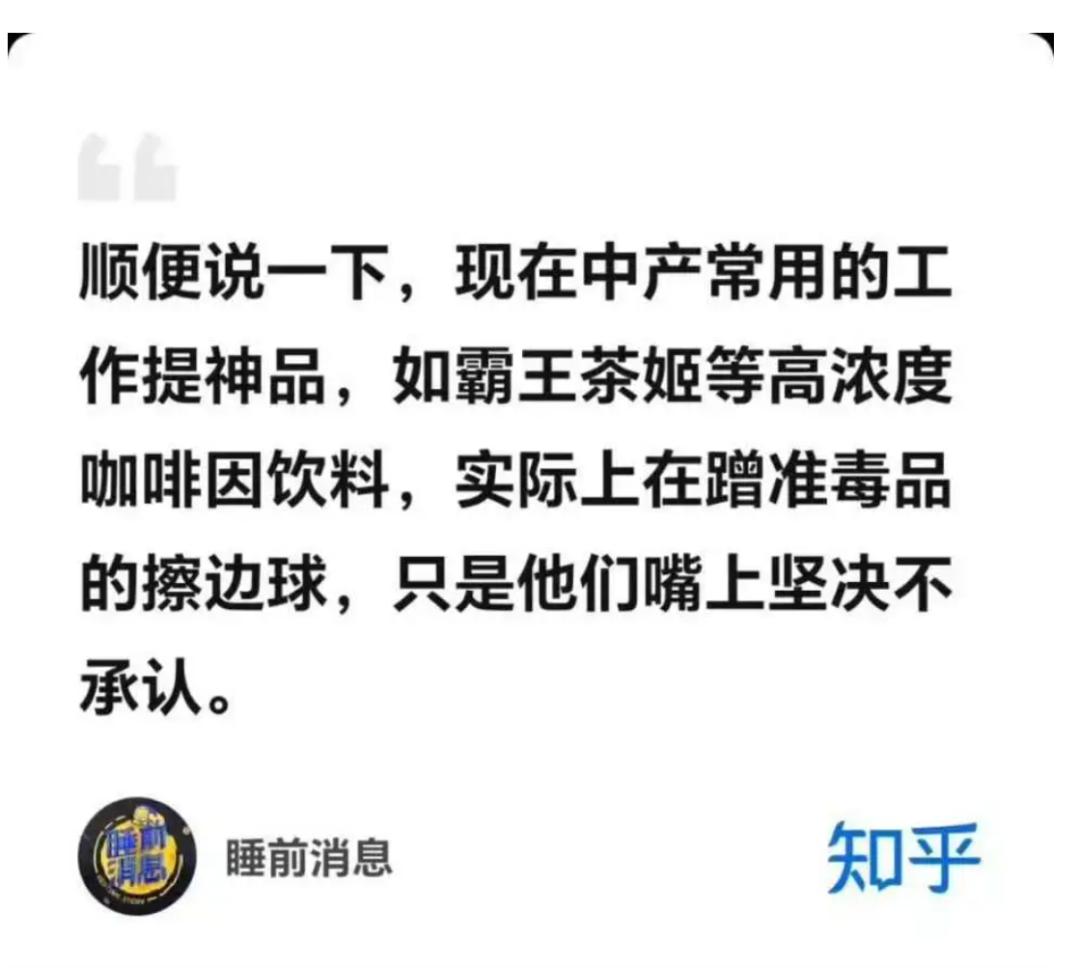
霸王茶姬“擦边毒品”是暴论,但把茶越泡越浓的奶茶确实正在让更多打工人心悸失眠?
3 6 Ke· 2026-01-04 09:05
Core Viewpoint - The controversy surrounding the caffeine content in Bawang Chaji's new milk tea products has led to significant public concern and a notable drop in the company's stock price, highlighting the growing scrutiny of caffeine levels in popular beverages [4][10][27]. Group 1: Caffeine Controversy - A popular social media post claimed that Bawang Chaji's milk tea contains high levels of caffeine, likening it to a "borderline drug" and suggesting it could lead to addiction [1][3]. - The Shanghai Narcotics Control Office had to clarify that caffeine is naturally present in tea and that Bawang Chaji's caffeine levels are within acceptable limits [3][10]. - Bawang Chaji's stock fell by 14.5%, resulting in a market value loss of approximately $200 million due to the caffeine controversy [4][10]. Group 2: Caffeine Content Comparisons - A cup of Bawang Chaji's milk tea can contain caffeine levels equivalent to 2.5 cans of Red Bull, with some drinks exceeding 200 mg of caffeine [8][10]. - The caffeine content in Bawang Chaji's drinks is significantly higher than that in traditional tea, as the preparation methods used in chain tea drinks extract higher concentrations of caffeine [20][22]. - The average caffeine content in a large cup of Bawang Chaji's popular drink, "Wanli Mulian," is around 214 mg, which is higher than many coffee beverages [10][12]. Group 3: Consumer Perception and Health Concerns - There is a growing awareness among consumers regarding the potential health risks associated with high caffeine intake, with many expressing concerns about insomnia and other side effects after consuming Bawang Chaji's products [9][10][27]. - The marketing of milk tea as a "healthy" and "natural" beverage has contributed to a lack of awareness about its caffeine content, with over 52% of consumers unaware that tea contains caffeine [27][28]. - Bawang Chaji has attempted to address these concerns by labeling caffeine content on their cups, but the information is not easily accessible to consumers [14][17].

霸王茶姬咖啡因含量遭质疑,市面上的奶茶咖啡因含量有多高?
Xin Jing Bao· 2025-12-29 04:44
Core Viewpoint - The caffeine content in bubble tea has come under scrutiny, with some varieties containing more caffeine than coffee, raising health concerns among consumers [1] Group 1: Caffeine Content in Bubble Tea - A recent survey by the Shanghai Consumer Association found that 51 varieties of bubble tea from 27 stores all contained caffeine [1] - The processing of tea leaves into concentrated tea powder results in a higher caffeine concentration [1] Group 2: Recommendations for Consumption - Consumers are advised to choose low-caffeine options and limit intake to one cup per day, preferably before 3 PM [1] - Special recommendations are made for minors, pregnant women, and breastfeeding women to either choose low-caffeine bubble tea or avoid it altogether [1]