学前教育免费

Search documents
育儿补贴、免保教费、灵活就业者权益保障......那些民生暖意 | 2025年政策回顾
Xin Lang Cai Jing· 2025-12-30 07:59
Group 1: Elderly Care and Social Support - By the end of 2024, the population aged 60 and above in China is expected to reach 310 million, accounting for 22% of the total population [21] - The "Opinions on Deepening the Reform and Development of Elderly Care Services" was released, aiming to establish a basic elderly care service network by 2029 and a mature system by 2035 [21] - The government is implementing a pilot program to provide subsidies for elderly care services, with nearly 1 billion yuan allocated for subsidies by September 2024 [22] Group 2: Rural Revitalization - The central government issued a document to deepen rural reforms and promote comprehensive rural revitalization, marking the 13th central document focused on agriculture and rural areas [23] - The monitoring and assistance mechanism identified over 7 million individuals for support, maintaining a 99% insurance coverage rate for the impoverished population [24] - Employment for the impoverished population remains stable at over 30 million, ensuring that more than two-thirds of their income is maintained [24] Group 3: Anti-Competition Measures - The government has initiated measures to combat "involution" in competition, with a focus on improving consumer environments and protecting workers' rights [25] - A new standard for food delivery platforms was introduced to address issues of competition and service transparency [26] Group 4: Urban Renewal - The Ministry of Housing and Urban-Rural Development announced plans for urban renewal projects, aiming to complete the renovation of old urban residential areas built before 2000 [27] - By November 2025, over 25,800 old urban residential areas have been renovated, exceeding the initial target of 25,000 [28] Group 5: Flexible Employment and Social Security - The government is enhancing social security coverage for flexible workers, with over 200 million individuals in this category [29] - A pilot program for occupational injury insurance for new employment forms is being expanded from 7 to 17 provinces [30] Group 6: Childcare Support - A nationwide cash subsidy of 3,600 yuan per year for childcare was introduced, expected to benefit over 28 million families [32] - From the fall semester of 2025, public kindergartens will waive fees for the last year of preschool education, impacting approximately 12 million children [34]
推动学前教育免费,背后是怎样的意图?
Hu Xiu· 2025-08-06 01:26
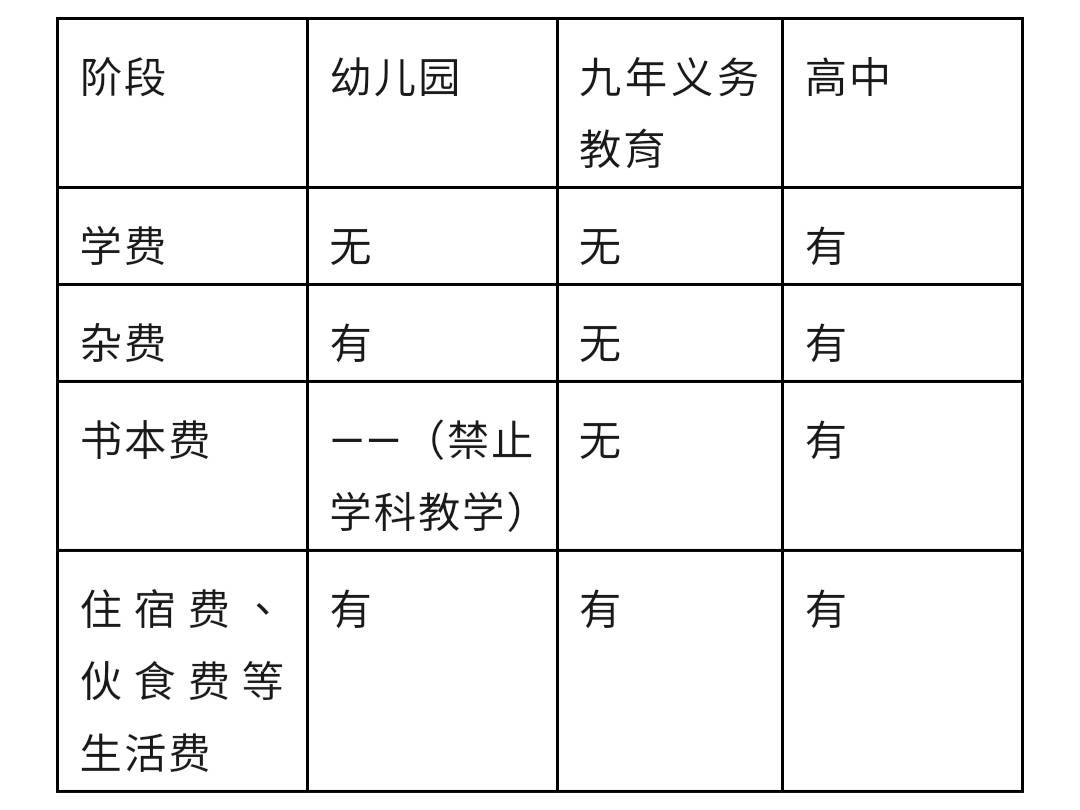
Core Viewpoint - The Chinese government has officially announced a gradual implementation of free preschool education, aiming to alleviate financial burdens on families and promote early childhood education [1][2]. Group 1: Policy Details - The new policy will exempt families from paying the "care and education fees" associated with preschool education, although costs such as meal fees, accommodation fees, and miscellaneous fees will still apply [2]. - The reform's impact on preschool education fees is expected to be comparable to the second stage of the fee structure in compulsory education, where tuition fees were eliminated but other costs remained [7]. Group 2: Historical Context - The evolution of education fees in China can be categorized into several stages, with the first stage (1986 to late 1990s) involving tuition and various fees, followed by the elimination of tuition in the late 1990s while retaining other fees [4][5]. - The current preschool education fee structure shows that while it is not as comprehensive as the nine-year compulsory education, it is significantly more favorable than the high school stage [9]. Group 3: Broader Implications - The push for free preschool education is part of a larger demographic strategy aimed at increasing birth rates and supporting families with children aged 0 to 6, which includes a yearly subsidy of 3,600 yuan for infants [10]. - The focus on early childhood education indicates a strategic shift towards enhancing population growth rather than solely improving educational quality at higher levels [13].