学历无用论

Search documents
大学无用?奥特曼辍学当了CEO,但名校生撑起了整个OpenAI
Sou Hu Cai Jing· 2026-01-26 10:50
Core Insights - The article highlights the importance of educational background in the AI industry, countering the narrative that degrees are irrelevant by showcasing the concentration of talent from prestigious universities at OpenAI [1][4][7] - OpenAI's employee distribution reveals that top universities like Stanford, UC Berkeley, and MIT contribute significantly to its workforce, indicating a strong correlation between educational pedigree and career opportunities in AI [7][9] - The competition for AI talent has escalated, with companies offering unprecedented salaries and benefits to attract top researchers, emphasizing that talent is the true competitive advantage in the AI sector [18][21][24] Educational Background - OpenAI employs 230 individuals from Stanford, 151 from UC Berkeley, and 100 from MIT, with these three institutions accounting for over 13% of the total workforce [7] - The presence of international institutions like the University of Waterloo, Tsinghua University, and Peking University in the top 20 further illustrates the global nature of AI talent [7][12] - The article suggests that while the educational background is significant, practical experience and project outcomes are ultimately more valuable in the AI field [14] Talent Competition - The AI talent war has entered a new phase, with companies like Google DeepMind reportedly offering compensation packages up to $20 million, including substantial signing bonuses [21][24] - The demand for AI talent has led to explosive salary growth for entry-level positions, making it competitive with senior roles in other industries [22] - OpenAI's resident researcher program offers competitive salaries and opportunities for formal positions, reflecting the industry's shift towards securing top talent through attractive compensation and resources [25] Industry Dynamics - The article emphasizes that the AI industry's evolution is driven by the aggregation of top talent, which creates a feedback loop that enhances innovation and application of research [26] - The narrative suggests that the competition for AI talent transcends salary, focusing on infrastructure, resource access, and visionary goals as key factors in attracting talent [24] - The findings from OpenAI's employee alma mater rankings reinforce the notion that the company's true strength lies in its ability to attract and retain top-tier AI talent rather than just its technological capabilities [24]

美国相信“学历无用论”的人变多了?
Hu Xiu· 2025-07-30 06:35
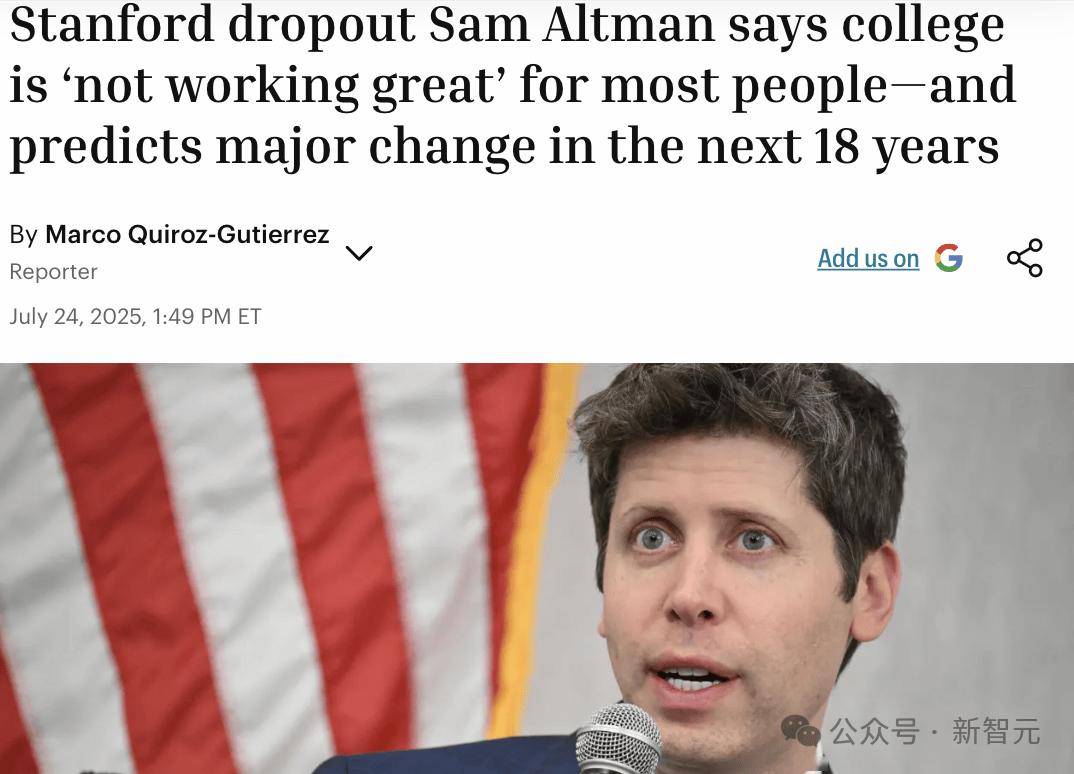
Core Insights - The article discusses the ongoing financial crisis in American higher education, highlighted by Harvard's willingness to spend up to $500 million to resolve disputes with the government, which is significantly higher than Columbia's $200 million fine [2][3]. - A Deloitte report indicates a growing skepticism among Americans regarding the value of higher education, with trust in its worth dropping from 57% in 2015 to 36% in 2024, a decrease of 21% [5][6]. Financial Challenges - Over 40 U.S. universities have closed since 2020, with 20 closures reported in 2024 alone, averaging one closure or merger per week [16][18]. - The Big Ten Conference, known for its rich resources, has reported significant operational deficits at several member institutions [17]. - A financial stress test suggests that up to 80 colleges and universities may permanently close by the end of the 2025-26 academic year [18][19]. Enrollment Trends - The decline in college enrollment is attributed to fewer students attending, particularly among white males, whose enrollment rates have dropped from 58% in 1970 to around 40% in the early 2020s [23][24]. - Total enrollment in U.S. colleges decreased from 18.1 million in 2010 to 15.4 million in 2021, with a slight increase to 15.9 million in 2024, insufficient to counteract the trend of closures and mergers [25]. Rising Costs and Spending Issues - Many universities face financial strain due to excessive spending, with nearly half of college presidents indicating that their institutions have too many academic programs [29]. - Rising operational costs limit universities' ability to innovate and adapt, leading to budget cuts in various areas, including academic programs and staff salaries [33][31]. Shift Towards Vocational Education - Only 47% of Americans believe a four-year degree is worth pursuing without loans, dropping to 22% when loans are involved [37]. - Enrollment in vocational community colleges increased by 16% from 2022 to 2023, indicating a shift towards practical skills training [39]. - The number of apprentices in the U.S. has more than doubled in the past decade, with significant income growth for skilled trades [41]. Institutional Collaboration - The concept of "systemness" is emerging, emphasizing collaboration among universities to share resources and improve financial health [60][62]. - Examples include cross-registration programs and shared resources among institutions, which have increased student participation in collaborative courses by 21.5% [68]. Leadership and Resilience - The leadership turnover rate in U.S. universities has reached over 20%, reflecting the challenges faced in maintaining stability during financial crises [72]. - Harvard's president has shown resilience in navigating financial pressures while advocating for academic freedom and institutional integrity [74][76].