宏观流动性环境

Search documents
Vatee:顶级大户审慎面对比特币 14% 反弹
Xin Lang Cai Jing· 2026-02-12 13:08
Core Insights - Bitcoin experienced a significant "stress test," rebounding 14% from a recent low of $60,130 to touch $72,000, yet professional traders have not shown a clear bullish shift, indicating deep uncertainty in the current macro liquidity environment [1][3] Group 1: Market Dynamics - A notable decline in leverage demand marks an important sign of the market entering a cooling period, with Binance's long-short ratio dropping from 1.93 to 1.20, and OKX's ratio falling from a peak of 4.3 to 1.7 after a $1 billion forced liquidation [1][3] - The volatility in these metrics is attributed more to a systemic clearing of excessive leverage rather than active bearish sentiment from investors, suggesting that the deleveraging process, while painful, is building a healthier and more resilient price foundation for the market [1][3] Group 2: Institutional Fund Flows - The spot ETF market recorded a net inflow of $516 million, effectively curbing the previous negative outflow trend [2][4] - Prior outflow pressure of $2.2 billion is likely linked to a collapse of an Asian fund that utilized cheap yen financing for cross-asset leveraged trading, indicating that such non-crypto related selling pressure tends to have a significant short-term impact but weak sustainability [2][4]
锡:锡市供应偏紧与需求分化下的博弈
Xin Lang Cai Jing· 2025-11-20 11:47
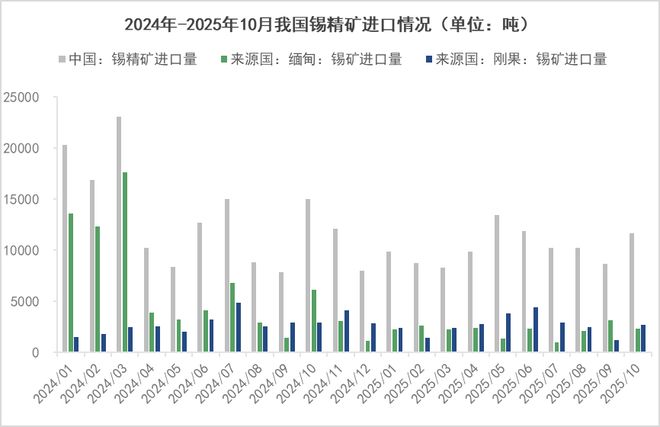
Core Insights - Since 2025, the global tin market has exhibited characteristics of "high volatility and long-term improvement" due to supply disruptions, demand differentiation, and macro policy adjustments [1] - Tin's strategic value continues to be highlighted as a key material in high-end manufacturing sectors such as semiconductor packaging and new energy [1] Supply Side - The global tin supply is characterized by "marginal easing but overall tightness," with the main increase coming from the resumption of tin mining in Myanmar [4] - After implementing a resumption plan, imports of tin from Myanmar to China have remained stable, alleviating some raw material shortages for smelters [4] - Domestic refined tin production is expected to see a month-on-month increase due to the recovery of large smelting plants in Yunnan, although overall production improvement may be limited due to tight supply conditions [4] Demand Side - There is a clear differentiation in demand, with "traditional weakness and emerging strength" [6] - Traditional consumption areas are under pressure, with domestic mobile phone shipments declining slightly from January to August, leading to low inventory replenishment intentions among soldering material companies [6] - However, robust demand from new energy vehicles and lithium batteries is expected to maintain positive growth in overall tin demand, gradually offsetting the decline in traditional consumption [6] - Low inventory levels further strengthen price support, with global visible tin inventory at a relatively low median level [6] Macro Environment - The macro environment provides significant support for the tin market, with the Federal Reserve having cut interest rates twice this year, and market attention on potential further cuts in December [6] - The consensus reached in China-US trade negotiations has alleviated uncertainties arising from global trade friction [6] - A joint plan from eight departments in China has identified tin as a key strategic resource for support, with ongoing policy benefits being released [6] Market Outlook - The current tin market is in a phase of "supply tightness improvement, demand structure upgrade, and favorable macro environment" [6] - In the short term, the supply tightness from Myanmar's resumption and traditional demand weakness will create a tug-of-war, with tin prices expected to fluctuate between 270,000 to 310,000 yuan per ton [6] - Key factors to monitor include the progress of Myanmar's resumption, actual downstream consumption, and changes in domestic and international macro policies [6]