客户全生命周期价值

Search documents
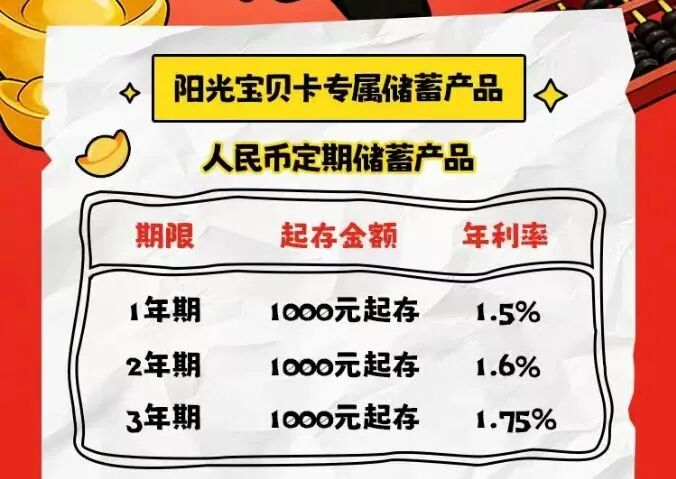
各大银行盯上了压岁钱:孩子存1000元,比你存20万利息高
Mei Ri Jing Ji Xin Wen· 2026-02-27 00:26
Core Insights - The article discusses the emerging trend of banks offering higher interest rates on children's savings accounts compared to traditional adult deposit products, indicating a strategic shift in the banking sector towards targeting the youth market [1][2][3]. Group 1: Interest Rate Dynamics - Beijing Rural Commercial Bank's "Sunshine Baby Card" offers a three-year interest rate of 1.75%, surpassing both the bank's standard fixed deposit rates and high-value time deposit rates [1][2]. - This "interest rate inversion" phenomenon, where children's small deposits yield higher rates than adult large deposits, is becoming a common strategy among banks to attract young customers [2][3]. Group 2: Strategic Implications - Industry experts suggest that this trend represents a long-term investment in customer lifetime value, as banks aim to establish emotional connections with young clients who will have a financial lifecycle of 50 to 60 years [3][7]. - The strategy allows banks to optimize their liability structure and manage liquidity more effectively, as children's savings typically have long retention periods and lower transaction frequencies [3][7]. Group 3: Product Offerings and Market Segmentation - Different types of banks are creating tailored product matrices to capture the significant market of "lucky money" from the Chinese New Year, focusing on specialized accounts, unique deposits, and parent-child co-management [4][5][6]. - State-owned banks leverage their comprehensive financial services to create one-stop solutions for financial management and education, while joint-stock banks emphasize differentiated account features and service experiences [4][5]. Group 4: Long-term Relationship Building - The shift towards children's financial products is seen as a transition from merely attracting deposits to building long-term relationships with families, allowing banks to access a broader range of financial needs within households [7][8]. - Successful examples include banks like China Merchants Bank and Beijing Bank, which have reported significant growth in their child account customer bases, indicating the effectiveness of this strategy in establishing family financial connections [8]. Group 5: Future Directions - Analysts recommend that banks expand their children's financial services within compliance frameworks, enhancing product offerings and integrating financial literacy education to create a comprehensive service ecosystem [9]. - The focus should be on transforming "lucky money" into a child's first financial asset, emphasizing the importance of financial education and responsible management of funds [9].





冲刺1.3万辆目标,质子汽车2026年怎么干?| 头条
第一商用车网· 2026-01-08 05:39
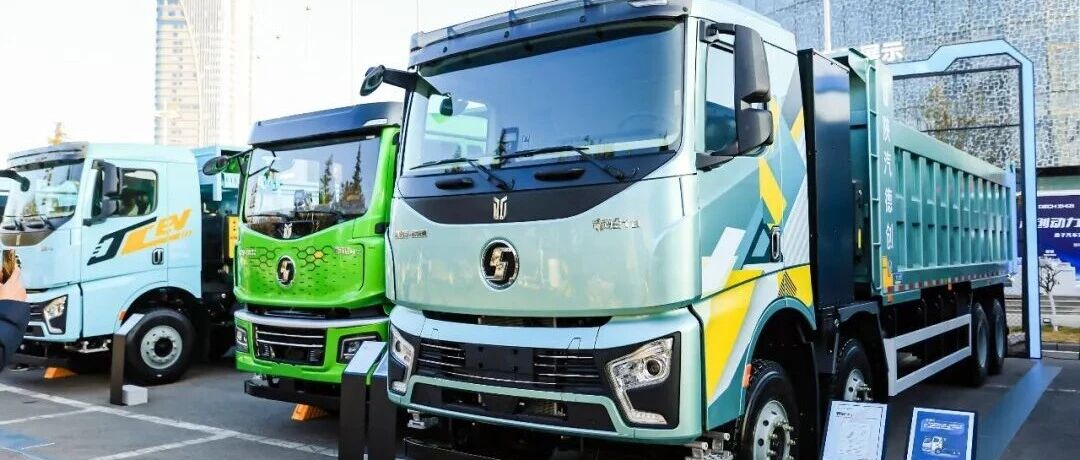
Core Viewpoint - The article emphasizes that 2026 marks a pivotal year for the new energy commercial vehicle industry, transitioning from "policy-driven" to "product-driven" strategies, with Proton Auto aiming to enhance its market competitiveness through a clear strategic roadmap [1][2]. Group 1: Industry Transition - The new energy heavy truck industry is evolving from a "market-driven" phase to a "product-driven" phase, where companies must not only meet customer needs but also lead and create demand to maximize customer lifetime value [2][3]. - Proton Auto's chairman highlighted the importance of this transition, indicating that the company is prepared to reshape its competitive logic around product-driven strategies [3]. Group 2: Performance and Growth - In 2025, Proton Auto achieved impressive results, with annual sales exceeding 8,000 units and a 357% year-on-year growth in pure electric models, expanding its product reach to 163 cities in China and making inroads into international markets [5]. - The company aims to increase its sales target to 13,000 units in 2026, building on a quarterly sales growth of 294% in 2025 [8]. Group 3: Strategic Development - Proton Auto's development philosophy for 2026 includes four key principles: "looking up at the stars, being practical, not being too big, and setting sail" [7]. - The company plans to enhance its marketing system through systematic upgrades in channel ecology, regional operations, incentive systems, and product matrix [10][12]. Group 4: Research and Innovation - The focus of research and development at Proton Auto is on five dimensions: intelligence, safety, reliability, efficiency, and comfort, with an emphasis on maximizing customer lifetime value [14]. - The company is transitioning towards a software-defined heavy truck era, where software differentiation will become a key competitive factor as hardware becomes more homogeneous [13][16]. Group 5: Future Outlook - Proton Auto is preparing for a market where the penetration rate of new energy heavy trucks is expected to exceed 35% and sales reach 300,000 units by 2026, positioning itself to leverage technological density and systemic resilience [20].