对标苹果

Search documents
东极定位王博:小米高端化的关键在于对标苹果
Sou Hu Wang· 2025-10-22 09:20
Core Viewpoint - Xiaomi's high-end strategy has sparked industry attention, with recent sales of 1 million units of the Xiaomi 17, despite skepticism from brand experts regarding its technological capabilities and brand image [1][20]. Group 1: Xiaomi's Strategic Evolution and Missteps - Xiaomi has been known for its user experience, innovative marketing, and high performance at competitive prices since its inception [6]. - The brand initially had a clear strategy of benchmarking against Apple, which helped elevate its brand recognition [8]. - However, from 2013 to 2014, Xiaomi shifted its focus towards market share and cost-effectiveness, moving away from its strategy of directly challenging Apple [12][20]. Group 2: Comparison with Huawei - Huawei's success in the high-end market is attributed to its consistent strategy of benchmarking against Apple, which helped establish a strong high-end image in consumers' minds [5][13]. - Unlike Xiaomi, Huawei maintained a clear competitive stance, emphasizing its technological advantages over Apple, which allowed it to capture significant market share [10][15]. - The contrast between Xiaomi and Huawei highlights the importance of strategic positioning in achieving business success [3][5]. Group 3: Strategic Insights for Xiaomi - Xiaomi's challenges in the high-end market stem from a lack of sustained commitment to its original strategy of benchmarking against Apple, rather than a deficiency in technology or resources [20][24]. - The company needs to reassess its high-end strategy and reaffirm its commitment to benchmarking against Apple to overcome current challenges [28]. - The case of Xiaomi serves as a reminder that strategic continuity and courage are essential for building a strong national brand [24][28]. Group 4: Opportunities for National Brands - The current era presents significant opportunities for national brands, with increasing expectations for them to challenge international competitors [25]. - Companies should focus on differentiating their concepts and capturing consumer mindshare through strong branding [27]. - Concentrating resources on key competitive areas is crucial for success, as demonstrated by Huawei's approach in the high-end market [27].



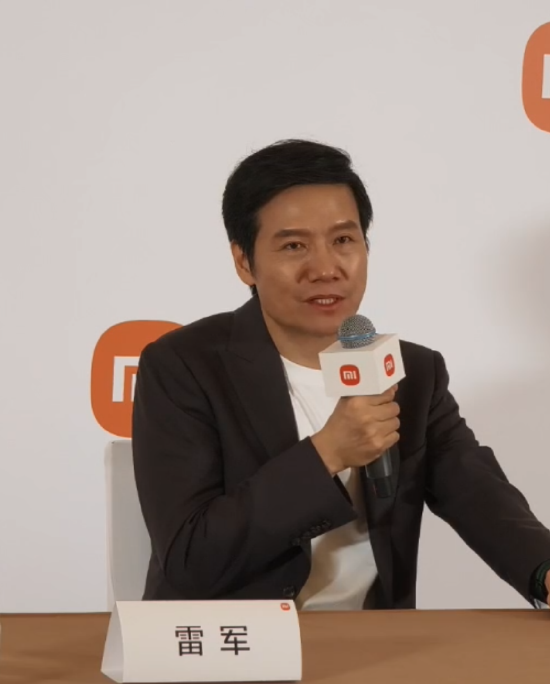
对标iPhone,雷军回应为何小米16改名小米17
Xin Lang Ke Ji· 2025-09-26 06:59
Core Viewpoint - Xiaomi's CEO Lei Jun emphasized the company's ambition to redefine its smartphone brand through the renaming of the Xiaomi 16 to Xiaomi 17, aiming to challenge the perception of Xiaomi as merely a follower in the industry [1]. Group 1: Brand Strategy - The renaming of the Xiaomi 16 to Xiaomi 17 is intended to encourage a fresh recognition of Xiaomi smartphones and express the company's determination to compete with the world's leading brands [1]. - Lei Jun expressed surprise at the public reaction to the renaming, attributing it to a long-standing, rigid perception of Xiaomi after 15 years in the smartphone market [1]. Group 2: Product Development - The Xiaomi 17 is described as a generational upgrade with significant improvements, claiming to surpass many features of the iPhone 17 series [1]. - Lei Jun highlighted the company's journey from following competitors to achieving a product that can now exceed Apple's offerings, showcasing a shift in Xiaomi's product development strategy [1].
雷军不跟安卓玩了,小米17系列副屏主打差异化,全面对标苹果
Sou Hu Cai Jing· 2025-09-17 00:24
Group 1 - The core point of the articles is that Xiaomi has renamed its upcoming smartphone series from Xiaomi 16 to Xiaomi 17 to directly compete with Apple, indicating a strategic shift in its branding approach [1][3] - Lei Jun, the CEO of Xiaomi, explicitly stated that the renaming is aimed at "competing head-on with Apple," showing the company's ambition to differentiate itself in the market [1] - The decision to rename the series reflects Xiaomi's intention to move away from the Android ecosystem and take a more aggressive stance against Apple, highlighting its willingness to take risks for differentiation [1]