产品差异化

Search documents
靠拯救打工人的“废腰”,他们赚了20个亿
虎嗅APP· 2026-02-02 10:49
Core Viewpoint - The article discusses the journey of a Chinese ergonomic chair brand, Xihou, which has successfully transitioned from a low-end market focus to a high-end brand, emphasizing the importance of product differentiation and strategic market choices in the context of international expansion [5][7][17]. Group 1: Company Development and Strategy - Xihou was founded in 2010 by Luo Huiping, who initially focused on the office chair market, achieving nearly 2 billion yuan in revenue and expanding to nearly 200 stores nationwide [5]. - The company made several unconventional choices, such as shifting from B2B to online sales and later focusing on high-end products while cutting off low-end offerings that contributed 70% of revenue but were not profitable [6][14]. - The decision to go international was driven by the need for structural change rather than simple expansion, with overseas business now accounting for nearly 40% of total revenue [5][6][21]. Group 2: Product Differentiation and Market Positioning - Xihou's shift to product differentiation began after facing intense price competition, leading to a focus on unique product features and design starting in 2015 [12][15]. - The company adopted a high-end pricing strategy, with main products priced above 500 yuan, while competitors remained below 200 yuan [18]. - R&D investment increased significantly, with the team expanding from a few members to over 100, reflecting a commitment to developing innovative products that stand out in the market [19]. Group 3: International Expansion and Challenges - Xihou entered the cross-border e-commerce market in 2018, experiencing significant growth during the pandemic, with domestic revenue increasing by over 35% and overseas revenue by over 50% [23]. - The company faced challenges in the U.S. market due to intense competition and consumer preferences that favored lower-priced products, prompting a strategic focus on the European market where quality is prioritized [25][30]. - Xihou's overseas revenue structure shows that Europe accounts for about half of its international sales, with a strategy of direct-to-consumer sales in Europe and B2B partnerships in developing countries [31][32]. Group 4: Shift Back to Offline Retail - After years of focusing on e-commerce, Xihou is now expanding its offline presence with a goal of opening over 1,000 experience stores across China [36]. - This shift aims to enhance customer experience, as ergonomic products require personal interaction for effective sales [36]. - The company has already established nearly 200 offline stores in China, with offline sales contributing over 10% to domestic revenue [38]. Group 5: Future Opportunities and Challenges - Xihou recognizes the need to build brand strength in Europe, where it competes with established high-end brands, and is focusing on product quality and storytelling to enhance brand perception [43]. - Talent acquisition has become increasingly competitive, with rival companies attempting to lure away Xihou's employees, prompting the company to emphasize its values and mission to attract and retain talent [44]. - The company sees significant growth potential in addressing unmet consumer needs in ergonomic products, suggesting that there are still billions of yuan in opportunities to explore [45].


9个月卖了661亿,鸣鸣很忙率先抢滩港交所,年货节成量贩零食下半场首战
3 6 Ke· 2026-01-07 04:13
Core Insights - The Hong Kong Stock Exchange has approved Hunan Mingming Henmang Commercial Chain Co., Ltd. to become the first "bulk snack stock" in Hong Kong, marking a significant milestone for the company [2] - Mingming Henmang achieved a retail sales volume (GMV) of 66.1 billion RMB in the first nine months of 2025, a year-on-year increase of 74.5%, surpassing the total for 2024 [2] - The company plans to expand its market presence by launching strategic alliances and exploring investment opportunities to strengthen its market position [9] Company Performance - For the first nine months of 2025, Mingming Henmang reported revenues of 46.371 billion RMB, a 75.2% increase year-on-year, and an adjusted net profit of 1.81 billion RMB, up 240.8% [2] - The company has seen explosive growth in store numbers, increasing from 6,585 to 19,517 between 2023 and September 2025 [4] - The adjusted net profit has grown from 0.81 billion RMB in 2022 to 9.13 billion RMB in 2024, reflecting a compound annual growth rate of 234.6% [3] Industry Dynamics - The bulk snack industry is entering a critical phase of consolidation, with major players like Mingming Henmang and Wancheng Group merging to enhance competitive strength [3] - The industry is facing challenges as the period of rapid expansion is coming to an end, with a scarcity of quality locations becoming a common issue [7] - The focus is shifting towards "refined management," emphasizing store, product, and supply chain upgrades, with product differentiation becoming a key competitive strategy [8] Market Outlook - The retail market for food and beverages in China is projected to grow from 7.1 trillion RMB in 2024 to approximately 8.7 trillion RMB by 2029, with a compound annual growth rate of about 4.3% [10] - The entry of capital into the market is expected to intensify competition between leading brands, as both Mingming Henmang and Wancheng Group are pursuing listings on the Hong Kong Stock Exchange [8][11]
钟薛高“种树”,认养一头牛“乘凉”
3 6 Ke· 2025-12-30 02:50
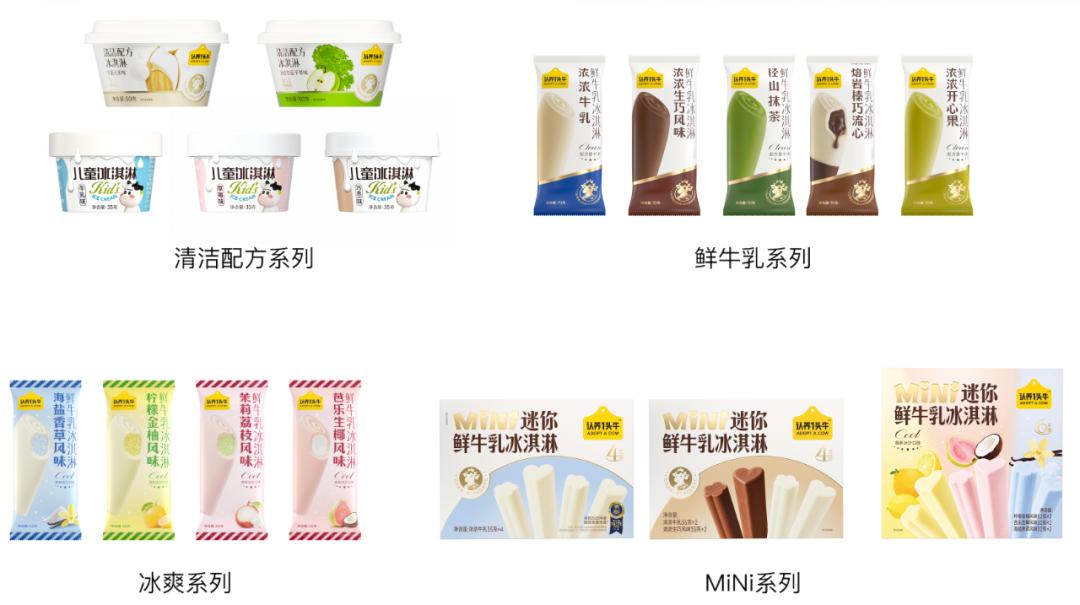
Core Insights - The article discusses the recent developments in the ice cream market in China, particularly focusing on the brand "Raising a Cow" and its product innovations, as well as the challenges faced by the brand "Chongxuegao" [1][3][24] Product Innovations - "Raising a Cow" launched a new series of ice creams in December 2026, including clean formula series, fresh milk series, refreshing series, and mini sharing packs [1] - The brand introduced a "children's ice cream" series in March 2024, which has seen significant sales, surpassing 10 million cups since its launch [3] - Other products like the matcha fresh milk ice cream sold 140,000 units in its first week, and the lychee ice cream reached a sales volume of 1 million units within a month, aided by media exposure [3] Market Dynamics - Three years ago, "Chongxuegao" was a leading brand in the ice cream sector, known for its strong marketing and innovative products, which set a precedent for other brands [3][16] - The emergence of "Chongxuegao" has contributed to the mid-to-high-end positioning of domestic ice cream brands in China [8][16] Strategic Decisions - "Chongxuegao" faced challenges due to strategic missteps, including product and channel mismatches, which led to its decline [7][21] - The brand's marketing strategies and product innovations have significantly influenced the ice cream market, despite its current struggles [8][24] Competitive Landscape - "Raising a Cow" has learned from "Chongxuegao" by redefining ice cream products, focusing on children's ice cream and emphasizing quality ingredients and clean labels [18][20] - The pricing strategy of "Raising a Cow" is positioned between 5-10 yuan, avoiding the pitfalls of being a "price killer" in the market [21][23] Consumer Insights - "Raising a Cow" has engaged with over 10,000 users to gather insights on children's ice cream preferences, leading to the development of products that meet consumer demands for health and safety [20][21] - The brand's focus on quality and safety resonates with family-oriented consumers, similar to the target audience of "Chongxuegao" [20][21] Distribution Strategy - "Raising a Cow" has established a presence in both e-commerce and offline channels, including partnerships with platforms like Hema and Dingdong Maicai, while avoiding aggressive expansion [23] - The brand's sales performance has been strong, with significant growth in e-commerce, particularly during promotional events [23]
中信证券:胶原蛋白注册证虽增未满 当前产业仍处红利期
智通财经网· 2025-12-30 01:04
Core Insights - The collagen market is experiencing strong consumer demand and awareness, with a current industry growth phase [1][2] - The number of registered products is increasing, but the supply is not yet fully meeting consumer demand, indicating a continued industry opportunity [1][2] - In the medium term, brands with strong product differentiation will be more competitive, relying on materials and technology [1][2] - Long-term competition will shift towards a combination of product, channel, and marketing strengths [1][2] Demand Perspective - Consumers have a strong recognition of collagen, leading to robust demand [1][2] - The aesthetic medicine injection market in China is projected to reach approximately 26.8 billion yuan in 2024, with a year-on-year growth of 26.4% [2] - The collagen product segment is expected to grow at a CAGR of 50.7% from 2024 to 2028 [2] Supply Perspective - The number of registered certificates for natural and recombinant collagen is on an upward trend, with a total of 10 certificates approved for 7 companies [3][4] - The current supply of collagen products is limited, with high prices and insufficient market penetration [2][4] - The market is expected to develop a product tier system with high (>10,000 yuan), medium (4,000-6,000 yuan), and low (500-2,000 yuan) price points to cater to diverse consumer needs [2] Product Differentiation - New products are expected to innovate around materials, indications, and concentrations, leading to differentiated pricing [4] - The majority of registered products are I-type collagen, with a focus on non-crosslinked and crosslinked types [3][4] - Future developments will likely focus on unique types and amino acid sequences, enhancing product differentiation [5] Market Dynamics - The industry is currently in a growth phase, with opportunities for companies to capture market share through innovation and strategic positioning [7] - Companies with strong R&D capabilities and marketing strategies are likely to succeed in the competitive landscape [7] - The market is anticipated to see an increase in registered products, enhancing the variety of indications and price tiers available [7]

对话小熊电器海外事业部市场负责人钟宛芸:小家电品牌出海,如何用差异化对抗同质化和价格战?
Xin Lang Cai Jing· 2025-12-26 12:23
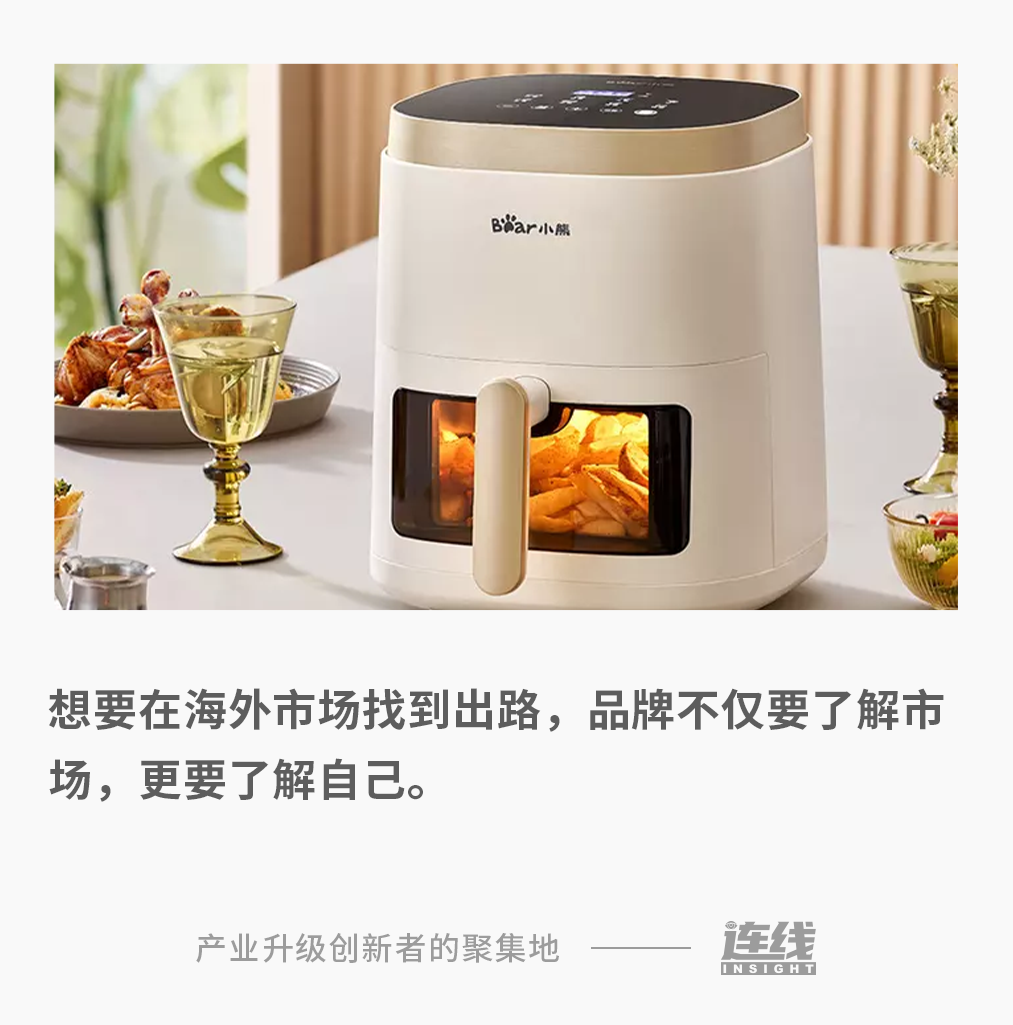
Core Viewpoint - The "going abroad" strategy has become a new growth avenue for many Chinese home appliance brands, particularly in the small appliance sector, which is characterized by shorter R&D cycles and closer alignment with daily life scenarios [28][29]. Group 1: Opportunities and Challenges in Overseas Markets - Small appliance brands face significant challenges when entering overseas markets, including competition from local brands with supply chain advantages and established international giants [33][34]. - The shift in family structures in markets like Vietnam presents opportunities for small appliances, such as the demand for smaller rice cookers due to the transition from multi-generational households to smaller family units [34][36]. - The use of social media platforms like TikTok, which has 60 million daily active users in Vietnam, is crucial for marketing small appliances effectively [36][38]. Group 2: Differentiation Strategies - Companies must focus on product differentiation by understanding local consumer habits and preferences, leading to tailored product offerings [34][38]. - Small Bear Electric has successfully introduced a small-capacity rice cooker in Vietnam, addressing the needs of younger families [34][36]. - The company has also innovated in product materials and features based on local lifestyle needs, which has helped it gain market share in a competitive environment [38][40]. Group 3: Marketing and Sales Channels - The company employs a flexible distribution model, often using a dealer tray approach to adapt to local market conditions [40]. - Initially focusing on offline sales, the company shifted to online marketing strategies after recognizing the challenges of the local offline market [40][41]. - The company tracks market share as a key performance indicator, aiming for significant results rather than immediate profits [41][42]. Group 4: Product Development and Market Research - Before launching new products, the company conducts thorough market data analysis, utilizing third-party research and sales data to inform product development [41][42]. - Local teams, including country managers and local employees, are engaged in the product development process to ensure alignment with market needs [42][44]. - A successful example of product differentiation is the slow cooker, which caters to local dietary preferences and has achieved significant sales in Vietnam [44][45]. Group 5: Future Market Potential - Emerging markets such as Southeast Asia present high potential for categories like baby products, driven by population growth [50]. - Companies are encouraged to define their strategic goals clearly before entering new markets, which will influence resource allocation and organizational structure [50][51]. - The competitive landscape in developing countries necessitates a focus on brand differentiation and quality rather than competing solely on price [51].

龙蟠科技:公司已于8月21日发布2025年向特定对象发行A股股票预案
Zheng Quan Ri Bao Wang· 2025-12-17 13:41
Core Viewpoint - Longpan Technology (603906) is actively pursuing a capital increase plan to fund high-performance phosphate-based cathode material projects, indicating a strategic focus on expanding production capacity and enhancing competitiveness in a challenging market environment [1] Group 1: Capital Increase and Project Plans - The company announced a plan on August 21 to issue A-shares to specific investors, with the aim of raising funds for two major projects: an 110,000-ton high-performance phosphate-based cathode material project in Shandong and an 85,000-ton project in Hubei [1] Group 2: Cost Control and Supply Chain Strategy - To manage costs, the company is implementing a vertical integration strategy, including a 40,000-ton lithium carbonate smelting project in Yichun, Jiangxi, to secure raw material supply [1] - The company is also adopting a demand-driven procurement strategy to minimize inventory impairment risks [1] Group 3: Market Position and Strategy - The industry is currently at the bottom of the cycle, and the company plans to enhance its competitiveness through internationalization strategies and product differentiation [1]

蓝宝科技呼吁 GPU 制造商放宽限制,赋予板卡设计更大自主权
Huan Qiu Wang Zi Xun· 2025-12-16 02:59
Core Viewpoint - The public relations manager of Sapphire Technology, Ed Crisler, urges GPU manufacturers like AMD to relax design restrictions to foster innovation among board partners and promote differentiation in the graphics card market [1][4] Group 1: Current Market Conditions - Sapphire, as an exclusive board partner of AMD, faces long-term constraints on market performance and product lines due to the technical conditions imposed by chip manufacturers [1] - Similar restrictions are also faced by board partners of NVIDIA, indicating a broader industry issue [1] Group 2: Call for Innovation - Ed Crisler emphasizes the need for chip manufacturers to grant more freedom by only providing core chips, memory, and necessary parameters for motherboard compatibility, allowing partners to handle the design work [4] - The current performance difference between factory-overclocked GPUs of the same level is only 1.5% to 2%, leading consumers to focus more on aspects like cooling design, PCB layout, power supply solutions, noise control, and after-sales service [4] Group 3: Limitations on Design - Despite some optimization possibilities in areas like cooler replacement and layout adjustments, strict design limitations still hinder innovation potential in user experience and industrial design [4] - Crisler expresses hope that chip manufacturers will further relax restrictions, enabling brands to stand out in design and offer consumers more diverse choices [4]



周专题:PVH集团FY2025Q3营收同比增长2%,中国业务表现优异
GOLDEN SUN SECURITIES· 2025-12-07 08:24
Investment Rating - The report maintains a "Buy" rating for key companies such as Shenzhou International and Huali Group, with specific price-to-earnings (PE) ratios projected for 2026 [9][38]. Core Insights - The textile and apparel industry is experiencing a weak recovery in the Chinese consumer market, while the U.S. and European markets show steady growth. The overall industry inventory is considered healthy, with expectations for upstream order growth driven by stable downstream replenishment [31][32]. - The report highlights the strong performance of direct-to-consumer (DTC) channels in the Asia-Pacific region, particularly in China, where DTC revenue growth is driven by e-commerce [18][23]. - Key investment themes include a focus on high-quality stocks in apparel manufacturing, brand apparel with stable growth or reversal logic, and strong alpha candidates in the gold and jewelry sector [21][22][33]. Summary by Sections Weekly Topic - PVH Group reported a 2% year-over-year revenue increase for FY2025Q3, reaching $2.294 billion, with a notable decline in gross margin due to increased tariffs and a challenging promotional environment [1][14]. Regional Performance - Asia-Pacific: FY2025Q3 revenue decreased by 1% year-over-year, but DTC business showed low single-digit growth, particularly in China [18][23]. - EMEA: Revenue grew by 4% year-over-year, but DTC and wholesale businesses faced declines due to a weak consumer environment [23]. - Americas: Revenue increased by 2%, driven by adjustments in the women's product line, although direct sales faced challenges [23]. Investment Themes - **Apparel Manufacturing**: Recommendations include Shenzhou International (PE of 12x) and Huali Group (PE of 18x), with expectations for improved core customer orders in 2026 [21][31]. - **Brand Apparel**: Focus on companies like Tmall and Anta Sports, with PE ratios of 15x and 16x respectively, and a recommendation for Bosideng (PE of 14x) [21][32]. - **Gold and Jewelry**: Companies like Chow Tai Fook and Chow Hong Ki are highlighted for their strong product differentiation and brand strength, with PE ratios of 17x and 21x respectively [22][33]. Recent Reports - The report emphasizes the importance of maintaining a long-term perspective in the apparel manufacturing sector, with expectations for revenue growth exceeding 10% CAGR from 2025 to 2026 for Shenzhou International [34][38].




六福集团(00590)发盈喜 预期中期溢利同比上升约 40%至 50%
智通财经网· 2025-11-20 11:19
Core Insights - The company, Luk Fook Holdings (00590), expects a revenue increase of approximately 20% to 30% for the six months ending September 30, 2025, compared to the same period last year, driven by effective product differentiation and sales strategies that significantly boosted the sales of priced jewelry products [1] - The company anticipates a profit increase of about 40% to 50% during the same period, benefiting from rising gold prices, an increased proportion of priced jewelry sales, and operational leverage enhancing profit margins [1] Revenue Expectations - Revenue is projected to rise by approximately 20% to 30% year-on-year [1] - The growth is attributed to successful sales strategies and product differentiation [1] Profit Projections - Profit is expected to increase by around 40% to 50% compared to the previous year [1] - Key factors contributing to profit growth include rising gold prices and a higher sales proportion of priced jewelry products [1] - Operational leverage is also expected to enhance profit margins [1]
口子窖的“困境”,给区域酒企有何启示
Xin Lang Cai Jing· 2025-11-20 10:28
Core Viewpoint - The white liquor industry is undergoing a deep adjustment, with regional brands like Kuozi Jiao facing significant survival challenges due to structural imbalances and outdated channel models [3][4][9]. Group 1: Company Performance - Kuozi Jiao reported its worst quarterly performance since going public, with Q3 revenue of 643 million yuan, a year-on-year decline of 46.23%, and a net profit of 26.97 million yuan, down 92.55% [3]. - High-end liquor revenue fell by 27.98% to 2.961 billion yuan, while mid-range liquor revenue decreased by 15.38% to 41 million yuan; low-end liquor was the only segment to grow, increasing by 25.09% to 114 million yuan [4][5]. Group 2: Market Dynamics - The decline in Kuozi Jiao's high-end liquor sales reflects a broader trend of consumer downgrade impacting non-leading brands, while top brands like Moutai and Wuliangye continue to thrive due to their strong brand recognition and pricing power [4][9]. - Kuozi Jiao's product iteration has lagged behind changing consumer preferences, particularly among younger consumers seeking lower-alcohol and healthier options [5]. Group 3: Channel Strategy - The "big merchant system" channel model has become a hindrance for Kuozi Jiao, leading to weak control over distribution and market responsiveness [6][7]. - Kuozi Jiao's reliance on a few large distributors has resulted in a disconnect from the end market, making it difficult to adapt to changing consumer demands [8]. Group 4: Industry Implications - Kuozi Jiao's drastic profit drop serves as a warning for the entire white liquor industry, highlighting the need for product innovation and flexible channel strategies to survive in a competitive landscape [9][10]. - The industry is shifting from rapid growth to a focus on high-quality development, with many regional brands needing to make fundamental choices to avoid decline [10].