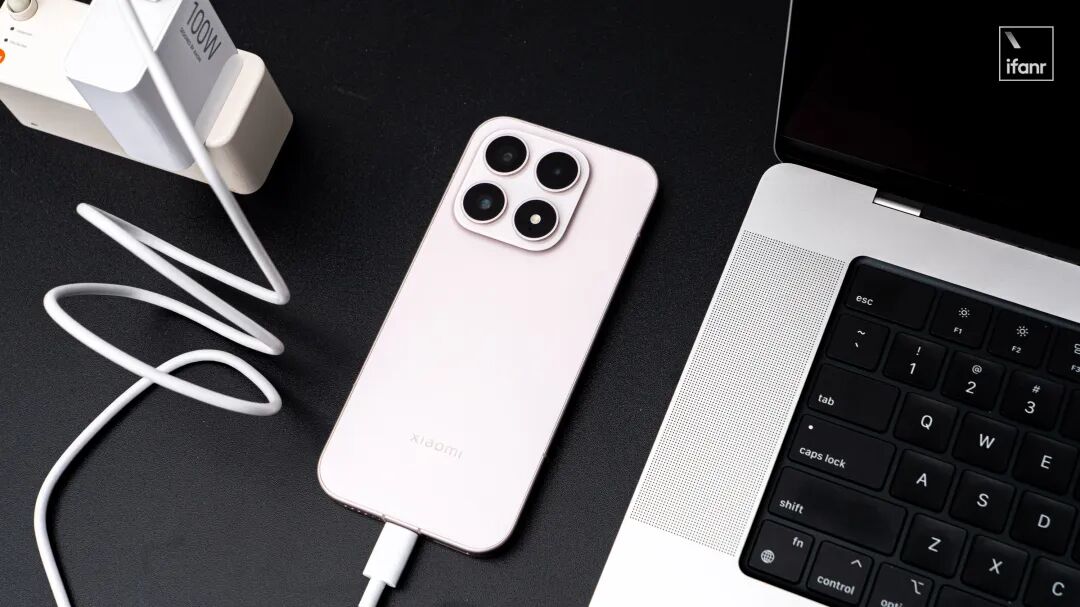
小米17系列

Search documents
国产手机,为什么越卖越贵?
创业邦· 2026-03-30 04:15
Core Viewpoint - The article discusses the significant price increase of Chinese smartphones, which is not merely a result of greed or cost transfer, but rather a complex interplay of technology, brand narrative, user segmentation, global compliance, and geopolitical competition [61][64]. Group 1: Price Increase Trends - Major Chinese smartphone brands like vivo, Xiaomi, and OPPO are raising prices across all segments, with flagship models starting at 4399 yuan for vivo and 4499 yuan for Xiaomi [6][8]. - The price increase is described as a silent revolution, moving from high-end models to all price ranges, reflecting a shift in the market dynamics [5][8]. - Consumers express frustration over rising prices while simultaneously opting for installment plans, indicating a disconnect between income growth and smartphone pricing [10]. Group 2: Memory Chip Price Surge - The surge in memory prices is attributed to the dominance of Korean companies like SK Hynix, which have shifted their production focus to higher-margin products, leading to a supply crunch for standard DRAM and LPDDR [12][22]. - The BOM (Bill of Materials) cost for flagship smartphones is projected to increase from 18% in 2024 to 25% in 2026 due to rising memory costs [22]. - The competitive landscape has changed, with smartphone manufacturers losing bargaining power as suppliers tighten their pricing strategies [25]. Group 3: Display Technology Independence - Chinese display manufacturers like BOE are achieving technological parity with Samsung, marking a shift in the supply chain dynamics and reducing reliance on a single supplier [27][32]. - The introduction of advanced display technologies by domestic manufacturers allows smartphone brands to differentiate their products without being constrained by Samsung's supply terms [32]. - Although the cost of domestic displays is currently higher by 8%-12%, manufacturers are willing to pay for the security and independence it provides [32]. Group 4: Chipset Pricing and Self-Development - Qualcomm continues to increase prices for its chipsets, which has led to a growing concern among Chinese smartphone manufacturers about their dependency on a single supplier [38][39]. - The trend of self-developed chips is gaining momentum, with companies like Xiaomi and OPPO aiming to cover a significant portion of their flagship models with in-house solutions by 2026 [41][43]. - The strategy of gradually replacing high-cost components with self-developed alternatives is seen as a way to mitigate risks associated with reliance on external suppliers [44]. Group 5: Consumer Behavior and Market Dynamics - The average smartphone replacement cycle in China has extended from 24 months in 2019 to 30-36 months by 2026, prompting manufacturers to adjust their pricing strategies accordingly [49]. - Brands are leveraging AI capabilities to redefine the value proposition of smartphones, encouraging consumers to pay for "intelligence" rather than just hardware [50][66]. - The willingness of consumers to pay a premium for AI features indicates a shift in market expectations and the perceived value of smartphones [71]. Group 6: Future Implications - The ongoing price increases and shifts in technology are part of a broader social experiment regarding value perception in the smartphone market [73]. - The outcome of this experiment will determine which brands can sustain their presence in the market, particularly in the context of rising competition from domestic chip manufacturers and changing consumer preferences [74][75].




突发!薪资谈判破裂,芯片巨头8.9万人要罢工;养龙虾的第一批受害者出现了!OpenClaw给装惨用户自动转了笔钱;腾讯视频回应收视率造假
雷峰网· 2026-03-10 00:32
Key Points - Samsung Electronics faces a significant strike crisis with over 89,000 employees voting for a nationwide strike due to a breakdown in salary negotiations, which could severely impact memory supply [4][5] - OpenClaw, an AI-driven platform, has led to incidents of financial loss for users, highlighting risks associated with AI systems lacking proper safeguards [7][8] - OnePlus is set to announce a price increase for its products, with other smartphone brands also planning price adjustments due to rising costs [10][11] - Oracle plans to lay off approximately 30,000 employees as part of a major restructuring, reallocating funds towards AI and data center investments rather than due to AI replacing jobs [39][40] - The global market for home cleaning robots is dominated by Chinese manufacturers, with Stone Technology leading in market share and growth [27][28] - Shanghai Fangqing Technology has secured 1 billion yuan in Pre-A financing, focusing on AI chip and system architecture development [29] - Xiaomi is preparing to launch L3 and L4 autonomous driving technologies, emphasizing the importance of driver attention during the use of these features [23][30] - Zhaowei Electric has successfully listed on the Hong Kong Stock Exchange, marking a significant milestone in the micro-drive system market [45][46] - Estun has also listed on the Hong Kong Stock Exchange, becoming the first "A+H" listed company in the industrial robot sector in China [46]

第一个能在手机上跑的小龙虾来了,它的名字,叫miclaw。
数字生命卡兹克· 2026-03-09 02:09
Core Viewpoint - The emergence of the Agent scene, exemplified by OpenClaw, indicates a fundamental user demand, making it a critical entry point for manufacturers. The company that controls this entry point is likely to dominate the market. Both software and hardware manufacturers are keen to participate in this Agent era, as demonstrated by Xiaomi's recent announcement of its Agent product, Xiaomi miclaw [1][5]. Group 1: Xiaomi miclaw Overview - Xiaomi miclaw is the first Agent product that operates on mobile devices, capable of utilizing system-level capabilities with security assurances [5][8]. - The product is currently in a closed testing phase, supporting only the Xiaomi 17 series models [5][8]. - Xiaomi miclaw is designed as an experimental product aimed at enthusiasts and tech-savvy users, requiring some coding knowledge for advanced functionalities [8][9]. Group 2: Features and Capabilities - Xiaomi miclaw offers various capabilities, including personal context understanding, ecological interconnectivity, and self-evolution, distinguishing it from traditional AI assistants [4][5]. - The product can perform tasks such as summarizing SMS messages, managing notes, and controlling smart home devices, showcasing its versatility [19][35]. - It includes a range of system-level tools, such as SMS management, call handling, calendar events, and smart home device control, totaling 27 tools available for user interaction [40][41]. Group 3: User Experience and Interaction - Users can interact with miclaw through voice commands, allowing for seamless integration into daily tasks, such as taking notes or managing alarms [23][36]. - The product's ability to learn and remember user preferences enhances its functionality, making it a more personalized assistant [10][31]. - Miclaw's integration with Xiaomi's smart home ecosystem allows users to control various devices, providing a comprehensive home management solution [52][53]. Group 4: Market Position and Future Outlook - The introduction of miclaw positions Xiaomi competitively in the Agent market, emphasizing the importance of controlling entry points in the tech landscape [1][5]. - The product's success may hinge on overcoming limitations related to third-party app permissions, which currently restrict its full potential [79][81]. - As the demand for integrated AI solutions grows, the evolution of products like miclaw could lead to significant shifts in user interaction with technology [82][84].
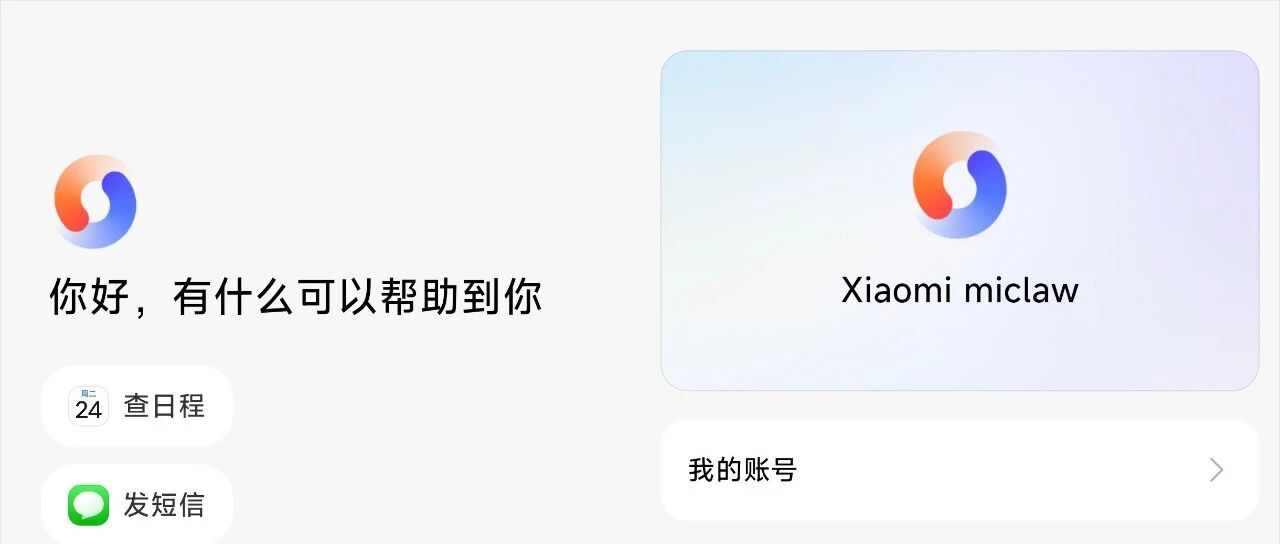
小米集团-W(01810):Xiaomimiclaw开启小范围封测
Orient Securities· 2026-03-08 15:25
Investment Rating - The report maintains a "Buy" rating for Xiaomi Group with a target price of HKD 52.17, based on a 28x PE valuation for 2026 [3][5]. Core Insights - The report predicts earnings per share (EPS) for 2025-2027 to be CNY 1.53, CNY 1.63, and CNY 2.29 respectively, with adjustments made to revenue and gross margin forecasts [3][11]. - Xiaomi's automotive business is showing strong momentum, preparing for large-scale production of the new SU7 model, with impressive delivery numbers in late 2025 [10]. - The introduction of the Xiaomi miclaw mobile agent is expected to significantly enhance AI capabilities and user experience within Xiaomi's ecosystem, marking a substantial advancement in system-level execution capabilities [10]. Financial Projections - Revenue projections for 2023A to 2027E are as follows: CNY 270,970 million, CNY 365,905 million, CNY 453,633 million, CNY 527,008 million, and CNY 657,491 million, with year-on-year growth rates of -3%, 35%, 24%, 16%, and 25% respectively [4]. - Operating profit is forecasted to grow from CNY 20,009 million in 2023A to CNY 66,264 million in 2027E, with a significant increase of 610% in 2024A [4]. - Net profit attributable to the parent company is expected to rise from CNY 17,475 million in 2023A to CNY 59,851 million in 2027E, reflecting a growth rate of 606% in 2024A [4]. Valuation Metrics - The report provides a comparison of Xiaomi's valuation metrics with peers, indicating a PE ratio of 44 for 2023A, decreasing to 13 by 2027E, and a PB ratio of 4.7 in 2023A, decreasing to 2.3 by 2027E [4][12].
在MWC上,小米展示AI下半场的另一种路径
36氪· 2026-03-05 13:31
Core Viewpoint - Xiaomi's strategy not only reflects its own corporate choices but also serves as a model for the positioning of Chinese tech companies in the global AI competition [2][34]. Group 1: AI Theme at MWC - At MWC 2026, AI emerged as the most prominent theme, with the event's focus on "The IQ Era" highlighting the importance of intelligence in technology [3]. - Xiaomi's exhibition theme was "The New Wave of AI," showcasing a seamless experience from mobile devices to cars and home environments through its AI capabilities [3][4]. - Xiaomi's approach combines hardware, systems, and AI capabilities, differentiating itself by demonstrating a scalable AI operation model rather than just individual products [4]. Group 2: Xiaomi's Ecosystem and AI Integration - Xiaomi's ecosystem has connected over 1 billion devices across more than 200 product categories, reaching 95% of daily life scenarios, with over 740 million global monthly active users [5]. - The company emphasizes the importance of integrating AI capabilities into real-life scenarios, moving AI from virtual to physical environments [5][14]. - Xiaomi's strategy focuses on embedding AI into mobile, automotive, and home devices, creating a continuous user experience [14][28]. Group 3: Shifts in AI Competition - The AI competition is evolving, with the focus shifting from model parameters and computational power to the practical application of AI in everyday scenarios [7][9]. - Key transformations include the ability of AI to operate across devices, understand real-world contexts, and provide continuous user engagement throughout daily activities [10][11]. - Chinese companies are gaining advantages in this new phase due to their established digital payment systems, active user data, and the ability to refine products in real-world settings [12][13]. Group 4: Xiaomi's Model Development - Xiaomi is entering the foundational model space, with plans to release various models by 2026, aiming to provide unified capabilities across multiple devices [18]. - The MiMo model is designed to support various applications, including image processing for mobile devices and environmental understanding for home systems [18][20]. - The integration of model capabilities with hardware allows Xiaomi to create a unique ecosystem that enhances user experience across different devices [24][25]. Group 5: Future Investments and Strategic Direction - Xiaomi plans to invest approximately 7.5 billion RMB in AI in 2025, representing a quarter of its annual R&D budget, with a total of 200 billion RMB earmarked for R&D over the next five years [33]. - The company aims to combine its long-standing hardware capabilities with self-developed model capabilities to create new competitive advantages in real-world applications [33]. - Xiaomi's path reflects a shift from merely chasing technological breakthroughs to integrating and applying AI effectively in everyday life [34][35].

博主称华为Mate80系列销量超310万,小米17系列超350万
Guan Cha Zhe Wang· 2026-02-25 14:08
Group 1 - The core point of the articles highlights the sales performance of various smartphone brands, with Xiaomi 17 series leading at approximately 3.5 million units sold, followed by Huawei Mate 80 series at about 3.1 million units [1] - The sales figures for sub-brands include REDMI K90 at approximately 1.1 million units and iQOO 15 at around 0.76 million units, indicating a competitive landscape among different brands [1] - The cumulative sales of the iPhone 17 series reached approximately 20.9 million units, showcasing Apple's strong market presence [1] Group 2 - In terms of market share, Huawei leads with 18.3%, closely followed by Apple at 18.2%, indicating a tight competition at the top [2] - OPPO and vivo both hold a market share of 16.3%, with OPPO including OnePlus and Realme, while Xiaomi and Honor have market shares of 14.1% and 12.8% respectively, ranking them 5th and 6th [2] - The data reflects a highly competitive smartphone market, with several brands vying for consumer attention and market share [2]
信达国际控股港股晨报-20260224
Xin Da Guo Ji Kong Gu· 2026-02-24 01:53
Market Overview - The Hang Seng Index is expected to hold at 26,000 points, influenced by the hawkish stance of the newly appointed Federal Reserve Chair and a rebound in the US dollar index, which has led to profit-taking in the commodity market [2] - The Chinese GDP growth target for 2026 is anticipated to be set at 4.5%-5%, lower than the previous target of around 5% for 2025, as many provinces have lowered their GDP goals ahead of the Two Sessions [2] - Regulatory measures have been implemented to cool the market, including increased financing margin ratios on the Shanghai and Shenzhen stock exchanges, leading to a collective reduction in leverage across the three markets [2] Sector Focus - AI stocks are expected to perform well due to intensive upgrades in AI large models and rapid growth in the semiconductor industry [3] Corporate News - Estun (002747.SZ), a company specializing in industrial robots, has passed the Hong Kong Stock Exchange listing hearing, targeting high-end industrial equipment markets [10] - Alibaba's Qianwen App facilitated nearly 200 million "one-sentence orders" during the Spring Festival, indicating a significant increase in user engagement [10] - Ant Group reported that its "AI Payment" and Ant Assistant App have both surpassed 100 million users, marking a significant milestone in AI-driven payment solutions [10] - JD Group reported a fourfold increase in user visits to its robot products during the Spring Festival, highlighting a growing interest in robotics and AI-related products [8][10] Economic Indicators - The Hang Seng Index closed at 27,081 points, up 668 points or 2.5%, with a total market turnover of HKD 173 billion [6] - The CRB Commodity Index decreased by 0.28% year-to-date, while gold prices increased by 2.35% [5] - The vacancy rate for Grade A offices in Central Hong Kong fell to 10.1%, the lowest level since 2023, indicating a recovery in leasing demand driven by financial institutions [8][10]
2026中国电影票房暂列全球第一;马斯克称其一生纳税将超5000亿美元;Xbox传奇菲尔 · 斯宾塞退休;小米17系列进军全球市场...
Sou Hu Cai Jing· 2026-02-22 01:10
Group 1 - The Chinese film market has surpassed North America in cumulative box office for 2026, reaching over $970 million (approximately 6.7 billion RMB), marking it as the world's leading single market for box office revenue [2] - Elon Musk stated that his lifetime tax payments could exceed $500 billion, with venture capitalist Marc Andreessen suggesting the actual figure might approach $5 trillion when considering corporate and employee taxes [3] - Phil Spencer, a key figure in Microsoft's gaming division for 12 years, has announced his retirement, with Asha Sharma, the president of CoreAI, set to take over [4] Group 2 - Xiaomi is set to launch its 17 series globally on February 28 in Barcelona, with the 17 Ultra Leica version expected to be named "Leica Leitzphone powered by Xiaomi," featuring the Snapdragon 8 Elite Gen 5 processor [5] - Huawei's Band 11 has been listed on its Philippine website, available in standard and Pro versions starting at 2,399 pesos, featuring a 1.62-inch AMOLED screen and 14-day battery life, with a release date of March 2 [6] - The Chinese automotive industry has seen a significant transformation, with overseas sales of Chinese-made and self-owned brand vehicles exceeding 9 million units in 2025, indicating a shift from "product export" to "industry export" [12]




华为Mate80销量超上代同期,苹果均价突破1000美元
Guan Cha Zhe Wang· 2026-02-02 03:51
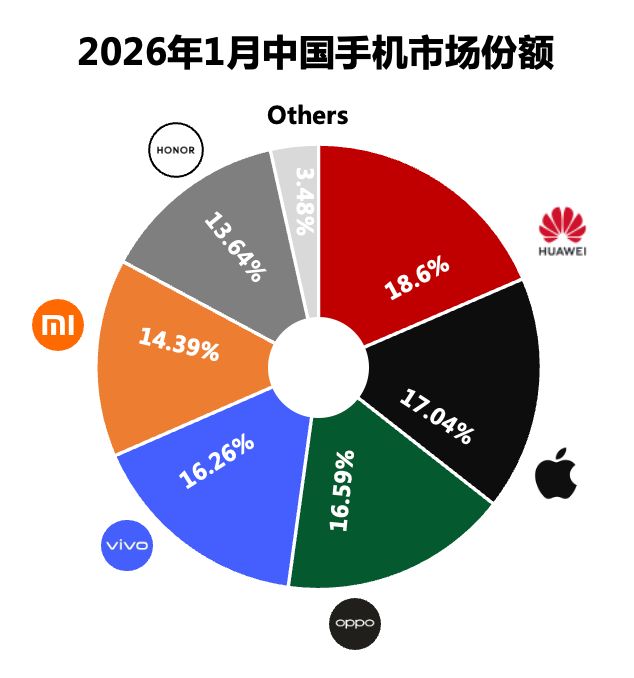
Group 1 - In January, Huawei regained the top position in the Chinese smartphone market with an 18.6% market share, closely followed by Apple at 17.04% [1] - The Huawei Mate80 series, launched later than competitors, has shown strong sales momentum, with approximately 2.54 million units sold by the end of January 2026, surpassing the Mate70 series during the same period [1] - Apple's iPhone 17 series performed well in China, achieving a market share of 21.2% and a year-on-year revenue increase of 38% in the Greater China region, with shipments reaching 16 million units in Q4 2025 [3] Group 2 - Globally, Apple leads the market with a 25% share of shipments and 59% of revenue, while the average selling price of Apple phones reached $1,011, significantly higher than competitors [4] - Despite current successes, Apple faces challenges such as rising component costs and increased competition, with price cuts from various manufacturers intensifying market rivalry [7][8] - The global smartphone market is expected to see rising average prices due to high-end trends and increased demand for AI features, but rising component costs may pressure manufacturers to focus on value growth and product optimization [8]
2026 年,手机厂商是时候拥抱公有快充协议了
3 6 Ke· 2026-01-30 00:31
Core Viewpoint - The article discusses the evolution of fast charging protocols in smartphones, highlighting the shift towards public protocols like PPS (Programmable Power Supply) and their advantages over proprietary charging solutions, particularly in terms of efficiency, cost, and compatibility with various devices. Group 1: Industry Trends - The year 2025 is anticipated to be a significant milestone for smartphone battery technology, with advancements in silicon-carbon anodes and increased battery capacities [1] - More manufacturers are expanding support for public fast charging protocols such as PPS and UFCS, indicating a potential shift away from proprietary protocols [3][5] - Xiaomi has set a new benchmark for domestic smartphones by demonstrating that public fast charging protocols can match the efficiency of proprietary solutions [5] Group 2: Advantages of PPS - PPS offers benefits such as faster charging, reduced heat generation, and lower costs compared to proprietary protocols [6][14] - The flexibility of PPS allows for dynamic voltage adjustments based on the battery's needs, improving charging efficiency and reducing energy loss [10][12] - The recent technological advancements have enabled PPS to achieve power levels of up to 100W, overcoming previous limitations [12] Group 3: Performance and Consumer Impact - Real-world testing of devices like the Redmi Turbo 5 Max shows that PPS can deliver charging speeds comparable to proprietary solutions, with only minor differences in total charging time [18][25] - The compatibility of PPS with existing USB PD standards allows consumers to use a single charger for multiple devices, enhancing convenience [30] - The adoption of PPS by manufacturers is seen as a strategic move to improve consumer satisfaction and brand loyalty in a competitive market [32]