
尼帕病毒

Search documents
华侨银行分析师:新加坡2026年有望实现1700万至1800万的游客入境目标
Jin Rong Jie· 2026-02-12 03:58
Core Viewpoint - Singapore is expected to achieve its official target of 17 to 18 million tourist arrivals by 2026, with a recovery to 16.9 million arrivals in 2025, reaching 88.5% of pre-pandemic levels [1] Group 1 - In 2025, Singapore recorded 16.9 million tourist arrivals, indicating a strong recovery from the pandemic [1] - A series of ongoing events such as conferences, incentive travel, exhibitions, and concerts are anticipated to support the growth in tourist numbers [1] - The analysis highlights the importance of avoiding any "black swan" events, specifically mentioning the closely monitored Nipah virus dynamics [1]
又一国出现感染病例!
Huan Qiu Wang· 2026-02-08 02:00
Group 1 - The World Health Organization (WHO) reported a case of Nipah virus infection in Bangladesh, with the infected individual being a woman aged between 40 and 50 from the Rajshahi region, who showed symptoms on January 21 and was diagnosed on January 29 [1] - The infected woman had no recent travel history but consumed raw date palm juice, and all 35 close contacts tested negative for the virus [1] - Bangladesh frequently experiences small-scale outbreaks of Nipah virus, particularly between December and April, coinciding with the harvesting and consumption season of date palm juice [1] Group 2 - Nipah virus is classified as a high-fatality zoonotic virus, with a mortality rate ranging from 40% to 75%, and there is currently no specific vaccine or effective treatment available [2] - The virus can be transmitted through infected animals, contaminated food or environments, and in rare cases, through direct human-to-human contact [4] - Consumption of raw date palm juice is a significant transmission route, as it can be contaminated by fruit bats, which are the primary carriers of the virus [4]
华兰生物:目前公司尚无预防尼帕病毒相关的药物
Zheng Quan Ri Bao Wang· 2026-02-04 12:12
Group 1 - The core product of the company’s subsidiary, Hualan Vaccine, is the quadrivalent influenza virus vaccine, which includes a pediatric formulation aimed at preventing influenza outbreaks caused by the virus [1] - The company currently does not have any drugs for the prevention of Nipah virus [1]


华兰生物:目前尚无预防或治疗尼帕病毒相关的药物
Ge Long Hui· 2026-02-04 07:12
Group 1 - The company, Hualan Biological (002007.SZ), currently has no drugs for the prevention or treatment of Nipah virus [1]
尼帕病毒是个啥病毒?
Xin Hua Wang· 2026-02-01 10:01
Core Insights - The recent outbreak of Nipah virus in West Bengal, India, has raised significant concern due to its high mortality rate and potential for human-to-human transmission [2][3] Group 1: Virus Overview - Nipah virus (NiV) is not a new virus; it was first identified in Malaysia in 1998 and belongs to the Henipavirus genus of the Paramyxoviridae family [2] - There are two subtypes of Nipah virus: the Malaysian subtype with a mortality rate of approximately 15% and the Bangladeshi subtype with a mortality rate ranging from 40% to 70% [2] - The virus primarily attacks the brain and lungs, leading to symptoms such as fever, headache, respiratory difficulties, and loss of consciousness, and can cause severe respiratory diseases like atypical pneumonia and acute respiratory distress syndrome [2] Group 2: Transmission - The natural host of Nipah virus is fruit bats, and it can be transmitted from animals to humans through contact with infected bodily fluids [3] - Recently, human-to-human transmission has been observed, marking a new characteristic of recent outbreaks [3] - High-risk groups include healthcare workers in contact with patients and slaughterhouse workers who handle infected animals [3] Group 3: Prevention - The transmission efficiency of Nipah virus through general social contact is low, primarily spreading through close contact rather than airborne routes like influenza or measles [4] - Public health measures focus on increasing awareness and implementing scientific protective measures to significantly reduce infection risk [4] - Nipah virus cases are mainly reported in tropical regions such as India and Malaysia, with no cases reported in China as of now [4]
别被算法“喂”大了恐惧
Xin Lang Cai Jing· 2026-01-31 07:07
Group 1 - The Wuhan Institute of Virology has confirmed that oral nucleoside drugs can effectively inhibit the Nipah virus, potentially becoming a viable treatment option [2] - The Nipah virus has a high fatality rate of up to 75% and lacks specific treatments or vaccines, leading to public anxiety and misinformation [2] - The media and social platforms have a responsibility to provide comprehensive knowledge and adjust algorithms to prioritize accurate information over sensational content [3] Group 2 - The Nipah virus is not new and has appeared periodically in South Asia, with limited spread that is usually quickly controlled [3] - Countries have implemented preventive measures, and China has not reported any cases, indicating that normal life should not be significantly affected [3] - The discovery of an effective drug for the Nipah virus serves to reassure the public that there are treatment options available, helping to alleviate anxiety [3]


尼帕病毒会全球流行吗
Xin Lang Cai Jing· 2026-01-30 23:52
Group 1 - The World Health Organization (WHO) has classified the Nipah virus as one of the most dangerous "priority pathogens" due to its potential to cause global outbreaks [1] - The Nipah virus has a high mortality rate ranging from 40% to 75%, with some localized outbreaks reporting a fatality rate of up to 100% [1] - Recent reports from India indicate multiple confirmed cases and nearly 100 individuals under observation, raising concerns about the virus's spread [1]
“致命尼帕”会全球流行吗?该如何防护?
Xin Lang Cai Jing· 2026-01-30 23:52
Core Viewpoint - The Nipah virus, classified as one of the most dangerous pathogens by the World Health Organization, has resurfaced in public attention due to recent outbreaks in India, prompting concerns about a potential global pandemic [1][2]. Group 1: Virus Overview - The Nipah virus, first identified in 1998, has a high mortality rate ranging from 40% to 75%, with some outbreaks reporting a fatality rate of up to 100% [3]. - It primarily affects the central nervous system and respiratory system, with symptoms rapidly progressing from fever and headache to coma within 24 to 48 hours [3]. Group 2: Transmission and Current Situation - The current outbreak in India highlights typical transmission chains, with the initial case linked to a nurse who consumed contaminated date palm sap [5][6]. - The virus can spread from animals to humans, primarily through consumption of food contaminated with bat saliva or urine, and from human to human through close contact, especially in healthcare settings [8]. Group 3: Preparedness and Response - China's public health system has established a multi-layered monitoring and prevention network in response to the Nipah virus, with customs authorities issuing health alerts for travelers from affected regions [11][14]. - The Chinese Center for Disease Control and Prevention has developed guidelines for prevention and control, including laboratory testing and case management [13]. Group 4: Vaccine Development Challenges - Despite the high fatality rate, there are currently no approved vaccines or specific treatments for the Nipah virus due to its sporadic and regional outbreaks, which deter pharmaceutical companies from investing in vaccine development [15]. - Research continues, with some candidate vaccines based on mRNA technology entering clinical trials, and monoclonal antibodies showing potential in compassionate use [15].
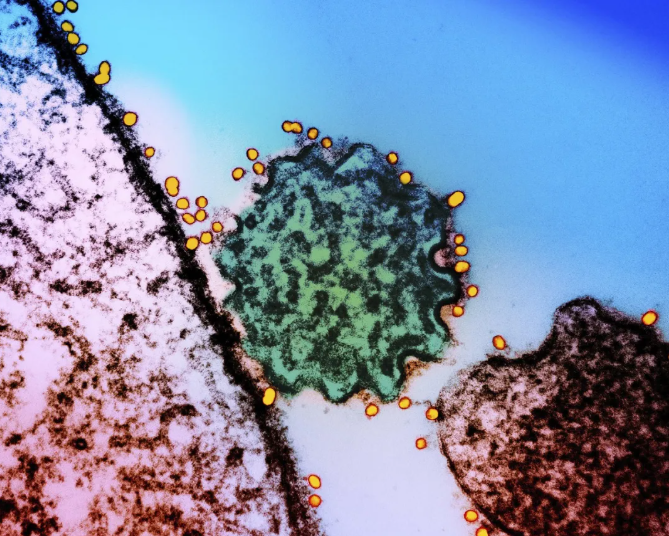
世卫组织确认印度确诊两例尼帕病毒感染病例
Jing Ji Guan Cha Wang· 2026-01-30 09:20
Core Viewpoint - The World Health Organization's Southeast Asia Regional Office reported two confirmed cases of Nipah virus infection in West Bengal, India, prompting enhanced monitoring and investigation by health authorities [1] Group 1: Health Response - Indian central and state health agencies have intensified monitoring, laboratory testing, and field investigations following the confirmed cases [1] - A total of 196 close contacts of the confirmed cases have been identified, tracked, monitored, and tested, all of whom are asymptomatic and have tested negative for the Nipah virus [1] Group 2: Current Situation - As of now, no additional cases of Nipah virus infection have been reported, and the situation is under continuous monitoring [1]
世卫组织:尼帕病毒从印度传播的风险较低
Jin Rong Jie· 2026-01-30 05:05
Group 1 - The World Health Organization (WHO) stated that there is no need for travel and trade restrictions following the report of two Nipah virus cases in India, indicating a low risk of transmission from India [1] - The WHO's assessment suggests that the situation is being monitored closely, but immediate action regarding travel and trade is not deemed necessary [1] - The low risk of Nipah virus transmission from India may have implications for public health policies and international relations in the region [1]