工业安全战略

Search documents
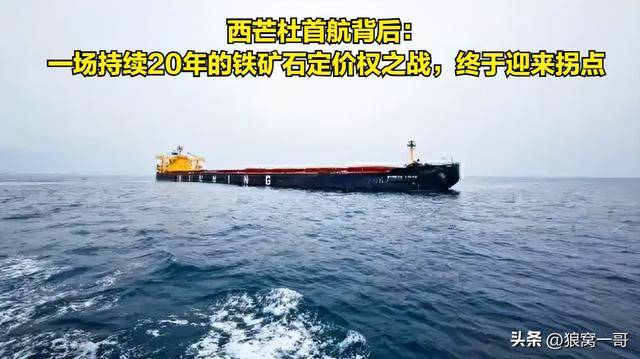
西芒杜首航背后:一场持续20年的铁矿石定价权之战,终于迎来拐点
Sou Hu Cai Jing· 2025-12-13 06:45
Core Viewpoint - A cargo ship carrying iron ore from Africa is set to fundamentally change the global industrial system, marking a shift from China being a mere buyer to becoming a rule-maker in the iron ore market [2][3]. Group 1: Significance of the Iron Ore Shipment - The shipment consists of 200,000 tons of iron ore, which is not just an ordinary commodity but the "blood" of the industrial system [5]. - Steel is foundational for various sectors including infrastructure, manufacturing, military, energy, transportation, shipbuilding, machinery, and real estate [6]. - For over two decades, China has been in a passive position in this critical resource segment [6]. Group 2: China's Historical Position in Iron Ore Market - China has been the largest steel producer and iron ore importer but has lacked pricing power due to the high level of market monopoly [8]. - The global iron ore shipping market has been dominated by three major groups that control mines, ports, shipping routes, and pricing mechanisms [7]. Group 3: Breaking the Monopoly Structure - The significance of the Simandou project lies not in resource scarcity but in breaking the threefold monopoly: resource, transportation, and financial [11]. - Simandou's high-quality ore provides a structural advantage in steel production, reducing costs and emissions [12]. - The project integrates mining, transportation, and shipping, creating a complete operational system that connects African resources to the global industrial cycle [14]. Group 4: China's New Role in the Supply Chain - China is transitioning from being a terminal buyer to a core participant and organizer in the iron ore supply chain [19]. - This shift allows China to transform iron ore from a market risk into an industrial asset, marking a qualitative change in its role [19]. Group 5: Transfer of Pricing Power - The transfer of pricing power is contingent on three hard conditions: the ability to choose not to buy, the ability to influence supply timing, and the capacity to participate in rule-making [22][25][29]. - With Simandou's gradual output, China gains alternative options, diminishing the pricing power of traditional suppliers [24]. Group 6: Implications for Guinea - For Guinea, the Simandou project represents not just mineral sales but a comprehensive infrastructure development that supports long-term economic growth [32]. - The project is characterized as a development-oriented partnership rather than exploitative extraction [33]. Group 7: China's Industrial Security Strategy - The project reflects China's matured industrial security strategy, aiming to secure critical resources and integrate them into a controllable system [36]. Group 8: Future Implications - The iron ore shipment signifies a milestone, indicating that China is poised to gain long-term pricing power and reshape the global iron ore market dynamics [43].