市场化运作机制

Search documents
政府投资基金“投向哪、怎么投”,国家首次作出系统规范
Sou Hu Cai Jing· 2026-01-12 03:36
Core Viewpoint - The National Development and Reform Commission, along with other ministries, has issued a systematic guideline for the layout and investment direction of government investment funds, marking the first national-level regulation in this area [1]. Group 1: Government Investment Fund Overview - By the end of 2024, China is expected to have established a total of 2,178 government-guided funds, with a total scale exceeding 12 trillion yuan, of which industry and venture capital funds account for 2,023 funds and over 10 trillion yuan [2]. Group 2: Policy Measures - The guideline outlines 14 policy measures focusing on three main aspects: investment direction, investment methods, and management responsibilities [3]. - It emphasizes supporting major strategies and key areas, particularly in sectors where market resource allocation is weak, and aims to foster the integration of technological and industrial innovation [3]. Group 3: Investment Direction - Funds are required to align with national major plans and encourage industries while avoiding investments in restricted, eliminated, or prohibited sectors [5]. - Emerging industries highlighted include next-generation information technology, new energy, new materials, high-end equipment, and green technology, among others [3]. Group 4: Fund Management and Compliance - The guideline mandates that funds not meeting layout and investment direction requirements will face enhanced guidance and potential corrective measures from relevant authorities [6]. - National-level funds are to focus on supporting the construction of a modern industrial system and addressing key technological challenges, while local funds should align with regional industrial foundations and development realities [6]. Group 5: Challenges and Recommendations - Analysts point out that the core issue with government investment funds is the unclear boundary between government and market roles, leading to challenges such as fundraising difficulties and regulatory constraints [7]. - Recommendations include clarifying the government-market boundary and enhancing professional talent reserves to improve fund management and operations [8].


国家层面首次发文规范政府投资基金运作,有哪些看点?
Xin Lang Cai Jing· 2026-01-12 02:47
Core Viewpoint - The National Development and Reform Commission, along with other ministries, has issued a systematic guideline for the layout and investment direction of government investment funds, marking the first national-level regulation in this area [1][10]. Group 1: Government Investment Fund Overview - By the end of 2024, China is expected to have established a total of 2,178 government-guided funds, with a cumulative scale exceeding 12 trillion yuan, of which 2,023 are industry and venture capital funds, surpassing 10 trillion yuan [2][11]. Group 2: Policy Measures - The guideline outlines 14 policy measures focusing on three main aspects: investment direction, investment methods, and management [3][12]. - It emphasizes supporting major strategies and key areas, particularly in sectors where market resources are inadequately allocated, and encourages early, small, long-term investments in hard technology [3][12]. Group 3: Investment Focus - Emerging industries highlighted include next-generation information technology, new energy, new materials, high-end equipment, new energy vehicles, green environmental protection, civil aviation, and marine engineering [3][12]. - Future industries include the metaverse, brain-computer interfaces, quantum information, humanoid robots, generative artificial intelligence, biomanufacturing, and new energy storage [3][12]. Group 4: Investment Direction Guidance - Funds must align with national major plans and encouraged industries, avoiding restricted, eliminated, or prohibited sectors [5][14]. - The guideline aims to address issues such as homogeneity in investment direction and lack of management standards that have emerged with the growth of government investment funds [5][14]. Group 5: Fund Management and Oversight - The guideline specifies that funds not meeting layout requirements will be subject to enhanced guidance and corrective measures, including discussions and warnings [6][15]. - National-level funds are to focus on supporting the construction of a modern industrial system and overcoming key technological challenges, while local funds should align with regional industrial foundations and development realities [7][15]. Group 6: Market Mechanism and Talent Development - Analysts suggest that improving the market-oriented operational mechanism is crucial for the development of government investment funds, addressing issues like fundraising difficulties and regulatory constraints [8][16]. - There is a call for clarifying the boundary between government and market roles, emphasizing the need for professional talent and collaboration with specialized teams to enhance fund management [9][17].

7年累计派息率达87%,信义能源(03868)上半年盈利改善估值迎反转
智通财经网· 2025-08-15 10:55
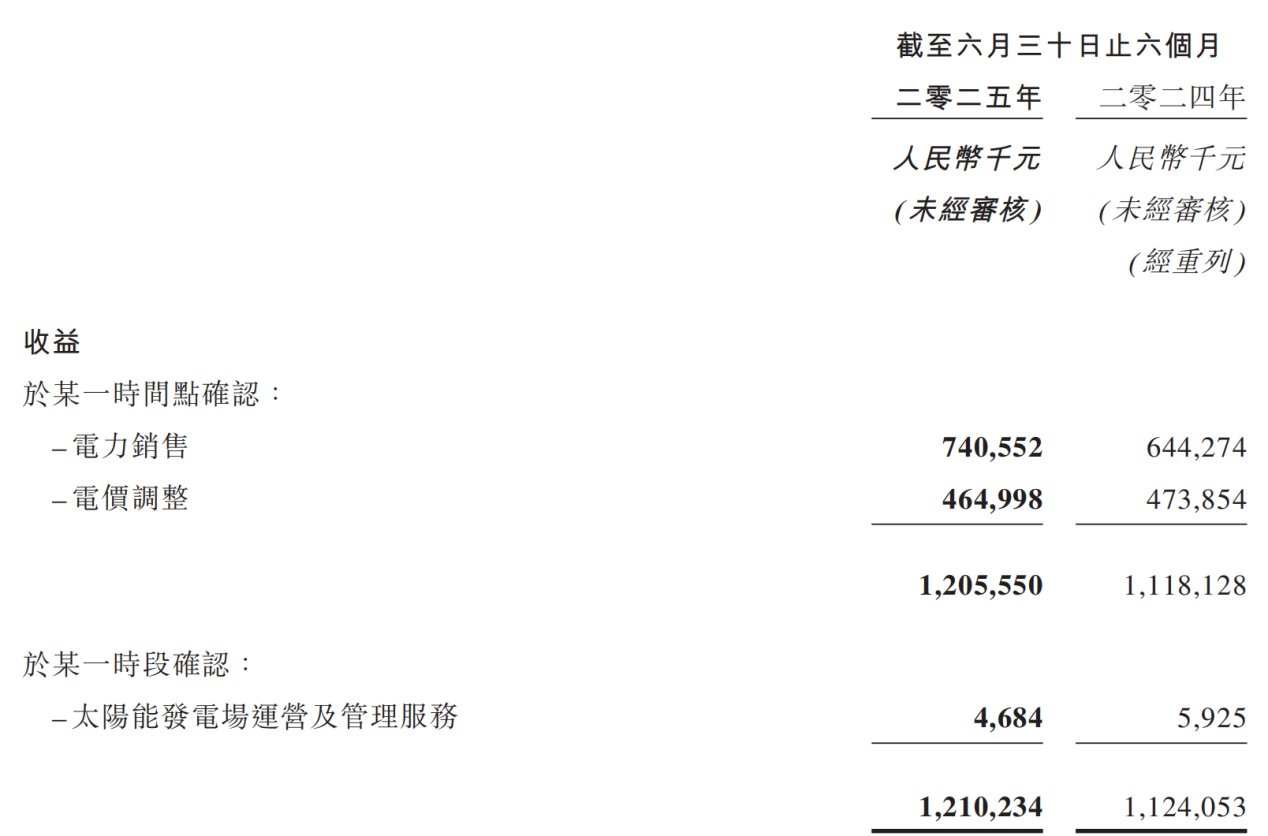
Core Viewpoint - Xinyi Energy has shown continuous growth in performance over the past two and a half years, with significant improvements in profitability, raising questions about whether its valuation is reversing [1] Financial Performance - For the first half of 2025, Xinyi Energy reported revenue of 1.21 billion RMB, a year-on-year increase of 7.67%, and EBITDA of 1.12 billion RMB, also up 7.7% [1] - The net profit attributable to shareholders reached 450 million RMB, reflecting a year-on-year growth of 23.43%, with a net profit margin of 37.19% [1] - The company proposed an interim dividend of 222 million HKD, with a per-share dividend of 2.9 HKD, marking a 26.1% increase [1] Cost and Efficiency - The increase in net profit was primarily driven by a decrease in financing costs and a reduction in income tax expenses, contributing a total of 7.26 percentage points to the net profit margin [1] - The financing cost rate decreased by 4.02 percentage points, and the income tax expense ratio fell by 3.24 percentage points [1] - The company has maintained stable core administrative costs (2-3%) and financing costs (12-13%), effectively alleviating profit decline pressures [2] Business Operations - Xinyi Energy's electricity sales amounted to 741 million RMB, a year-on-year increase of 15.06%, while the total power generation from solar projects grew by 22.7% [2][3] - As of June 30, 2025, the company operated and held approved generating capacity of 4,540.5 MW in solar projects [3] Industry Outlook - The solar energy sector continues to exhibit high growth potential, with new installed capacity exceeding 200 GW in the first half of 2025 [5] - However, the industry is experiencing a slowdown in growth, transitioning from policy-driven to market-driven mechanisms, with no government subsidies for new projects after May 2025 [5] - The solar industry has faced overcapacity issues, leading to a significant decline in valuations across the sector, with Xinyi Energy's market value down by 80% [5] Dividend Policy and Market Sentiment - Despite profit volatility, Xinyi Energy has consistently paid dividends for seven consecutive years since 2019, with a cumulative dividend of 548 million RMB and a payout ratio of 86% [6] - Analysts maintain a positive outlook on the company, with expectations of profit growth and potential market expansion into Malaysia [6]