新兴产业

Search documents
EPMI新兴产业行业报告202603:节后全线回补信息技术尤为强势
Zhong Guo Ren Min Yin Hang· 2026-03-20 05:15
Investment Rating - The report indicates a strong upward trend in the emerging industries, with the EPMI rising to 57.6, marking the highest value in five years, confirming the upward cycle trend [1]. Core Insights - The emerging industries are experiencing a significant recovery post-holiday, particularly in information technology, which shows robust growth [1]. - The report anticipates a slight decline in the EPMI next month but expects it to remain at a high level, indicating sustained demand and production recovery [2]. - Various sectors, including new generation information technology, new materials, and biotechnology, are showing strong performance, with PMI values indicating expansion [3][4]. Summary by Sections Section 1: Overview of China's Emerging Industry Index - The emerging industries are showing a broad recovery, with all surveyed sectors reporting PMI values above 50, indicating expansion [10]. Section 2: PMI and Sub-indexes 1. **High-end Equipment Manufacturing** - PMI increased to 54.5, driven by post-holiday recovery, with production and new orders showing significant growth [18]. 2. **Energy Conservation and Environmental Protection** - PMI rose to 53.5, with production and new orders also increasing, reflecting a recovery in demand [25]. 3. **Biotechnology** - PMI reached 57.4, with substantial increases in production and new orders, indicating strong seasonal demand [37]. 4. **New Materials** - PMI surged to 59.7, with significant growth in orders and production, driven by seasonal factors [46]. 5. **New Energy** - PMI rose to 59.2, with production and orders reflecting strong demand recovery [56]. 6. **New Energy Vehicles** - PMI increased to 54.7, showing recovery but still below peak levels, indicating ongoing challenges in demand [66]. 7. **New Generation Information Technology** - PMI jumped to 62.2, indicating a strong recovery and expansion in the sector [76]. 8. **Healthcare Services** - PMI fell to 51.8, reflecting a slight decline in demand post-holiday [86]. 9. **Business Consulting Services** - PMI remained high at 75, but new orders are low, indicating a need for demand recovery [93].
全球最大电子级玻纤生产线点火,占全球产能9%
第一财经· 2026-03-19 12:58
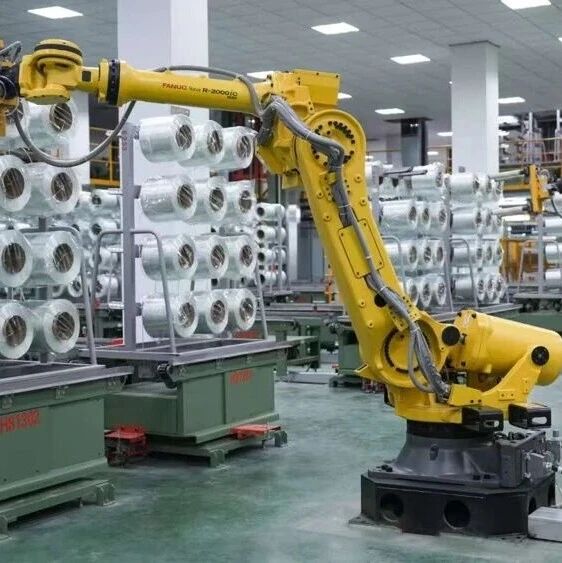
Core Viewpoint - The successful ignition of China's Jushi's 100,000-ton electronic-grade fiberglass production line in Huai'an marks a significant advancement in the global electronic fiberglass market, with the production line accounting for 9% of the global market and being the largest of its kind worldwide [3][4]. Group 1: Production and Market Impact - The new production line will increase Jushi's market share in electronic fiberglass to approximately 28%, enhancing its position in the global market [4]. - This production line is part of the world's first zero-carbon intelligent manufacturing base for fiberglass, aimed at supporting emerging industries such as consumer electronics, 5G communications, and industrial control [3]. Group 2: Technological Advancements - The project integrates advanced technologies including proprietary high-performance glass formulations, large-scale melting furnaces, and smart manufacturing, achieving 100% independent intellectual property rights [5]. - The use of industrial internet, AI quality inspection, and digital twin technologies enables full-process intelligence, significantly improving production efficiency and reducing energy consumption [5]. Group 3: Strategic Importance - Electronic-grade fiberglass is a critical strategic material for printed circuit boards (PCBs), which serve as the physical and electrical connection for all electronic components [5]. - The performance of electronic-grade fiberglass directly influences the dielectric properties, thermal expansion coefficients, and reliability of PCBs, making it essential for the digital economy [5]. Group 4: Future Directions - The company aims to focus on breakthroughs in next-generation electronic fabric core technologies during the 14th Five-Year Plan, collaborating with downstream customers and research institutions to enhance the safety and autonomy of China's electronic information industry chain [5].


新兴产业周报20260317-20260317
Western Securities· 2026-03-17 07:28
Investment Rating - The report recommends an "Overweight" rating for solid-state batteries, innovative drugs, and humanoid robots, while maintaining a "Neutral" rating for commercial aerospace and other sectors [5][21]. Core Insights - The report highlights a "less loss for win" phase, suggesting a focus on sectors with potential growth despite current market pressures [5]. - Key themes include advancements in solid-state batteries, innovative pharmaceuticals, and humanoid robots, with specific mentions of Tesla's production plans and breakthroughs in battery technology [5][10]. Summary by Relevant Sections Solid-State Batteries - The sector is rated "Overweight" with a strong technical outlook, indicating a low position relative to historical averages and potential for growth [5]. - Recent developments include the second-generation semi-solid-state battery from Funeng Technology, which supports fast charging and has achieved small-scale production [5][10]. Innovative Drugs - Rated "Overweight," this sector shows strong fundamentals despite slight downward adjustments in profit expectations [5]. - Notable events include the acceptance of a clinical trial application by Yangli Pharmaceutical for a drug targeting hypertension, marking a significant step for Chinese innovative drugs in international markets [10]. Humanoid Robots - The humanoid robot sector is also rated "Overweight," with a strong technical outlook and ongoing developments, such as Tesla's announcement of mass production plans for its Optimus robot [5][10]. Commercial Aerospace - This sector is rated "Neutral," facing adjustment pressures despite recent successful satellite launches [5]. AI Applications and Computing Infrastructure - Both sectors are rated "Neutral," with moderate growth expectations and recent regulatory approvals for industry standards [5][10]. New Consumption - The new consumption sector is rated "Neutral+" with a strong technical outlook, indicating potential growth opportunities as new consumption enterprises prepare for IPOs [5][10]. Gaming - The gaming sector is rated "Neutral," with recent adjustments in commission rates by major platforms like Apple and Google providing a favorable environment for game developers [5][10]. Low-altitude Economy - This sector is rated "Neutral," with ongoing legislative efforts to support its development [5][10]. Deep Sea Economy - Rated "Underweight," this sector faces challenges despite significant contributions to national oil production [5][10]. Military and Defense - The military sector is rated "Neutral," with ongoing expansions and production commitments from major defense contractors [5][10]. Controlled Nuclear Fusion - This sector is rated "Neutral," with recent government initiatives highlighting its strategic importance for future energy solutions [5][10].
十大增量信息——十五五规划纲要学习心得
Huachuang Securities· 2026-03-16 06:33
Economic Goals - The outline states that by 2035, the per capita GDP is expected to double compared to 2020, reaching a level above $20,000, with an average annual growth rate of 4.17% over the next decade[2][10]. - The GDP growth will be maintained within a reasonable range, with annual adjustments based on circumstances[10]. Major Targets - The "15th Five-Year Plan" outlines 20 major targets, including a 7% annual increase in R&D expenditure and a 17% reduction in carbon emissions per unit of GDP[3][11]. - New indicators include increasing the proportion of care beds in elderly care institutions and improving the enrollment rate of children under three in childcare services[3][11]. Major Projects - A total of 109 major projects will be implemented during the "15th Five-Year Plan," focusing on new industrial capabilities, technological innovation, and infrastructure development, compared to 102 projects in the previous plan[4][12]. - Key areas for new projects include integrated circuits, intelligent manufacturing, and green hydrogen energy[4][12]. Technological Innovation - The plan emphasizes the deep integration of technological and industrial innovation, including establishing a corporate R&D reserve fund and supporting quality tech companies in financing[5][16]. - It aims to enhance the efficiency of data and algorithm supply, promoting innovation in AI and digital technologies[19][20]. Infrastructure Development - The plan prioritizes new infrastructure, renewable energy, and urban renewal, with specific targets for the construction of gas, water, and sewage pipelines totaling approximately 20, 17.5, and 10 million kilometers respectively[23][24]. - It also emphasizes the construction of a national integrated computing network and the development of renewable energy sources[23][24].
投资大家谈 | 长城基金“科技+”:看好有估值和基本面支撑的科技股
点拾投资· 2026-03-14 03:41
Core Viewpoint - The article emphasizes the importance of technology innovation, particularly in the context of AI, as a key focus area during the upcoming Two Sessions in March. It highlights the need for investment strategies that can capitalize on structural opportunities within the technology sector driven by AI advancements [1]. Group 1: Investment Opportunities in AI - Chen Liangdong sees potential in AI-driven sectors, particularly those experiencing rapid demand growth, and suggests that industries benefiting from the government's "anti-involution" policies may present favorable risk-reward investment opportunities [1]. - Shu Wenyu focuses on the AI computing hardware sector, indicating that despite recent market volatility, the long-term trend remains intact. The emphasis is on companies with high earnings visibility and positive fundamental trends, while caution is advised for overvalued stocks [2]. - Zhao Fengfei identifies opportunities in AI infrastructure and applications, including partnerships with major AI model developers and sectors like semiconductors that have both domestic production and price increase logic [4]. Group 2: Market Trends and Risks - You Guoliang notes that geopolitical tensions, such as the US-Iran conflict, have impacted market risk appetite, but he anticipates that defensive assets may outperform in the short term. He remains optimistic about the commercial aerospace sector, expecting significant catalysts in the second quarter [3]. - Han Lin discusses the impact of Middle Eastern conflicts on global financial assets, suggesting that the market may quickly price in risks before returning to focus on domestic policy expectations and risk appetite recovery [6]. - Yang Weiwei highlights the semiconductor expansion opportunities, particularly in AI applications and domestic computing power, suggesting that the sector may see upward momentum due to solid industry fundamentals [7]. Group 3: Focus on Growth Sectors - Yu Huan emphasizes the importance of investing in growth sectors, particularly those benefiting from AI price increases and industries experiencing supply-demand mismatches [5]. - Liu Jiang expresses a positive outlook on emerging technology sectors and resource commodities, suggesting that recent market adjustments could enhance the sustainability of upward trends [8][9].

经济大省挑大梁,多地明确重点布局新产业新赛道
第一财经· 2026-03-10 15:39
Core Viewpoint - The article emphasizes the critical role of major economic provinces in stabilizing and driving China's overall economic growth, particularly in the context of the "14th Five-Year Plan" and the need for innovative industrial development and increased domestic demand [2][4][5]. Economic Stability and Growth Targets - The government aims for an economic growth target of 4.5% to 5% for the year, with major provinces expected to anchor this growth by setting their GDP growth targets between 4.5% and 5.5% [4]. - Major provinces, including Guangdong, Jiangsu, Shandong, and others, collectively contribute approximately 85.5 trillion yuan to the national GDP, accounting for over 60% of the total [4]. Industrial Development and Future Industries - The "14th Five-Year Plan" prioritizes the establishment of a modern industrial system and the strengthening of the real economy as core measures for growth [5]. - Major provinces are focusing on nurturing emerging and future industries, with Shanghai leading in systematic planning for future industries, emphasizing areas such as cognitive technology and talent development [6][8]. Domestic Demand Expansion - The government has placed a strong emphasis on expanding domestic demand, with a focus on building a robust domestic market and promoting consumption and investment [11]. - Shanghai aims to become an international consumption center, while provinces like Henan are working on creating new consumption scenarios to boost local economies [11][12]. Enhancing Public Welfare - Major economic provinces are tasked with improving public welfare, including high-quality employment, increasing income for urban and rural residents, and enhancing public services [15][17]. - Initiatives such as Guangdong's "Million Talents Gathering" plan aim to attract a significant number of graduates to support local economic development [16].
有色:政策提振需求,部分品种供给约束加大
Wu Kuang Qi Huo· 2026-03-10 01:19
Report Summary 1. Investment Rating - Not provided in the report 2. Core View - The policy tone of the government work report is steady and positive. Although the annual economic target is lowered to 4.5%-5.0%, the more proactive fiscal policy and moderately loose monetary policy remain unchanged. There will still be structural highlights in the economy. The demand for metal materials in relevant fields will be boosted, while the supply of some varieties will be relatively limited [3][6] 3. Summary by Metal Copper - The government's support for "two major" and "two new" work will continue to support copper demand in industries, as well as in durable consumer goods such as automobiles and home appliances. However, with the decrease in financial support (250 billion yuan of ultra-long-term special treasury bonds are planned this year, lower than last year's 300 billion yuan), the growth of copper demand for related products will slow down. The cultivation and expansion of emerging and future industries will benefit the demand for copper foils, copper strips, and cables in fields such as integrated circuits, future energy, embodied intelligence, and 6G. The development of the intelligent new economy and the construction of new infrastructure projects are expected to make data centers a new growth point for domestic copper demand, and the demand for copper in green power will also be supported. In the "dual carbon" field, the demand for copper in power grids and supporting energy storage is expected to grow rapidly [7] Aluminum - The moderately loose monetary policy and the effort to stabilize the real estate market are expected to gradually stabilize the domestic real estate market, narrowing the decline in aluminum demand in the real estate sector (accounting for over 20% of total aluminum demand). The construction of a new power system and the growth of State Grid's fixed - asset investment will drive the demand for aluminum in UHV and new energy storage. The implementation of the carbon emission control system may increase the supply disturbance of electrolytic aluminum. Given that domestic electrolytic aluminum production capacity is approaching the ceiling and the Middle East conflict is disrupting global supply, aluminum prices may benefit [8] Alumina - The two - sessions policy will promote the green transformation of the alumina supply side and the upgrade of the demand side to high - value - added products, aiming to transform the industry from "quantity" to "quality". On the supply side, environmental protection policies will accelerate the elimination of backward production capacity. On the demand side, policies will guide the downstream consumption structure to upgrade to high - end alumina in high - tech fields such as new energy and semiconductors, with limited impact on traditional fields [9] Zinc - The construction of a modern industrial system will boost zinc demand in galvanizing and die - casting zinc alloy fields. The development of a green and low - carbon economy will promote the transformation of the zinc smelting industry, and the clearance of high - energy - consuming and backward production capacity may ease the short - term surplus pressure of domestic zinc ingots. The future trend of zinc prices depends on whether policy stimulus can lead to a rapid recovery of downstream demand [10][11][13] Lead - The emphasis on environmental protection and resource recycling will standardize the lead industry. Policies on the cross - provincial transfer of waste lead - acid batteries and the closed - loop recycling system may ease the shortage of raw materials. In the short term, lead supply may tighten, strengthening price support. In the long term, the industry will achieve a balance between the primary and recycled lead sectors [14] Tin - The focus on emerging industries at the two - sessions provides strong support for the core demand of tin in electronic solders. On the supply side, the limited domestic tin resources and strict environmental protection constraints limit the growth of primary tin production capacity, and the recycled tin industry cannot make up for the gap in the short term. On the demand side, the expansion of new industries boosts the demand for high - end solders, and the strategic reserve of rare metals enhances the strategic value of tin. The supply - demand imbalance of tin will continue [15] Nickel - The policies support the development of new energy and green - low - carbon industries, improving the demand for nickel. On the supply side, policies promote domestic nickel exploration and the efficient use of recycled nickel, while restricting the release of new smelting capacity. On the demand side, policies drive the demand for nickel in new energy vehicles, energy storage, and stainless steel. The over - supply situation of the nickel market is expected to converge [16] Lithium Carbonate - The government work report emphasizes the development of future energy and the carbon emission control system, making the lithium - battery industry a key support for energy storage and transportation electrification. In the energy storage field, the carbon emission control system and the national low - carbon transformation fund will drive the growth of lithium - battery energy storage. In the transportation field, the substitution of new energy vehicles for fuel vehicles has a large potential. The lithium - battery industry will have more development opportunities [17] Stainless Steel - The real - estate policy focuses on the utilization of existing assets, with limited impact on new construction projects. However, policies such as old - community renovation and affordable housing construction may increase the demand for building materials. The policy of expanding domestic demand will stimulate the demand for stainless steel in home appliances and automobiles. With the tightening of raw material supply from Indonesia, the supply - demand situation of the stainless - steel market is expected to improve, and prices may stabilize and rebound [19]
紧跟国家战略脉搏,九方智投AI股票机解读“两会”未来产业新机遇
第一财经· 2026-03-09 07:37
Core Viewpoint - The article emphasizes the importance of nurturing and expanding emerging and future industries as outlined in the government work report, which has garnered significant attention in the capital markets [1]. Group 1: Policy Insights - The government work report highlights the implementation of an industrial innovation project, encouraging state-owned enterprises to lead in opening application scenarios for emerging pillar industries such as integrated circuits, aerospace, biomedicine, and low-altitude economy [1]. - A mechanism for investment growth and risk sharing in future industries is proposed, focusing on future energy, quantum technology, embodied intelligence, brain-computer interfaces, and 6G [1][3]. Group 2: Investment Opportunities - The investment advisory team at Jiufang Zhitu has quickly identified "future industries" as a core keyword and structured its analysis around its definition, scope, and policy support directions, providing users with a competitive edge in decision-making [3]. - Six key future industry directions have been summarized: future energy, embodied intelligence, quantum technology, brain-computer interfaces, biomanufacturing, and space economy, reflecting a deep understanding of policy spirit and industry trends [11]. Group 3: Decision-Making Support - Jiufang Zhitu's AI stock machine has produced in-depth video interpretations of the government work report, analyzing how future industries can transition from "technological breakthroughs" to "industrial monetization," impacting the valuation systems and growth logic of related A-share sectors [14][16]. - The AI stock machine serves as a bridge between macro national narratives and micro personal decisions, translating complex policy language into actionable investment logic for investors [18]. Group 4: Technological Empowerment - Jiufang Zhitu AI stock machine is recognized for its timely, accurate, comprehensive, and professional interpretation advantages, enabling ordinary investors to engage with cutting-edge fields like quantum technology and brain-computer interfaces without cognitive barriers [18][19].

事关老年人就业、义务教育年限、生育休假等,这场记者会信息量很大
21世纪经济报道· 2026-03-07 10:25AI Processing
国务院新闻办公室于2026年3月7日(星期六)下午3时举行吹风会,请国家发展改革委副主任郑备,国家发展改革委秘书长袁达,国 家发展改革委发展战略和规划司司长陈雷,国家发展改革委创新和高技术发展司司长白京羽,国家发展改革委社会发展司司长刘德 春解读"十五五"规划《纲要(草案)》,并答记者问。 发布会要点如下: 国家发展改革委副主任 郑备: "十五五"规划纲要草案共设18篇、62章、171节 "十五五"规划纲要草案共设18篇、62章、171节,分为三大板块。 第一板块为总论,对应第一篇,包括发展环境、指导方针和主要目标,主要是贯彻落实党中央《建议》明确的指导思想、原则和目 标要求,提出了"十五五"时期经济社会发展的20项主要指标。 第二板块是重大战略任务,对应第二篇至第十七篇,从产业发展、科技创新、数智化发展、国内市场、深化改革、对外开放、乡村 振兴、城乡区域、文化建设、人口发展、民生保障、绿色发展、安全发展、国防建设、民主法治、一国两制等16个方面阐述主要任 务和重大举措。 其中,顺应数字技术和人工智能发展大势,将提升数智化发展水平单独成篇;立足人口发展的阶段性特征,将人口 高质量发展单独成篇。 第三板块是规划 ...

利好来了!事关创业板IPO,吴清明确
21世纪经济报道· 2026-03-06 09:48
Core Viewpoint - Since the implementation of the "827 New Policy" in 2023, consumer and service enterprises face significant pressure for A-share listings, leading to a trend of these companies opting for listings in Hong Kong. Recent statements from the China Securities Regulatory Commission (CSRC) indicate support for innovative consumer and modern service enterprises to list on the ChiNext board, which may enhance the diversity and inclusivity of A-share IPOs [1]. Group 1 - The CSRC chairman, Wu Qing, announced a series of reform measures for the ChiNext board, specifically supporting high-quality innovative consumer and modern service enterprises for IPOs [1]. - The support for consumer and service enterprises to list on the ChiNext board comes with prerequisites, including characteristics of "modernity," "newness," and alignment with entrepreneurial innovation [1]. - The increase in IPOs for consumer and service enterprises on the ChiNext board should be approached with cautious optimism, as it does not guarantee a significant rise in the number of listings [1].