市场结构性风险

Search documents
相比鲍威尔“收传票”,下周这场庭审对美联储独立性“更加重要”,对市场“意义重大”
Sou Hu Cai Jing· 2026-01-14 00:20
Core Viewpoint - The upcoming Supreme Court hearing on January 21 regarding the case against Federal Reserve Governor Lisa Cook is expected to have significant implications for the independence of the Federal Reserve and the potential for political influence over monetary policy [1][3]. Group 1: Legal Implications - The Supreme Court will hear arguments about whether the President can remove Federal Reserve officials "for cause," which could set a critical legal precedent affecting the structure of the Federal Reserve [1][5]. - If the court rules against Cook, it could increase the likelihood of Federal Reserve Chair Jerome Powell being removed due to the ongoing investigation by the Department of Justice [1][6]. Group 2: Market Reactions - Financial markets have reacted to the developments, with traders betting that the Federal Reserve will not take action in its upcoming policy meeting, pushing expectations for the next rate cut to June [2]. - The market has shown a clear directional response, with declines in the dollar, stock market, and bonds, indicating how the market may digest this long-term risk if the situation escalates [2]. Group 3: Structural Risks - The potential outcome of the Cook case could lead to a Federal Reserve composed of more dovish members, which may not respond appropriately to economic cycles, resulting in severe structural costs for the market [6]. - If the court supports the President's ability to dismiss Cook, it could lead to a broader erosion of checks on executive power, impacting the Federal Reserve's independence [5][6]. Group 4: Powell's Position - Powell may decide to remain on the Federal Reserve Board beyond his term as Chair, which ends in May, as a response to the pressure from the Trump administration [7]. - The probability of Powell continuing to serve on the Federal Reserve Board after his Chair term has increased to over 55%, reflecting a shift in market expectations regarding his departure [7].


原料供应收紧 沪锌下方支撑力量较强
Qi Huo Ri Bao· 2025-11-20 00:26
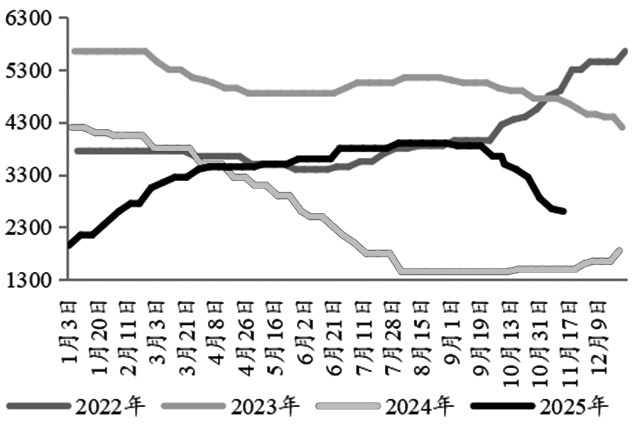
Core Viewpoint - In the second half of this year, the zinc market is experiencing wide fluctuations in prices, supported by tightening raw material supply and increasing demand from domestic refineries [1] Supply and Demand Dynamics - Domestic zinc supply has become more relaxed due to the resumption of overseas mines, with refinery raw material inventories available for about 28 days and processing fees continuously recovering, leading to improved refinery profits of approximately 2000 CNY/ton [1] - Monthly production from refineries has increased from around 500,000 tons to over 600,000 tons, with some refineries starting winter storage in mid-September, further boosting demand [1] - The price ratio between Shanghai zinc and London zinc remains low, with refineries favoring the purchase of domestic ore due to cost-effectiveness, while imports are primarily through long-term contracts [1] - As temperatures drop in the north, some mines will enter seasonal maintenance, potentially tightening supply into the first quarter of next year [1] Processing Fees and Profitability - As of November 7, the processing fee for domestic zinc concentrate has decreased to 2650 CNY/metal ton, down 32.05% from the peak in September, while the processing fee for imported zinc concentrate has also declined to 98.37 USD/dry ton, down 17.16% from October's high [2] - The latest announcement from the China Zinc Raw Material Joint Negotiation Group indicates that the processing fee guidance for imported zinc concentrate will be between 105-120 USD/dry ton until the end of Q1 2026 [2] - The shift in processing fees has led to a transfer of profits back to the mining sector, with zinc concentrate production profits rising to 5398 CNY/metal ton, a 52.06% increase compared to September, while refined zinc production profits have dropped to -1338 CNY/ton, a decline of 1172 CNY/ton [2] Inventory Trends - London zinc inventory has been decreasing since late April, reaching 37,800 tons by November 12, a decline of 80.65% from the peak in April and 84.79% year-on-year [4] - Domestic inventories continue to accumulate due to sufficient raw materials and good production profits, with refined zinc production from January to October totaling 5.6863 million tons, a year-on-year increase of 10.09% [6] - Downstream enterprises are primarily purchasing zinc ingots based on demand and price dips, leading to a continuous accumulation of inventory [6] Market Structure and Future Outlook - The London Metal Exchange (LME) plans to implement permanent rules to address liquidity risks in near-month contracts, indicating a systematic response to structural risks in the market [7] - The current state of Shanghai zinc futures shows "pressure above and support below," with expectations of slight downward price movement in the short term due to high inventory levels and weak demand, while tight raw material supply and reduced refinery production expectations provide strong support for prices in the medium to long term [9]