
年菜消费确定性

Search documents
年菜消费新选择:从“丰盛的惊喜”转向“确定的幸福”
Bei Jing Ri Bao Ke Hu Duan· 2026-02-14 00:53
Core Insights - The Chinese New Year cuisine market is experiencing a significant transformation, with a focus on "certainty" in consumer choices, leading to a projected market size exceeding 260 billion yuan by the end of the year, growing at an annual rate of over 38% [10][11][12] Group 1: Market Trends - The demand for New Year’s Eve dinner reservations has surged, with platforms like Meituan reporting a threefold increase in orders compared to the previous year [11] - Consumers are increasingly favoring family gatherings over business dinners, prompting restaurants to adapt their offerings to meet family needs [11] - The trend towards pre-packaged and semi-finished dishes is becoming mainstream, with over 60% of consumers opting for these options [15] Group 2: Consumer Behavior - The desire for a predictable dining experience is driving consumer choices, with families preferring fixed-price packages that eliminate uncertainty [13][14] - The focus has shifted from traditional displays of culinary skill to ensuring quality family time during the holiday, with 74% of consumers viewing the holiday as a time for relaxation [14][15] - Consumers are willing to pay for "zero-risk" dining experiences, reflecting a shift in the value placed on family gatherings [14][15] Group 3: Supply Chain and Operational Strategies - Companies are restructuring their supply chains to ensure quality and price stability during peak demand periods, with advanced inventory management practices being implemented [17] - Retail platforms are standardizing regional dishes to ensure consistent quality and taste, enhancing the overall dining experience [17][18] - The integration of cultural elements into meal offerings is becoming a competitive advantage, with brands creating unique dining experiences that resonate with consumers [18]

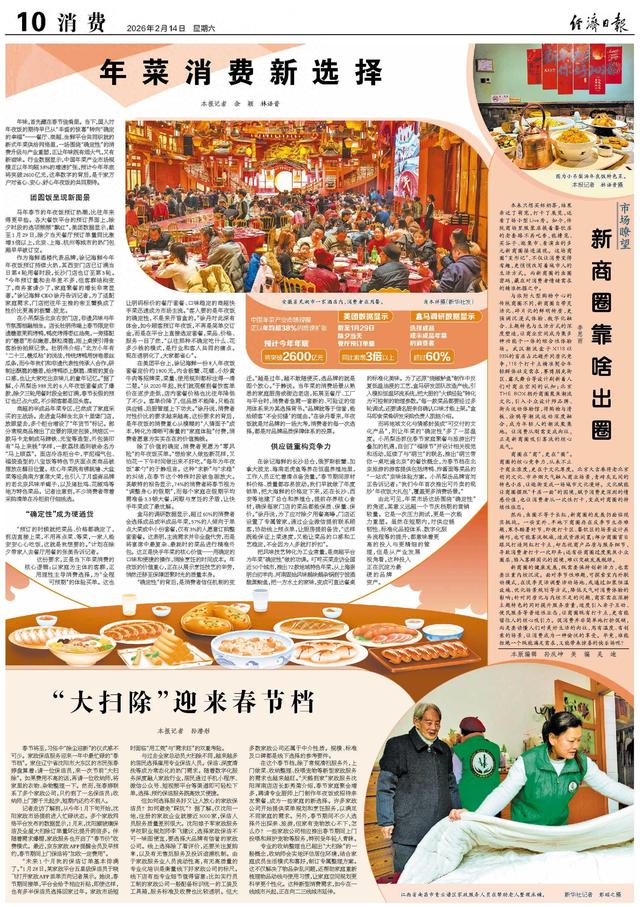
年菜消费新选择:菜品、价格“确定性”成为硬通货
Jing Ji Ri Bao· 2026-02-14 00:41
Core Insights - The Chinese New Year cuisine market is experiencing a significant transformation, with a focus on "certainty" in consumer choices, leading to a consumption upgrade and industry reshaping. The market size is expected to exceed 260 billion yuan by the end of this year, growing at an annual rate of over 38% [1] Group 1: Consumer Trends - The demand for New Year's Eve dinner reservations has surged earlier this year, with a reported increase of over three times in pre-orders on platforms like Meituan compared to last year [2] - Consumers are increasingly favoring family gatherings over business dinners, leading to a shift in the types of dishes offered, with a preference for more cost-effective options [2] - The trend of "certainty" in dining experiences is becoming a key consumer demand, with families preferring pre-defined meal packages that eliminate uncertainty in menu selection and pricing [4][5] Group 2: Market Dynamics - Over 60% of consumers are opting for ready-made or semi-finished dishes, indicating a preference for outsourcing complex meal preparations while still enjoying traditional flavors [6] - The focus on value and quality is shifting consumer spending from traditional "face-saving" costs to measurable family experiences, with consumers willing to pay for tangible value [5] - The competition in the New Year's cuisine market is not just about seasonal marketing but also about building resilient supply chains and standardized quality control systems, which are becoming essential brand assets [8] Group 3: Supply Chain and Product Development - Companies like Xu Ji Seafood are implementing annual contracts to stabilize prices and ensure quality during the peak season, enhancing their supply chain resilience [7] - Retail platforms are innovating by standardizing regional dishes and employing technology to replicate traditional cooking methods, ensuring consistent quality across products [7] - The integration of cultural elements into meal offerings is becoming a strategy to enhance consumer engagement, with brands creating unique dining experiences that resonate with family traditions [8]
年菜消费新选择
Xin Lang Cai Jing· 2026-02-13 22:47
Core Insights - The Chinese New Year cuisine market is experiencing a significant transformation, shifting from a focus on "surprising abundance" to "certain happiness," with a market size projected to exceed 260 billion yuan by the end of the year, growing at an annual rate of over 38% [1] Group 1: Market Trends - The demand for New Year's Eve dinner reservations has surged earlier this year, with a reported threefold increase in pre-orders on platforms like Meituan, particularly in major cities such as Beijing, Shanghai, and Hangzhou [2] - The consumer base for dining has shifted from business gatherings to family reunions, leading restaurants to adapt their offerings to more cost-effective options [2] - Supermarkets are becoming the primary battleground for purchasing semi-finished New Year dishes, with various festive products and themed packaging being introduced to attract consumers [3] Group 2: Consumer Preferences - Consumers are increasingly seeking "certainty" in their dining experiences, preferring pre-defined meal packages that eliminate the uncertainty of ordering [4] - The average consumer is now more focused on measurable family experiences rather than traditional social pressures, leading to a demand for transparent pricing and quality [5] - Over 60% of consumers prefer ready-made or semi-finished dishes, indicating a trend towards outsourcing the most complex meal preparations [6] Group 3: Supply Chain and Operational Strategies - Companies are restructuring their supply chains to ensure quality and price stability during peak demand periods, with advanced inventory management practices being implemented [7] - Retail platforms are standardizing regional dishes to ensure consistent quality and flavor, utilizing technology to replicate traditional cooking methods [7] - The integration of cultural elements into meal offerings is enhancing the emotional connection consumers have with their dining experiences, as seen with initiatives like "福禄节" [8]