
海鲜

Search documents
Nature Health:浙江大学发现,这种中国特色饮食,能够显著降低肥胖和心血管风险,对男性尤其有效
生物世界· 2026-03-15 04:22
Core Viewpoint - The article discusses the health benefits of the "Eastern Diet" identified in a study, which is associated with reduced obesity and improved cardiometabolic health in the eastern coastal regions of China [4][10]. Group 1: Research Findings - A study involving 8,931 participants from the WELL-China cohort revealed that the Eastern Diet can significantly lower obesity risk and reduce the risk of severe cardiovascular events by 22% [4][12]. - The Eastern Diet was identified through a "unsupervised clustering" algorithm, highlighting its health benefits based on real dietary data rather than a pre-designed meal plan [7][8]. - Approximately 46.8% of participants adhered to the Eastern Diet, which is characterized by a preference for lighter flavors and includes a higher intake of vegetables, fruits, seafood, whole grains, and dairy products [7][10]. Group 2: Health Benefits - Following the Eastern Diet leads to a 17% reduction in the risk of central obesity, which is a more harmful type of obesity characterized by excess abdominal and visceral fat [10][12]. - The study found that individuals adhering to the Eastern Diet had a healthier fat distribution, with reduced abdominal fat and increased lower limb fat [10]. - The diet is associated with a 36% reduction in cardiovascular event risk for men, while women also benefit but to a lesser statistically significant extent [14][15]. Group 3: Dietary Recommendations - The Eastern Diet emphasizes the consumption of recognized healthy foods such as vegetables, fruits, seafood, whole grains, nuts, and dairy, while reducing refined grains, red meat, and fried foods [11][16]. - Practical guidelines for adopting the Eastern Diet include incorporating whole grains and root vegetables, ensuring a colorful plate with plenty of vegetables and fruits, diversifying protein sources, and using healthier cooking methods [16][18].


“中国得利最大”,东南亚挠头…
Xin Lang Cai Jing· 2026-02-27 15:21
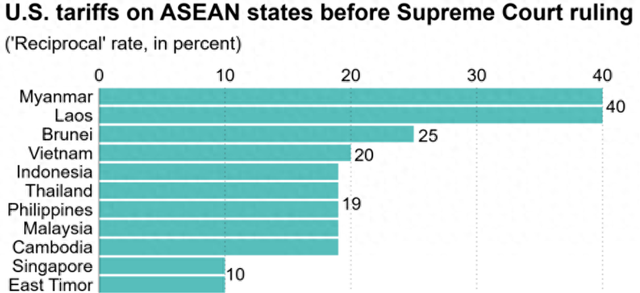
Core Viewpoint - The recent U.S. Supreme Court ruling against the so-called "equivalent tariffs" has led to the implementation of a 10% global tariff on goods, which may increase to 15% in the future, creating uncertainty for Southeast Asian exporters and complicating their trade strategies [1][2]. Group 1: Impact on Southeast Asian Exporters - Southeast Asian exporters are in a state of uncertainty, struggling to adjust their supply chains, pricing strategies, and shipping plans due to the fluctuating U.S. tariff policies [1][2]. - The ruling has made China one of the "biggest direct beneficiaries," complicating the competitive landscape for Southeast Asian countries [1][2]. - Countries like Cambodia, Malaysia, and Indonesia, which have bilateral trade agreements with the U.S., are facing significant uncertainty regarding their trade arrangements [2]. Group 2: Business Strategies and Adjustments - Many businesses in Indonesia are adopting a strategy of "risk reduction while maintaining exports," with selective early shipments rather than a rush to export [5]. - The Indonesian Employers Association has noted that the current legal environment is unstable, making it difficult for companies to formulate stable business plans [4]. - Companies in Malaysia are also adjusting their strategies, with some choosing to ship products early to avoid inventory buildup, while others are reassessing their contracts and risk exposures [5][7]. Group 3: Economic Outlook and Future Scenarios - The uncertainty surrounding U.S. tariffs is expected to remain a dominant theme in the region, with potential scenarios including a return to previous tariff levels or the establishment of a permanent 15% rate [2]. - Vietnam is seen as a potential beneficiary of supply chain shifts, although it has not finalized a trade agreement with the U.S., leaving its tariff situation uncertain [6]. - The Asian Development Bank has indicated that the new tariffs could have macroeconomic impacts on Cambodia, potentially trapping it in a passive position due to global trade policy fluctuations [7].
葡萄牙 英国欧洲食品出口要求
Sou Hu Cai Jing· 2026-02-26 02:48
Core Viewpoint - The article discusses the food export requirements between Portugal and the UK, emphasizing the importance of adhering to strict regulations to ensure food safety, quality, and authenticity in the trade process [1]. Group 1: Food Safety and Hygiene Standards - Food exports must comply with high hygiene standards throughout production, processing, packaging, storage, and transportation. This includes implementing a preventive food safety system based on hazard analysis and critical control points [4]. - For perishable products like seafood and dairy, strict temperature control records and supply chain traceability are essential to ensure food safety within its shelf life [4]. Group 2: Product Composition and Labeling Regulations - Food composition and labeling must be clear and accurate, adhering to destination market requirements. Labels should include product name, ingredient list, allergen information, net weight, producer information, expiration date, and storage conditions [5]. - Specific categories like organic products and those with geographical indications require official certification to ensure authenticity [5]. Group 3: Special Regulations for Animal Products - Stricter regulations apply to animal-derived products such as meat, dairy, and eggs. Exporters must register with relevant authorities and undergo regular inspections [6]. - Each shipment must include an official health certificate from the exporting country's authorities, confirming compliance with destination market health standards [6]. Group 4: Health Requirements for Plant Products - For plant products like fruits and vegetables, preventing the spread of pests and diseases is crucial. A phytosanitary certificate may be required to prove that products have been inspected and meet health standards [7]. Group 5: Customs and Trade Procedures - After ensuring product compliance, exporters must follow formal customs procedures, including accurate classification, value declaration, and payment of applicable tariffs [8]. - Complete documentation, including commercial invoices and health certificates, is necessary for smooth customs clearance [8]. Group 6: Regulatory Differences Post-Brexit - The food trade between Portugal and the UK is governed by a trade and cooperation agreement, which avoids most tariffs but does not align regulatory rules automatically [11]. - Exporters must comply with both the exporting country's regulations and the importing country's independent regulations, reflecting the need for high responsibility and attention to detail in the evolving regulatory landscape [11].

2025年爱尔兰对埃及的出口增长了5%
Shang Wu Bu Wang Zhan· 2026-02-26 02:47
Core Insights - The report by the Arab-Irish Chamber of Commerce (AICC) explores Egypt's potential to become a major export market for Ireland over the next five years [1] - Egypt is currently Ireland's third-largest Arab export market, accounting for nearly 8% of Ireland's total exports to the Arab region [1] - In the first nine months of 2025, Ireland's exports to African countries reached €169.9 million, reflecting a 5% increase compared to 2024 [1] - Major export categories include dairy products, pharmaceuticals, fish, seafood, and essential oils [1] - AICC CEO Eunice stated that when service exports are included, the export value could approach €1.2 billion [1]
特朗普政府正酝酿征收新关税
Xin Lang Cai Jing· 2026-02-24 19:18
Group 1 - The U.S. Supreme Court ruled that the large-scale tariffs imposed by the Trump administration under the International Emergency Economic Powers Act were illegal, leading to uncertainty in the economy [1] - The Trump administration is preparing to impose new tariffs on six categories of products based on other legal provisions related to national security, which differ from the newly introduced 15% tariffs [1][4] - The U.S. Department of Commerce is initiating new investigations under Section 232 of the Trade Expansion Act of 1962, targeting products such as large batteries, cast iron, plastic pipes, industrial chemicals, and telecommunications equipment [2] Group 2 - The Trump administration previously invoked Section 232 to investigate nine categories of products, including semiconductors and pharmaceuticals, with investigations potentially accelerating after the Supreme Court ruling [3] - The administration intends to modify the algorithm for steel and aluminum tariffs, which may lower nominal rates for some products but could result in higher overall tariffs based on total product value [3] - The Supreme Court's ruling has led to the cessation of tariffs under the International Emergency Economic Powers Act, but tariffs under Sections 232 and 301 remain effective [4] Group 3 - The new tariffs and trade policies introduced by the Trump administration are expected to increase complexity and uncertainty in the economic landscape, with experts noting a lack of clarity regarding future tariff changes [5] - The administration's use of multiple trade laws to impose tariffs may not allow for quick implementation, potentially taking months to take effect [4][5]
美媒:特朗普政府正酝酿征收新关税
Xin Lang Cai Jing· 2026-02-24 11:51
Core Viewpoint - The U.S. Supreme Court ruled that the large-scale tariffs imposed by the Trump administration under the International Emergency Economic Powers Act were illegal, leading to plans for new tariffs based on national security laws, which may increase economic uncertainty [1][6]. Group 1: New Tariff Investigations - The U.S. Department of Commerce is initiating new investigations under Section 232 of the Trade Expansion Act of 1962 for products in industries such as large batteries, cast iron and iron fittings, plastic pipes, industrial chemicals, and telecommunications equipment [1][6]. - The U.S. Trade Representative's office is also starting new trade investigations under Section 301 of the Trade Act of 1974, which may lead to tariffs on issues like drug pricing and discrimination against U.S. technology companies [2][6]. Group 2: Existing Tariffs and Changes - The Trump administration previously invoked Section 232 to investigate nine categories of products, including semiconductors and solar panels, with many investigations ongoing for nearly a year [2][7]. - There is an intention to modify the algorithm for steel and aluminum tariffs, potentially lowering nominal rates but taxing based on the total value of products rather than just their steel and aluminum content [7]. Group 3: Economic Uncertainty - Following the Supreme Court ruling, the Department of Homeland Security confirmed that tariffs under the International Emergency Economic Powers Act would cease, but tariffs under Sections 232 and 301 remain effective [9]. - The new tariffs announced under Section 122 of the Trade Act of 1974 will impose a 15% tariff on goods from all countries for a maximum of 150 days, requiring Congressional approval for extension [9]. - Experts predict that the complexity and unpredictability of trade policies will increase, leading to greater uncertainty regarding future tariffs [10].
爸爸妈妈别塞了,这些真不让带!
Xin Lang Cai Jing· 2026-02-23 12:30
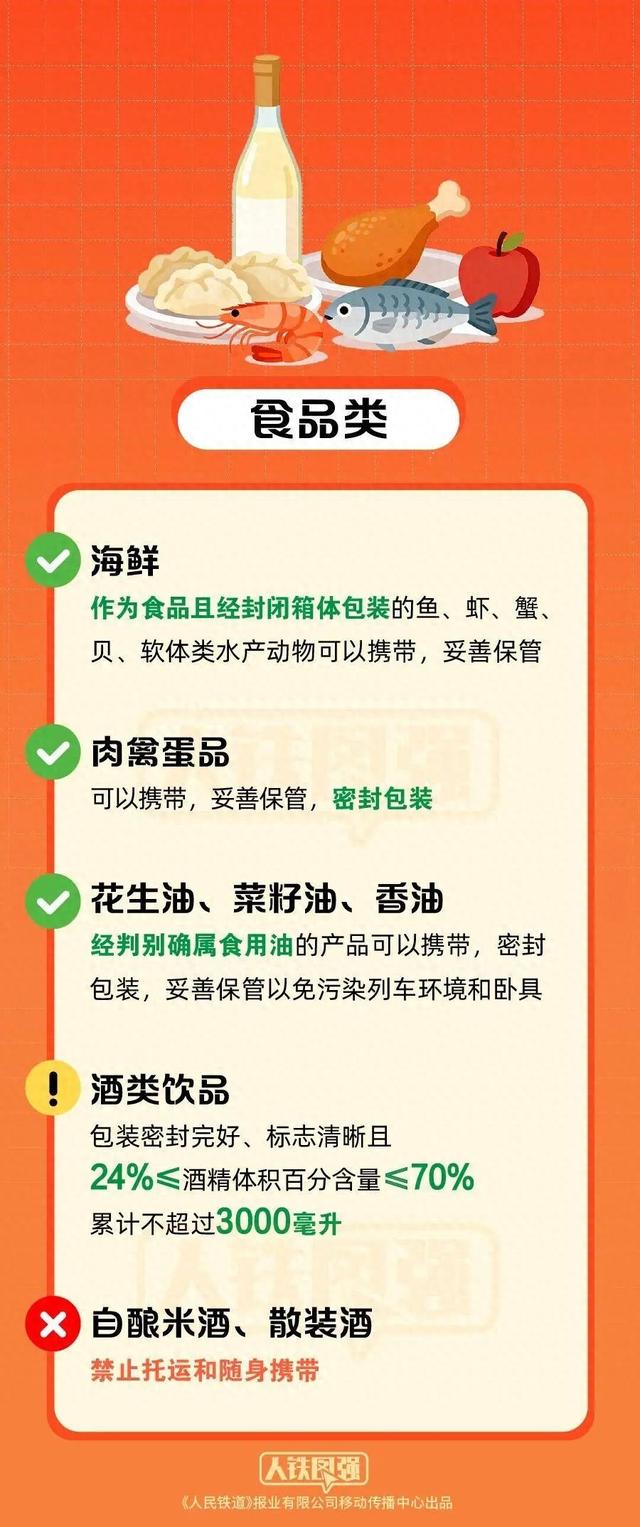
Group 1 - The article provides guidelines on items that can and cannot be carried on trains, emphasizing the importance of proper packaging and handling to avoid contamination and safety issues [1][3][4] - Specific food items such as meat, poultry, and eggs are allowed if properly sealed and stored, while certain alcoholic beverages are permitted under specific conditions, including a maximum alcohol content of 70% and a total volume not exceeding 3000 milliliters [3][4] - Personal care items like perfumes and sprays are allowed in limited quantities, with restrictions on container sizes for flammable products [6][7] Group 2 - Items such as knives with blades longer than 60mm are prohibited for carry-on but can be checked in, while smaller knives are allowed [7][11] - Certain recreational items like folding strollers and wheelchairs are permitted, with specific guidelines for electric wheelchairs [8][9] - Prohibited items include flammable liquids, certain tools, and weapons, which cannot be carried on or checked in [14][15] Group 3 - Smoking is strictly prohibited on high-speed trains and in designated areas of regular trains, with fines imposed for violations [18] - Passengers are allowed to carry a limited number of electronic cigarettes and lighters, but usage is restricted [18] - Guidelines for transporting small animals, such as guide dogs and pets, are provided, including weight limits and health requirements [19] Group 4 - The article outlines procedures for reporting lost items, including using the railway's official app and contacting customer service for assistance [20][21][22][23]
西安未央:巡逻走访排查隐患 警企联手守护安宁
Xin Lang Cai Jing· 2026-02-23 08:22
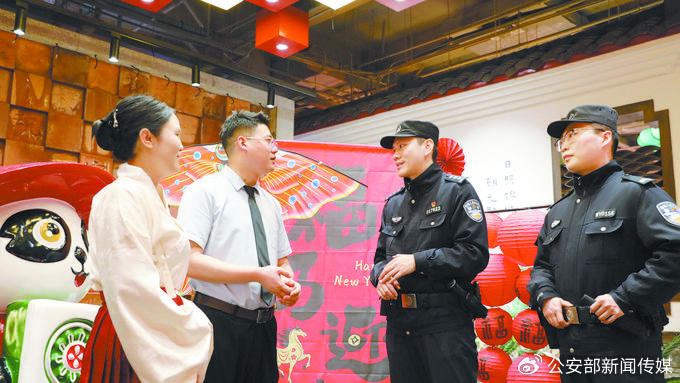
Core Viewpoint - The article highlights the proactive measures taken by the police in Xi'an to ensure public safety and the smooth operation of markets during the Chinese New Year, emphasizing the importance of safety inspections and community engagement. Group 1: Market Operations - The largest agricultural wholesale market in Xi'an, Xibeicheng Agricultural Products Wholesale Market, was bustling with activity as residents rushed to purchase goods for the New Year [1] - The market featured a variety of products including vegetables, seafood, and meat, contributing to the festive atmosphere [1] Group 2: Police Engagement - Officer Han Jiacheng from the Han City Police Station was actively inspecting a seafood stall, ensuring that all goods were fresh and compliant with safety regulations [2] - The police's "Spring Festival Protecting Enterprises and Supporting Businesses" initiative involved thorough inspections at key locations, including logistics centers, to ensure timely delivery of goods [2] Group 3: Safety Measures - Officer Han conducted safety inspections in a large fresh food supermarket, addressing electrical hazards and providing safety training to staff [2] - The police's efforts created a safety net for the community, ensuring that families could celebrate the New Year with peace of mind [3]
博贺渔港,马年火热|新春走基层
Nan Fang Nong Cun Bao· 2026-02-23 07:01
Core Viewpoint - The article highlights the vibrant atmosphere and increased tourism in the fishing town of Boge during the Spring Festival, showcasing its unique cultural and culinary offerings that attract visitors and boost local businesses. Group 1: Tourism and Local Economy - The Boge market, known for its seafood, has seen a surge in visitors during the Spring Festival, leading to fully booked hotels and bustling local businesses [20][21] - The market's operating hours have been extended to accommodate late-rising tourists, enhancing their experience of purchasing fresh seafood [14][15] - The influx of tourists has resulted in a significant increase in restaurant turnover, with some establishments reporting a 4 to 5 times higher table turnover rate compared to normal periods [29] Group 2: Seafood Industry and Cultural Significance - Local seafood sales have skyrocketed, with pre-festival sales reaching three times the usual volume, driven by traditional customs and the demand for fresh ingredients for festive meals [30][31] - The unique cultural practice of "Nian Li," where the community comes together to celebrate with seafood, has further fueled demand, with families ordering large quantities for celebrations [38][49] - The fishing community's rhythm during the festival includes a temporary pause for family reunions, followed by preparations for the upcoming fishing season to meet the demand for seafood [44][48]

津城年味“云”端浓
Xin Lang Cai Jing· 2026-02-22 21:01
Group 1 - The core viewpoint of the articles highlights the transformation in consumer behavior during the Spring Festival in Tianjin, shifting from "pragmatism" to "emotional value" in purchasing decisions [1][3] - Traditional categories such as seafood, alcohol, dairy, and nuts have seen significant growth, indicating a robust demand for festive goods [1] - The popularity of DIY activities among younger consumers is rising, with handmade items like embroidery and flower lanterns gaining traction, reflecting a desire for personal involvement in celebrations [1] Group 2 - In the tourism sector, popular attractions during the Spring Festival include the Tianjin Eye and the National Ocean Museum, with hotel bookings in key areas like Binjiang Dao and Italian Style Street increasing by 20% year-on-year [2] - The concept of "atmosphere consumption" is prevalent, as consumers engage in various activities from purchasing festive goods to enhancing their home environments, contributing to a vibrant festive atmosphere [3]