康德哲学

Search documents
看不清方向时,如何决策?
3 6 Ke· 2026-02-28 04:03
Core Insights - The article emphasizes that market analysis often reflects perceived phenomena rather than the true nature of the market, suggesting that businesses should focus on experimentation rather than solely relying on predictive models [3][22][46] Group 1: Historical Context of Financial Crises - The article discusses the Great Depression of the 1920s, highlighting the initial optimism in the U.S. economy and the subsequent stock market crash that led to widespread financial ruin [4][5] - It notes that classical economics initially downplayed the crisis, believing in the market's self-correcting nature, which ultimately failed as unemployment soared to 20%-25% [6][7] Group 2: Economic Theories and Their Limitations - The article outlines the evolution of economic thought, from classical economics to Keynesianism, and the resurgence of Austrian economics post-2000 financial crisis, indicating that no single theory can fully explain economic phenomena [9][10][11] - It argues that all economic theories are merely models and interpretations of reality, not absolute truths [11][44] Group 3: Insights from Kant's Philosophy - Kant's philosophy suggests that humans perceive the world through a subjective lens, which limits their understanding of the true nature of reality [12][16] - The article posits that all market analyses are interpretations of market phenomena rather than the market itself, urging businesses to focus on real-world interactions [22][44] Group 4: Case Study of Pinduoduo - Pinduoduo's success is attributed to its innovative approach of integrating social interaction and gamification into shopping, rather than optimizing traditional search functions [24][25][26] - The company exemplifies how businesses can create new market opportunities through experimental interactions rather than relying on existing market analyses [24][25] Group 5: Organizational Culture and Strategy - The article advocates for a shift from deterministic planning to exploratory experimentation within organizations, emphasizing the need for flexibility and adaptability [27][30] - It suggests that leaders should act as chief experimenters, fostering a culture that encourages trial and error while minimizing the costs of failure [32][39] Group 6: Embracing Failure as a Learning Tool - The article highlights the importance of creating a culture that rewards learning from failures rather than punishing them, which can lead to innovation and growth [39][40] - It calls for the establishment of a knowledge base that documents both successful and unsuccessful experiments to enhance organizational memory and learning [41][42]


郑昕:为更多学者提供学术交流平台
Xin Lang Cai Jing· 2025-12-25 19:23
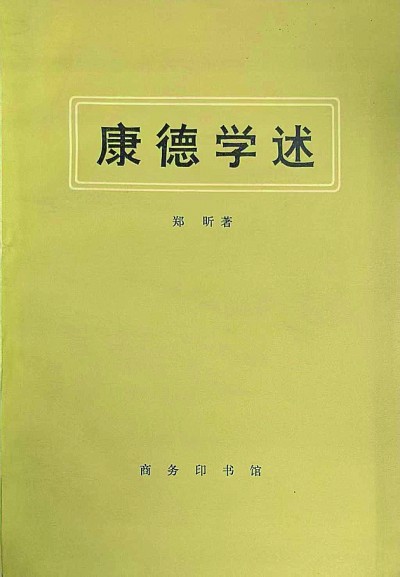
Core Viewpoint - The establishment of the Chinese New Philosophy Research Association in 1949 marked a significant moment in the development of philosophical discourse in China, aiming to unite philosophers and promote new philosophical ideas in the context of a new democratic society [1]. Group 1: Historical Context - The Chinese New Philosophy Research Association was officially established on July 13, 1949, as announced in the first edition of the Guangming Daily [1]. - The association's mission included uniting philosophers to understand the development laws of a new democratic society and to critique and absorb old philosophical heritage [1]. Group 2: Key Figures - Renowned philosopher Zheng Xin was elected as the vice president of the association, having studied philosophy in Germany under the guidance of Bruno Bauch, a master of Neo-Kantianism [2]. - Zheng Xin returned to China in 1932 and became a professor at Peking University, later serving as the head of the philosophy department twice after the founding of the People's Republic of China [4]. Group 3: Contributions to Philosophy - Zheng Xin authored "A Study of Kant," which was the first comprehensive introduction to Kant's philosophy in China, significantly advancing the study of Kantian philosophy in the country [4]. - Under Zheng Xin's leadership, the "Philosophy" special publication was created to provide a platform for philosophical research and discussion, emphasizing the importance of serving the interests of the working people and socialist construction [5]. Group 4: Academic Influence - The "Philosophy" publication became a forefront for academic exchange in the national philosophical community, publishing significant papers and organizing discussions on the nature of truth [6]. - The discussions on truth had a profound impact on the academic community, maintaining a focus on scholarly issues without political overtones, which was considered a valuable aspect of the debates [6]. Group 5: Legacy and Impact - The publication's transformation from a biweekly to a weekly format under Zheng Xin significantly enhanced the timeliness and depth of philosophical discussions, providing a vital platform for scholars, especially younger researchers [6]. - The enduring legacy of the discussions and writings from that era reflects a commitment to academic courage and the pursuit of truth, which continues to resonate in contemporary philosophical discourse [6].
杭州师范大学哲学711中国哲学史+812西方哲学史考研复习经验真题答案重难点笔记题库
Sou Hu Cai Jing· 2025-06-05 10:13
Core Insights - The document outlines a comprehensive study plan for Chinese and Western philosophy, emphasizing the importance of understanding key texts and concepts for exam preparation [9][25]. Group 1: Core Materials and Textbooks - Official textbooks for Chinese philosophy include "Chinese Philosophy History" by Peking University, which covers from pre-Qin to modern philosophy, providing clear logic and explanations for classical texts [1]. - "New Compilation of Chinese Philosophy History" by Guo Qiyong and Feng Dawen focuses on details and strengthens the understanding of Song-Ming Neo-Confucianism [2]. - "Song-Ming Neo-Confucianism" by Chen Lai offers in-depth analysis of Cheng-Zhu and Yangming schools, highlighting key exam points like "relationship between principle and material force" [3]. - For Western philosophy, "A Brief History of Western Philosophy" by Zhao Dunhua aligns closely with exam topics, covering essential theories like "Plato's Theory of Ideas" [4]. - "History of Western Philosophy" by Deng Xiaomang provides depth on German classical philosophy, aiding in understanding complex systems like "Hegel's Dialectics" [5]. Group 2: Study Methods and Techniques - The study plan includes a foundational phase focusing on reading and framework construction, with a structured approach to both Chinese and Western philosophy [9]. - Emphasis is placed on creating comparative tables and timelines to visualize the evolution of philosophical thoughts and concepts [9]. - The strengthening phase involves timed practice with past exam questions, focusing on logical development in essay questions [9]. - The final phase includes memorization techniques and full simulation tests to prepare for complex comparative questions [11]. Group 3: Exam Preparation Strategies - The document suggests using a structured approach for answering essay questions, employing a "total - part - total" format to enhance clarity and depth [24]. - It highlights the importance of understanding the differences between various philosophical schools, such as "Li Ben Lun" versus "Xin Ben Lun" in Chinese philosophy [16]. - The need for continuous review of past exam questions and the creation of a "weakness list" for targeted study is emphasized [28].