宋明理学

Search documents
认真对待“敬”字工夫
Xin Lang Cai Jing· 2025-12-22 23:27
Core Viewpoint - The article explores the concept of "敬" (respect) in Zhu Xi's philosophy, emphasizing its multifaceted nature and the need for a deeper understanding beyond its modern interpretation [1][2][8]. Group 1: Understanding "敬" - Zhu Xi elevates the concept of "敬" to a fundamental principle in his teachings, stating that it is the essence of the "Saint's teachings" [1]. - The term "敬" traditionally implies respect towards those of higher status or achievement, but Zhu Xi's context challenges this by suggesting respect should also be directed towards "人欲" (human desires) [2]. - In ancient Chinese, "敬" can refer to a variety of subjects, including oneself, adversaries, and even negative entities, indicating a broader application than in modern usage [3][4]. Group 2: Contextual Applications of "敬" - Historical texts illustrate that "敬" can be directed towards potential threats or negative influences, emphasizing the importance of vigilance and caution [4][5]. - The article highlights that "敬" encompasses a range of meanings such as caution, respect, and seriousness, with "认真对待" (seriously regard) being a core interpretation [6][8]. - Zhu Xi's teachings encourage a serious approach to all endeavors, reinforcing the idea that "敬" is about being earnest and attentive in one's actions [7][8].
当清华学者遇见中学少年:赵金刚带领爱莎学子以哲学视角重读《西游记》
Xin Lang Cai Jing· 2025-12-21 18:37
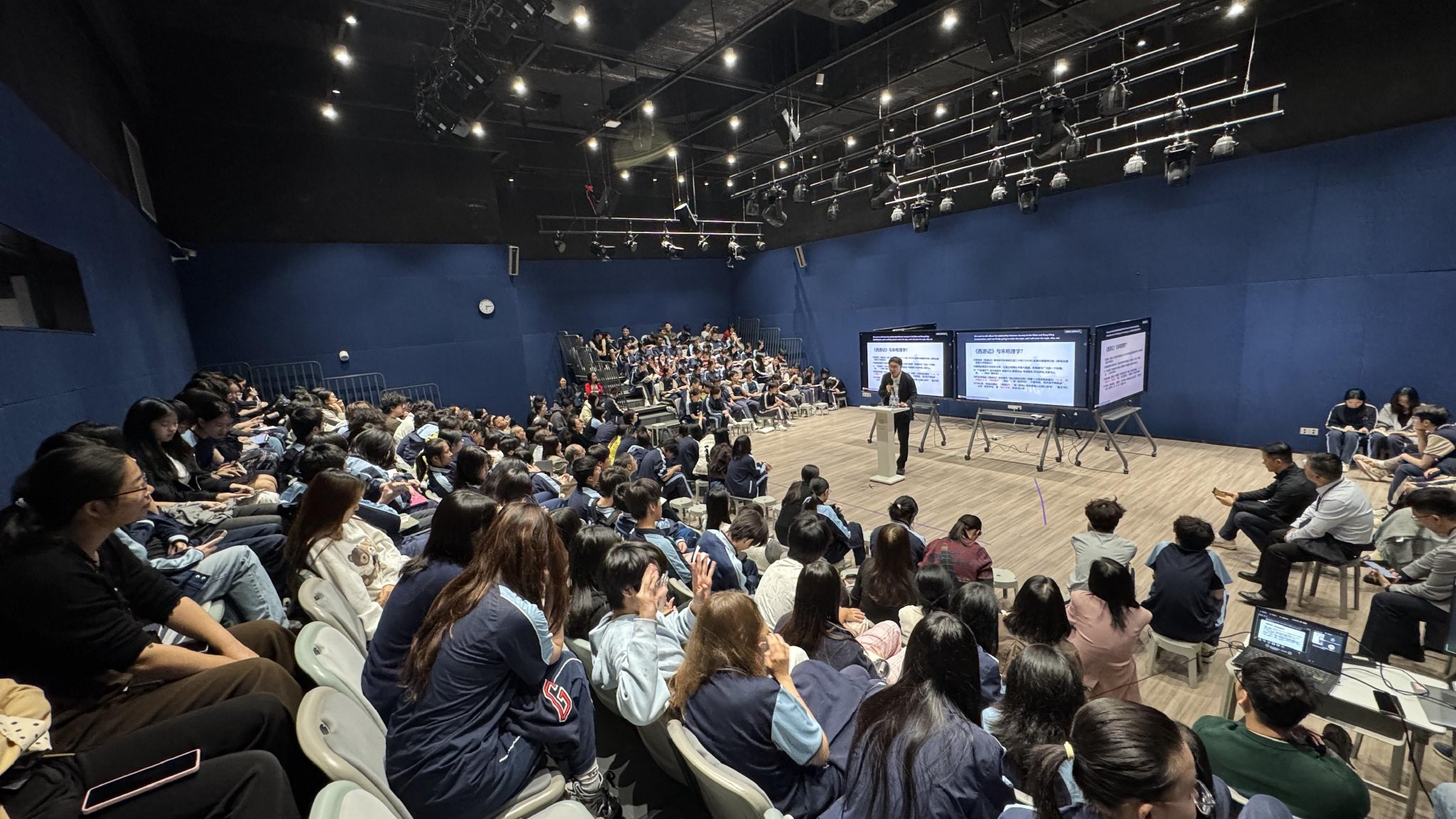
Core Insights - The lecture by Zhao Jingang at the Tsinghua-Aisha Humanities Lecture Hall focused on reinterpreting the classic novel "Journey to the West" through the lens of Song-Ming philosophy, emphasizing the deep-rooted Chinese thought traditions and their relevance to personal growth [1][10][12] Group 1: Lecture Content - The event was well-attended, with students engaging actively in discussions, highlighting a lack of detachment often seen in typical lectures [3][7] - Zhao pointed out that many people's understanding of "Journey to the West" is based on adapted versions, which diverge from the original narrative and themes [3][4] - The discussion included key questions about the motivations of characters and the philosophical implications behind the story, illustrating that the novel addresses not just adventure but also moral and personal development [3][4][5] Group 2: Philosophical Framework - Zhao provided a framework for understanding the main characters as representations of different aspects of the human psyche: Sun Wukong as "heart," Bai Longma as "intention," Zhu Bajie as "desire," and Sha Seng as "reason" [5] - The evolution of Sun Wukong's name symbolizes the journey of personal growth and self-awareness, reflecting the philosophical concept of "heart and nature" [5][12] - The lecture aimed to encourage students to return to the original text for deeper understanding, moving beyond simplified adaptations [14][15] Group 3: Student Engagement - Students expressed enthusiasm for the integration of literature and philosophy, with many indicating a desire to revisit the original text of "Journey to the West" after the lecture [8][10] - The event fostered a connection between classic literature and contemporary life, challenging students to consider the reasons behind the enduring status of these works [8][10] Group 4: Educational Context - The Tsinghua-Aisha Humanities Lecture Series aims to bridge higher education resources with foundational education, enhancing students' humanistic perspectives [10][17] - Zhao emphasized the importance of storytelling in education, advocating for a more engaging approach to teaching complex philosophical ideas [18]

96年女生当上博导,浙大回应
券商中国· 2025-08-16 05:29
Core Points - The article highlights the introduction of new faculty members at the Zhejiang University School of Philosophy for 2025, focusing on Jiang Jiafeng, a young scholar born in 1996, who has an academic background in literature and philosophy from various prestigious institutions [1] - Jiang Jiafeng's research areas include Zhuzi studies and Song-Ming philosophy, and while she has the qualifications to supervise doctoral students, it is noted that new faculty members typically do not immediately take on this role due to the limited number of doctoral positions available each year [1] - The article also mentions another new faculty member, Guo Jing, who is also born in 1996 and specializes in religious studies, indicating a trend of young scholars joining the faculty [1] Summary by Sections Introduction of New Faculty - Jiang Jiafeng, a new faculty member at Zhejiang University, has a diverse academic background and is currently in training before starting her teaching duties [1] - The philosophy department has introduced three new young faculty members this year, with Jiang and Guo being notable examples [1] Research Areas and Qualifications - Jiang's research focuses on Zhuzi studies and Song-Ming philosophy, showcasing the department's commitment to traditional Chinese philosophy [1] - The department's representative clarified that while Jiang is qualified to supervise doctoral students, the allocation of such roles is competitive and not guaranteed for new faculty [1] Faculty Demographics - The article emphasizes the trend of hiring younger faculty members, with both Jiang and Guo being born in 1996, reflecting a shift towards a younger academic workforce in the philosophy department [1]

她,96年出生,已任浙大博导
Mei Ri Jing Ji Xin Wen· 2025-08-13 05:17
Core Points - Jiang Jiafeng, born in 1996, is a notable new faculty member at Zhejiang University, specializing in Chinese philosophy [1][3] - Jiang holds a bachelor's degree from Nanchang University, a master's from Xiamen University, and a PhD from Beijing Normal University, with additional training at the National University of Singapore [4] - Her research focuses on Zhuzi studies and Song-Ming philosophy, particularly analyzing the "Heart" chapter of the "Mencius" and its significance in the history of Chinese philosophy [4][6] Academic Contributions - Jiang has published six papers in high-level academic journals such as "Philosophical Research" and "Philosophy and Culture" [6] - She has participated in two National Social Science Fund projects and served as a review expert for the "International Confucian Collection: Korean Edition" [6] - Jiang has received several honors, including the National Scholarship and awards for academic innovation and outstanding doctoral dissertation [6] Young Scholars in Academia - A new wave of "post-90s" professors and doctoral advisors is emerging, bringing fresh energy and teaching capabilities to universities [6] - These young scholars are noted for their strong research abilities and approachable nature, fostering a lively team atmosphere that is well-received by students [6] - There is a call for a supportive work environment to help young academics thrive and realize their professional potential [6]

杭州师范大学哲学711中国哲学史+812西方哲学史考研复习经验真题答案重难点笔记题库
Sou Hu Cai Jing· 2025-06-05 10:13
Core Insights - The document outlines a comprehensive study plan for Chinese and Western philosophy, emphasizing the importance of understanding key texts and concepts for exam preparation [9][25]. Group 1: Core Materials and Textbooks - Official textbooks for Chinese philosophy include "Chinese Philosophy History" by Peking University, which covers from pre-Qin to modern philosophy, providing clear logic and explanations for classical texts [1]. - "New Compilation of Chinese Philosophy History" by Guo Qiyong and Feng Dawen focuses on details and strengthens the understanding of Song-Ming Neo-Confucianism [2]. - "Song-Ming Neo-Confucianism" by Chen Lai offers in-depth analysis of Cheng-Zhu and Yangming schools, highlighting key exam points like "relationship between principle and material force" [3]. - For Western philosophy, "A Brief History of Western Philosophy" by Zhao Dunhua aligns closely with exam topics, covering essential theories like "Plato's Theory of Ideas" [4]. - "History of Western Philosophy" by Deng Xiaomang provides depth on German classical philosophy, aiding in understanding complex systems like "Hegel's Dialectics" [5]. Group 2: Study Methods and Techniques - The study plan includes a foundational phase focusing on reading and framework construction, with a structured approach to both Chinese and Western philosophy [9]. - Emphasis is placed on creating comparative tables and timelines to visualize the evolution of philosophical thoughts and concepts [9]. - The strengthening phase involves timed practice with past exam questions, focusing on logical development in essay questions [9]. - The final phase includes memorization techniques and full simulation tests to prepare for complex comparative questions [11]. Group 3: Exam Preparation Strategies - The document suggests using a structured approach for answering essay questions, employing a "total - part - total" format to enhance clarity and depth [24]. - It highlights the importance of understanding the differences between various philosophical schools, such as "Li Ben Lun" versus "Xin Ben Lun" in Chinese philosophy [16]. - The need for continuous review of past exam questions and the creation of a "weakness list" for targeted study is emphasized [28].