建仓

Search documents
一文吃透投资基础暗语,新手“养基”告别懵懂
Xin Lang Cai Jing· 2026-02-25 09:42
Core Insights - The article aims to demystify common investment jargon and concepts for new investors, enhancing their understanding and experience in finance [1] Group 1: Investment Concepts - "仓位" (position) refers to the total amount of funds allocated for buying stocks or funds, typically divided into ten parts, with a 10% position indicating 10% of available funds used for investment [1] - "空仓" (empty position) means having no investments, with all funds in cash, indicating a wait-and-see approach [2] - "轻仓" (light position) indicates investing less than 30% of available funds, while "半仓" (half position) means investing around 50%, balancing risk and opportunity [3] - "重仓" (heavy position) refers to investing over 70% of available funds, and "全仓" (full position) means investing all available funds [3] - Dynamic adjustment of positions is essential, with terms like "加仓" (adding position) for increasing investments and "减仓" (reducing position) for selling part of the holdings [4] Group 2: Trading Strategies - "止盈" (take profit) involves selling part of the investment after making a profit, while "止损" (stop loss) means selling to prevent further losses when reaching a predetermined loss threshold [4] - "梭哈" (all-in) refers to investing all funds at once, while "做多" (going long) indicates a bullish outlook, often involving leverage [5] - "做空" (short selling) is the opposite, betting on a decline in stock prices [5] Group 3: Market Behavior - Terms like "追涨" (chasing gains) and "杀跌" (panic selling) describe common emotional reactions to market movements, often leading to poor investment decisions [5] - "踏空" (missing out) refers to the frustration of not investing during a market rise, while "卖飞" (selling too early) describes selling an investment before it significantly appreciates [5] Group 4: Investment Duration and Strategies - Short-term holding is defined as holding investments for less than a year, while long-term holding refers to maintaining investments for over a year, which is generally more suitable for new investors [6] - "定投" (regular investment) involves investing a fixed amount regularly to mitigate price volatility, though it is not considered the best investment strategy [6] - The article emphasizes that understanding these basic terms and concepts is crucial for building a foundational investment logic before delving into more complex knowledge [6]
黄金白银又下跌 “建仓”两字搜索量上涨?
Sou Hu Cai Jing· 2026-02-06 04:51
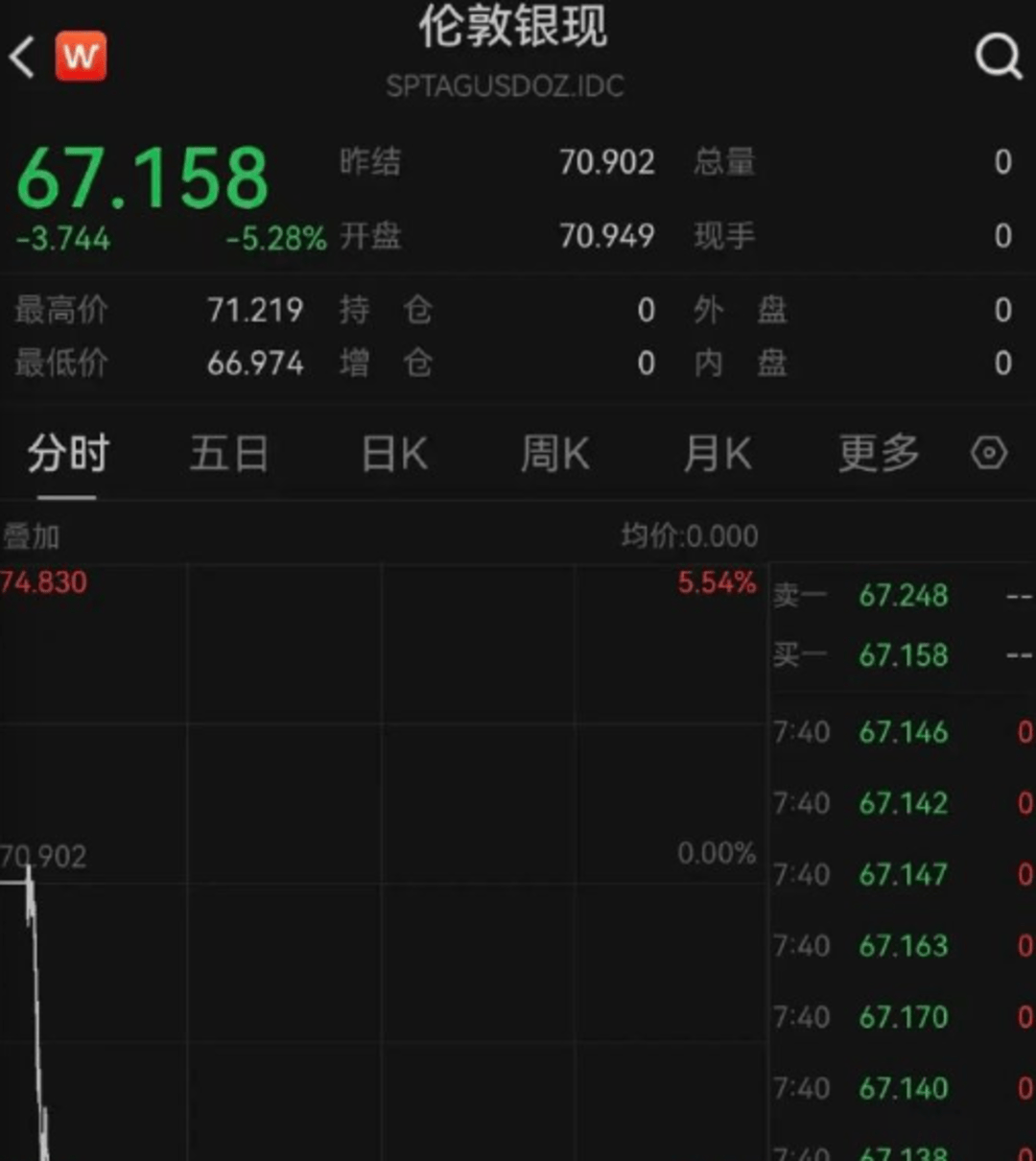
Core Viewpoint - The global financial market experienced a significant sell-off, with major assets like US stocks, gold, silver, and cryptocurrencies all declining simultaneously, breaking the traditional correlation between risk and safe-haven assets [1][3][4]. Market Performance - On February 5, US stock markets saw collective declines, with the Dow Jones Industrial Average down 1.20%, the Nasdaq Composite down 1.59%, and the S&P 500 down 1.23% [3]. - The technology sector faced the most pressure, with stocks like Qualcomm and AMD dropping over 8%, while Amazon and Microsoft fell more than 4% [3]. - In contrast, Chinese stocks listed in the US showed resilience, with the Nasdaq Golden Dragon China Index rising 0.90%, driven by strong performances from companies like NIO and Yum China [3]. Cryptocurrency and Precious Metals - The cryptocurrency market faced significant sell-offs, with Bitcoin dropping over 10% to around $62,000 after breaking the psychological barrier of $70,000 [4]. - Precious metals also saw sharp declines, with gold prices falling over 3% and silver prices plummeting more than 19% [4]. - Analysts attribute this cross-asset decline to a combination of factors, including reduced geopolitical risk, a shift in Federal Reserve policy, and declining market confidence [4]. Investor Behavior - Despite the market downturn, there is a notable increase in interest among young investors, with search queries related to "building positions" and "bottom fishing" surging, particularly among users under 30 [5][8]. - Young investors are shifting their financial strategies, moving away from traditional savings to seek diversified asset allocations, viewing market dips as buying opportunities [5]. Investment Risks and Recommendations - Experts caution that the enthusiasm among young investors may lead to misconceptions and risks, as many lack professional investment knowledge and may fall into the trap of "buying the dip" without understanding market volatility [7][8]. - It is recommended that young investors focus on learning investment fundamentals, assess their risk tolerance, and avoid speculative behaviors to navigate the complex financial landscape effectively [8].

23只ETF公告上市,最高仓位69.53%
Zheng Quan Shi Bao Wang· 2025-12-10 05:42
Core Viewpoint - The Huatai-PineBridge Hang Seng Index Hong Kong Stock Connect ETF is set to be listed on December 15, 2025, with a total trading share of 344 million, and is currently in the accumulation phase with a significant stock investment ratio of 69.53% [1] Group 1: ETF Listing and Investment Composition - The Huatai-PineBridge ETF has a total asset allocation of 14.27% in bank deposits and settlement reserves, while stock investments account for 69.53% of total assets [1] - In the past month, 23 stock ETFs have announced their listings, with an average position of only 19.69%, making the Huatai-PineBridge ETF the highest at 69.53% [1] - Other ETFs with high positions include Morgan Stanley Hang Seng Hong Kong Stock Connect 50 ETF at 54.00%, Bosera National Certificate Industrial Software Theme ETF at 46.74%, and CMB International CSI 800 Free Cash Flow ETF at 44.72% [1] Group 2: Institutional Investor Participation - Among the recently listed ETFs, the average number of shares raised is 483 million, with the top three being the Huatai-PineBridge ETF, the Innovation and Entrepreneurship Artificial Intelligence ETF at 933 million, and the Jiashi CSI Sub-Segmented Chemical Industry Theme ETF at 926 million [2] - The average proportion of shares held by institutional investors is 11.11%, with the highest being the Innovation and Entrepreneurship Artificial Intelligence ETF at 34.43% [2] - ETFs with lower institutional investor holdings include Tianhong National Certificate Hong Kong Stock Connect Technology ETF at 0.59% and E Fund CSI A500 Dividend Low Volatility ETF at 2.91% [2]
华尔街大佬出手!建仓这只大牛股
格隆汇APP· 2025-09-24 10:08
Core Viewpoint - The article discusses the evolution of ETFs and highlights a significant investment opportunity in a particular high-performing stock, driven by actions from major Wall Street figures [1]. Group 1: ETF Evolution - The article outlines the historical development of ETFs, emphasizing their growing popularity among investors due to their liquidity and cost-effectiveness [1]. - It mentions the increasing diversification of ETF offerings, which now include various sectors and asset classes, catering to a wider range of investment strategies [1]. Group 2: Investment Opportunities - The article identifies a specific high-performing stock that has attracted attention from prominent investors, suggesting a potential for substantial returns [1]. - It provides insights into the stock's recent performance metrics, indicating a notable increase in market interest and investment volume [1].