
建筑防火安全

Search documents
新国标发布 筑牢建筑防火“第一道闸门”
Zhong Guo Jing Ji Wang· 2026-02-02 03:12
Core Viewpoint - The newly revised mandatory national standard "Classification of Combustion Performance of Building Materials and Products" (GB 8624-2025) will be implemented on January 1, 2027, marking a significant upgrade in China's building fire safety standards since its last comprehensive revision in 2012 [1][3]. Group 1: Key Changes in the New Standard - The new standard categorizes building materials and products into three main categories and nine subcategories, with building insulation materials further divided into five subcategories, enhancing precision in management [2]. - The scope of application has been significantly expanded to include new classifications, testing methods, and criteria for fire safety performance of building insulation materials and photovoltaic components [2]. - A multidimensional evaluation of combustion performance has been established, incorporating key additional grading information such as smoke production characteristics, burning droplets, and smoke toxicity into a four-dimensional evaluation system [2]. Group 2: Implications of the New Standard - The implementation of the new standard introduces a QR code and electronic labeling system for building insulation materials, creating a comprehensive fire safety supervision scheme from development to application [3]. - The standard provides a technical basis for the development of building-integrated photovoltaics, compelling manufacturers to enhance flame-retardant processes and purifying the market by eliminating substandard products [3]. - The new standard serves as a "safety red line" for building design, a "technical measurement" for material quality control, and a "legal basis" for fire safety acceptance, significantly contributing to the prevention of major fire safety risks in the construction sector [3].
香港大埔火灾,不是天灾
虎嗅APP· 2025-11-27 13:37
Core Viewpoint - The article discusses the tragic fire incident at Hong Kong's Hong Fu Court, which resulted in at least 72 deaths, marking one of the most severe fires in the region in nearly three decades [5][6]. Group 1: Fire Incident Details - The fire originated from scaffolding outside the building, which was under renovation, and quickly spread to seven out of eight buildings in the complex [7][10][39]. - The rapid spread of the fire was attributed to the use of bamboo scaffolding and non-fire-resistant materials, which are common in Hong Kong's construction practices [18][25][29]. - The lack of fire alarms on the construction site contributed to the inability of residents to evacuate in time [8][10]. Group 2: Construction Practices and Regulations - The bamboo scaffolding used is lightweight and cost-effective but poses significant safety risks, including being a fire hazard [20][23]. - The protective netting used during renovations was not made of fire-resistant materials, further exacerbating the fire risk [25][26]. - Despite previous incidents highlighting the dangers of such materials, regulatory enforcement has been lax, allowing unsafe practices to continue [43][46]. Group 3: Community and Financial Implications - Residents had previously raised concerns about the fire hazards associated with the renovation materials, but their warnings were dismissed by contractors [32][33]. - The renovation project required a budget of 330 million HKD, with individual homeowners facing significant financial burdens, leading to dissatisfaction and allegations of corruption within the homeowners' committee [33][35][38]. - The tragedy has left many residents not only financially devastated but also homeless, as the majority of the buildings were destroyed [39][40]. Group 4: Accountability and Future Considerations - The article emphasizes the need for accountability among contractors and regulatory bodies, especially given the history of similar incidents in Hong Kong [42][43]. - There is a call for stricter regulations regarding the use of bamboo scaffolding and the materials used in construction to prevent future tragedies [46][47]. - The article reflects on the historical context of fire safety in Hong Kong, noting that lessons from past incidents have not been adequately learned, leading to repeated mistakes [56][58].

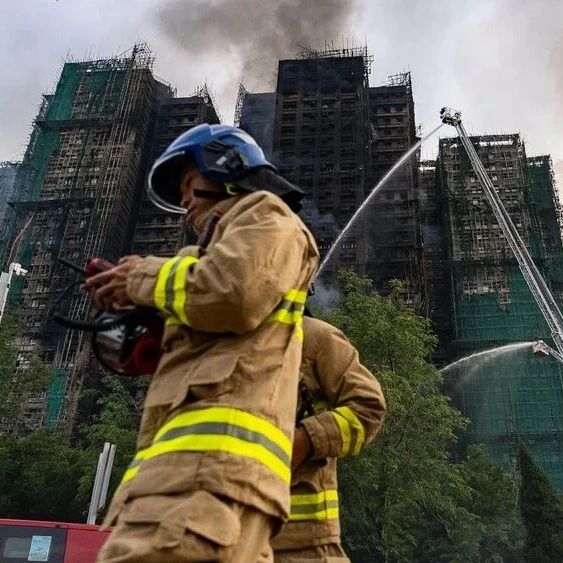
两问香港大埔火灾:施工为何采用竹棚架?高楼为何难施救?
Di Yi Cai Jing· 2025-11-27 05:10
Core Insights - The fire at Hong Kong's Ma On Shan estate has resulted in 44 fatalities and 45 injuries, raising concerns about the safety of construction materials used in high-rise buildings [1][2] - Investigations suggest that the rapid spread of the fire may be linked to the use of non-fire-resistant materials, particularly the green protective nets and foam insulation used in construction [2][3] - The incident has prompted discussions on the safety regulations surrounding the use of bamboo scaffolding, which is prevalent in Hong Kong's construction industry [4][5] Construction Material Concerns - The external wall materials of the affected buildings exhibited unusual fire spread characteristics, leading authorities to suspect potential criminal activity [2] - Bamboo scaffolding, which constitutes 90% of the scaffolding market in Hong Kong, is noted for its low ignition point and has been criticized for its fire safety risks [3][4] - The use of non-compliant materials in construction and maintenance processes, including insulation and sealing materials, is highlighted as a significant risk factor [5] Regulatory and Safety Implications - Current safety regulations do not adequately address the fire resistance of scaffolding materials, which has raised alarms among safety experts [3] - The Hong Kong government plans to mandate that at least half of new public works projects utilize metal scaffolding by early 2025 to enhance safety [4] - The high density of buildings and the close proximity of residential units complicate fire control efforts, as does the common practice of using stairwells for storage, which can impede evacuation [5][6] Fire Rescue Challenges - The high-rise nature of buildings in Hong Kong presents significant challenges for fire rescue operations, particularly for structures exceeding 100 meters in height [8] - The recent fire involved over 140 fire trucks and 800 personnel, highlighting the scale of the emergency response required for such incidents [8]