开源合规

Search documents
美团旗下AI浏览器两次回应代码风波:将升级代码审查流程
第一财经· 2026-03-03 13:57
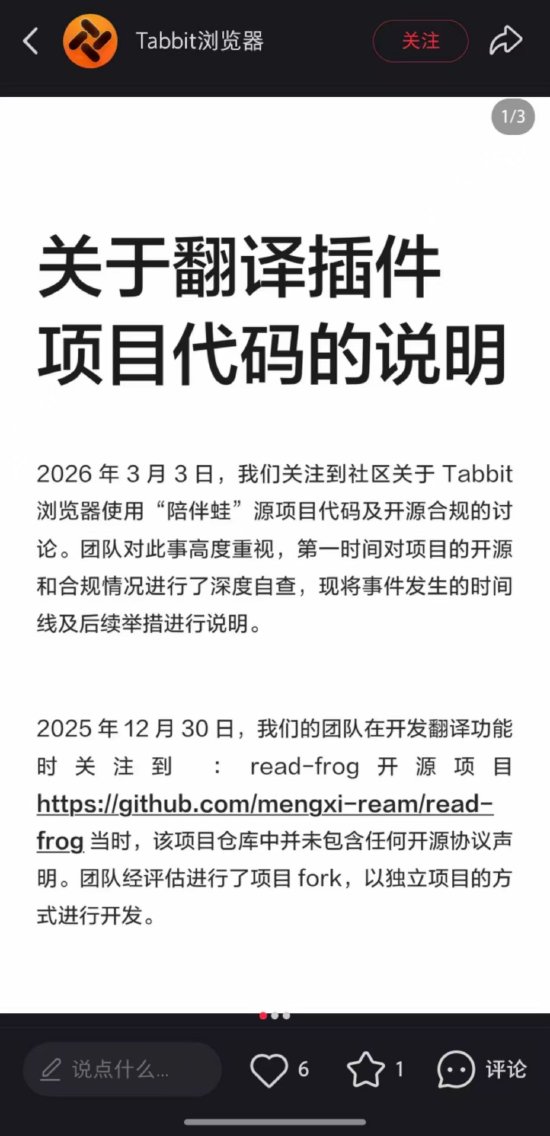
Core Viewpoint - The article discusses the controversy surrounding Meituan's AI browser Tabbit, which faced allegations of using code from the open-source project "陪读蛙" (Read Frog) without proper licensing, highlighting the importance of compliance with open-source protocols in the tech industry [2][4]. Group 1: Incident Overview - Tabbit was accused of using code from "陪读蛙" without adhering to its GPL license, which requires any derivative work to be open-sourced [2]. - The Tabbit team claimed they were unaware of the GPL license change made by "陪读蛙" in January 2026, as they had not merged subsequent code updates [2]. - Following the incident, Tabbit agreed to remove the disputed translation feature and open-source the project, while also enhancing their internal code review processes [2][4]. Group 2: Industry Implications - The CEO of iMedia Consulting, Zhang Yi, noted that the dispute reflects a broader issue of compliance in open-source usage, suggesting that this incident could serve as a cautionary example for the industry [4]. - Meituan's strategy involves expanding its AI capabilities from local services to a more general AI platform, aiming to create a comprehensive agent ecosystem that integrates various AI functionalities [5]. - Challenges for Meituan include compliance risks, competition in the AI browser market, and the need to attract users from established browsers to develop new usage habits [5].


美团回应AI浏览器抄袭争议,已移除相关项目
3 6 Ke· 2026-03-03 13:05
Group 1 - Meituan's Tabbit AI browser faced allegations of code plagiarism from the open-source project "陪读蛙" (read-frog) after its public testing on March 2 [1][2] - The Tabbit team responded by stating they respect the original author's rights and have removed the related translation module from the new version, while also making the disputed code open-source for community review [2] - The incident was characterized as a misunderstanding regarding open-source protocols rather than malicious intent, with both parties agreeing to amicable communication and resolution [2] Group 2 - The Tabbit browser is positioned as an AI-native browser targeting office workers, students, and content creators, featuring web browsing, comprehensive search, AI dialogue, and automated task execution [1] - The team committed to enhancing internal code review and open-source usage processes, ensuring clear labeling of all open-source project licenses in the future [2] - Meituan's investment in AI includes a full acquisition of the "光年之外" (GN06) team for approximately 2.065 billion yuan, aiming to develop a Chinese version of OpenAI and has invested billions in GPU and large model research [2]


美团旗下AI浏览器两次回应代码风波:将升级代码审查流程
Di Yi Cai Jing Zi Xun· 2026-03-03 11:41
Core Viewpoint - The incident involving Meituan's AI browser Tabbit highlights compliance issues related to open-source software usage, which can serve as a cautionary example for the industry regarding open-source compliance practices [4]. Group 1: Incident Overview - Tabbit faced controversy shortly after its public testing began due to allegations of using code from the open-source project "Read Frog" without proper licensing [1]. - The original author of "Read Frog" stated that Tabbit's use of the code violated the GPL agreement, which requires any derivative work to be open-sourced [1]. - Tabbit acknowledged the oversight, stating that they were unaware of the GPLv3 license added in January 2026, and committed to removing the disputed translation feature and open-sourcing it [1][2]. Group 2: Communication and Resolution - Following the issue's emergence, Tabbit's team promptly contacted the original author to clarify the situation and conducted an internal review [2]. - The communication was described as positive and timely, confirming that the issue was not due to malicious intent but rather a misunderstanding of open-source compliance [2]. - Both parties reached an agreement, and Tabbit will update its code and restore the translation feature after securing proper licensing [2]. Group 3: Industry Implications - Zhang Yi, CEO of iiMedia Consulting, noted that the dispute reflects a broader issue of compliance lapses in open-source usage within the industry [4]. - He suggested that this incident could serve as a warning for future occurrences of similar disputes or non-compliance issues in the sector [4]. - Meituan's strategy to integrate AI into its services aims to create a comprehensive agent ecosystem, which is crucial for establishing a competitive edge in the market [4]. Group 4: Challenges Ahead - The company faces significant challenges, including compliance risks highlighted by this incident and intense competition in the AI browser market [5]. - There is a concern regarding the homogeneity of AI browsers, making it difficult for users to transition from established browsers to new offerings like Tabbit [5].
美团光年之外AI浏览器抄袭?官方回应:充分尊重和理解原作者,已移除相关项目
Xin Lang Cai Jing· 2026-03-03 05:15
Core Viewpoint - The Tabbit AI browser, developed by Meituan's team, has entered public testing, but it faces allegations of code plagiarism from users on social media [1][8]. Group 1: Allegations and Response - Users have claimed that the Tabbit AI browser has copied code from their projects, specifically mentioning the "陪伴蛙" source project [1][8]. - The official response from the Tabbit team indicates that they are taking the allegations seriously and have conducted a thorough self-examination regarding the open-source compliance of their project [1][8]. Group 2: Development Timeline - On December 30, 2025, while developing a translation feature, the team forked the "read-frog" open-source project, which at that time did not have any open-source license declaration [5][8]. - On January 2, 2026, the original author of the "read-frog" project added a GPLv3 license to the repository, but the Tabbit team did not merge subsequent code from the original project and failed to notice this change in licensing [7][12]. Group 3: Commitment to Open Source - The Tabbit team acknowledges that their forking occurred before the project had a clear open-source license and expresses respect for the original author's ownership and licensing choices [9][12]. - The team has decided to remove the translation project from the new version of the Tabbit browser and has made the project fully open-source for community review and use [9][12].