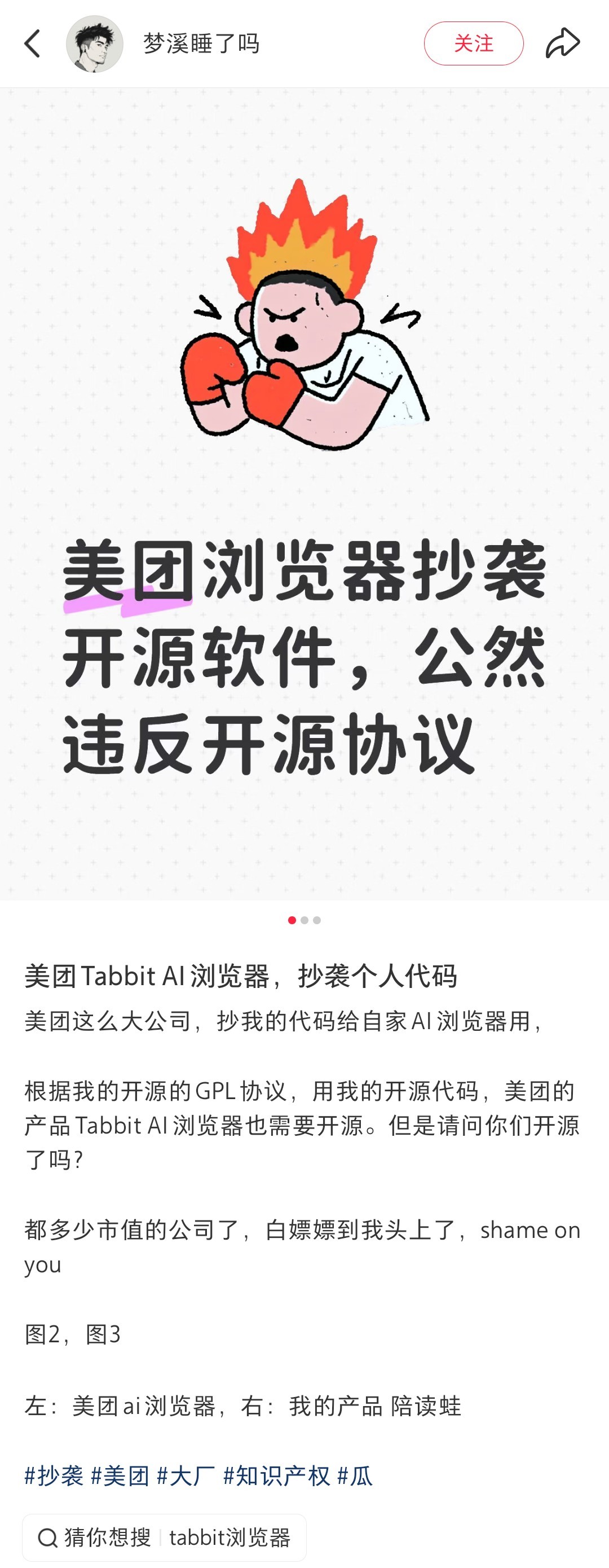
陪读蛙

Search documents
AI浏览器陷入“抄袭门”,美团的AI困境
3 6 Ke· 2026-03-04 02:24
Core Viewpoint - Meituan's recent launch of the Tabbit AI browser has been overshadowed by plagiarism allegations, raising concerns about the company's AI strategy and execution [1][2][3] Group 1: Product Launch and Allegations - Meituan's Tabbit AI browser was launched on March 2, marking the company's first AI-native browser product after over two years of development [1] - Within a day of its launch, the developer of a competing translation product accused Tabbit of copying features, including a built-in translation plugin [1] - Meituan issued two apologies, acknowledging a lack of rigorous understanding of open-source protocols and subsequently removed the disputed code [1][2] Group 2: Product Features and Performance - Tabbit aims to address user pain points with features like intelligent tab grouping, which organizes bookmarks into categories, enhancing user experience [5] - The browser includes an optimized screenshot tool that allows users to capture specific content areas efficiently [7] - However, the core Agent functionality, currently available only to Pro members, has faced issues with stability and execution, leading to a subpar user experience [10][11] Group 3: Strategic Context and Challenges - Meituan's AI strategy, articulated by CEO Wang Xing, focuses on integrating AI into operations, transforming existing products, and building foundational models [16][17][18] - Despite various attempts to innovate in the AI space, Meituan has not yet delivered a standout product, with previous efforts like the AI image product "MiaoShua" failing to gain traction [20] - The company has struggled with infrastructure challenges, as evidenced by service outages during high user traffic, indicating weaknesses in its AI capabilities compared to competitors [22]



AI浏览器被指抄袭代码 美团承认开源调研不充分 已改正
Nan Fang Du Shi Bao· 2026-03-03 22:31
Core Viewpoint - The controversy revolves around the alleged code plagiarism by Meituan's AI browser Tabbit from the open-source project "陪读蛙" (Read Frog), leading to discussions about compliance with the GPL license [2][3][5]. Group 1: Allegations and Responses - Tabbit was accused of using code from the Read Frog project without proper adherence to the GPL license, which requires any derivative work to also be open-sourced [3][5]. - The Tabbit team acknowledged the issue, stating that their research on the open-source protocol was insufficient and that they have since removed the disputed code and made it open-source [2][6]. - The original author of Read Frog confirmed that there was no malicious intent from Tabbit, attributing the issue to a lack of rigorous understanding of the open-source compliance process [6][7]. Group 2: GPL License Implications - The GPL license mandates that any software using its code must also be open-sourced, which is a critical point in the ongoing dispute [5]. - The strong "copyleft" nature of the GPL makes it particularly sensitive for commercial entities, as failure to comply can lead to legal repercussions [5]. Group 3: Product Information - Tabbit, developed by Meituan's team, is an AI browser aimed at enhancing productivity in office and learning environments, recently entering public beta on March 2 [7].

美团回应AI浏览器抄袭争议,已移除相关项目
3 6 Ke· 2026-03-03 13:05
Group 1 - Meituan's Tabbit AI browser faced allegations of code plagiarism from the open-source project "陪读蛙" (read-frog) after its public testing on March 2 [1][2] - The Tabbit team responded by stating they respect the original author's rights and have removed the related translation module from the new version, while also making the disputed code open-source for community review [2] - The incident was characterized as a misunderstanding regarding open-source protocols rather than malicious intent, with both parties agreeing to amicable communication and resolution [2] Group 2 - The Tabbit browser is positioned as an AI-native browser targeting office workers, students, and content creators, featuring web browsing, comprehensive search, AI dialogue, and automated task execution [1] - The team committed to enhancing internal code review and open-source usage processes, ensuring clear labeling of all open-source project licenses in the future [2] - Meituan's investment in AI includes a full acquisition of the "光年之外" (GN06) team for approximately 2.065 billion yuan, aiming to develop a Chinese version of OpenAI and has invested billions in GPU and large model research [2]

美团旗下AI浏览器两次回应代码风波:将升级代码审查流程
Di Yi Cai Jing Zi Xun· 2026-03-03 11:41
Core Viewpoint - The incident involving Meituan's AI browser Tabbit highlights compliance issues related to open-source software usage, which can serve as a cautionary example for the industry regarding open-source compliance practices [4]. Group 1: Incident Overview - Tabbit faced controversy shortly after its public testing began due to allegations of using code from the open-source project "Read Frog" without proper licensing [1]. - The original author of "Read Frog" stated that Tabbit's use of the code violated the GPL agreement, which requires any derivative work to be open-sourced [1]. - Tabbit acknowledged the oversight, stating that they were unaware of the GPLv3 license added in January 2026, and committed to removing the disputed translation feature and open-sourcing it [1][2]. Group 2: Communication and Resolution - Following the issue's emergence, Tabbit's team promptly contacted the original author to clarify the situation and conducted an internal review [2]. - The communication was described as positive and timely, confirming that the issue was not due to malicious intent but rather a misunderstanding of open-source compliance [2]. - Both parties reached an agreement, and Tabbit will update its code and restore the translation feature after securing proper licensing [2]. Group 3: Industry Implications - Zhang Yi, CEO of iiMedia Consulting, noted that the dispute reflects a broader issue of compliance lapses in open-source usage within the industry [4]. - He suggested that this incident could serve as a warning for future occurrences of similar disputes or non-compliance issues in the sector [4]. - Meituan's strategy to integrate AI into its services aims to create a comprehensive agent ecosystem, which is crucial for establishing a competitive edge in the market [4]. Group 4: Challenges Ahead - The company faces significant challenges, including compliance risks highlighted by this incident and intense competition in the AI browser market [5]. - There is a concern regarding the homogeneity of AI browsers, making it difficult for users to transition from established browsers to new offerings like Tabbit [5].
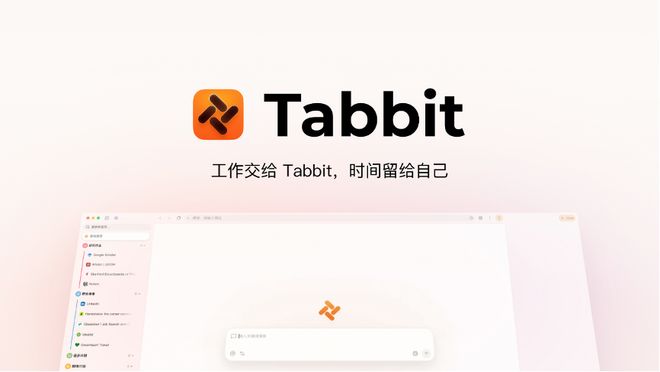
美团旗下AI浏览器Tabbit:感谢“陪读蛙”原作者包容与格局
Feng Huang Wang· 2026-03-03 09:45
Core Viewpoint - The Tabbit browser, developed by Meituan's team, faced controversy due to the use of code from the "Read Frog" open-source project, but has since resolved the issue through direct communication and licensing agreements with the original author [1][2] Group 1: Company Actions - The Tabbit team issued a joint statement with the "Read Frog" project, confirming that they have communicated directly with the original author and reached a consensus regarding the licensing of the project [1] - Following the agreement, the Tabbit browser will update its code and restore the relevant functionality, while also committing to enhance internal code review and open-source project usage processes [1] - The Tabbit team expressed gratitude towards the original author of "Read Frog" for their understanding and professional advice during the communication process [1] Group 2: Industry Response - The original author of "Read Frog" acknowledged the discussions surrounding the use of their code and confirmed that the Tabbit team acted promptly to address the issue [2] - The author clarified that the problem was not due to malicious intent but rather a lack of rigorous understanding of open-source protocols and compliance processes [2] - The relevant code has been processed for open-source compliance, and both parties are in further discussions regarding subsequent matters [2]

曝美团AI浏览器Tabbit涉嫌代码抄袭 官方回应
Feng Huang Wang· 2026-03-03 06:53
Core Viewpoint - A user accused Meituan's AI browser Tabbit of copying code from their personal product, Peiduwa, and provided evidence of the alleged plagiarism [1][3] Group 1: Allegations and Responses - The user "Mengxi Shuilema" posted on social media, claiming that Tabbit's code was taken from Peiduwa, including a comparison of the two product interfaces [1] - The user released a video showing that Tabbit's icon file was named "read-frog," which is associated with Peiduwa [3] - According to the user, under the GPL agreement, any product using their code must be open-sourced, which Meituan failed to do with Tabbit [3] - Tabbit's official response stated that the original project did not have an open-source license at the time of forking, and they have since decided to open-source the project [3] Group 2: Product Information - Tabbit is an AI-native browser launched by Meituan's Lightyear team, which began free public testing on March 2 [3] - The browser is designed to automate web operations, information extraction, and report generation, supporting custom scripts and workflow reuse [3] - Tabbit features the LongCat large model from Meituan and allows users to switch between multiple AI options, focusing on efficient office work [3]