形式化

Search documents
大模型开始“批量破解”数学难题
Hua Er Jie Jian Wen· 2026-01-15 07:08
Core Insights - The breakthrough in artificial intelligence (AI) within the field of mathematics is accelerating, with 15 out of over 1000 unsolved problems left by mathematician Paul Erdős being solved since Christmas, 11 of which involved AI models [1] - OpenAI's latest GPT 5.2 model has shown significant improvements in mathematical reasoning, capable of providing complete proofs in 15 minutes, surpassing previous versions [1] - AI models have made substantial autonomous progress on 8 different Erdős problems, indicating a shift in the role of AI from an assistant to an independent problem solver [1][3] Impact on Mathematical Research and AI Application Market - The advancements in AI are transforming the academic research workflow, with formal tools like Lean and Aristotle being widely adopted by top mathematicians and computer science professors [2] - The increase in the number of solved Erdős problems is attributed to the serious engagement of top mathematicians with these AI tools, marking a shift from experimental to mainstream academic application [6] Systematic Breakthroughs and Discoveries - The discovery by Neel Somani began with a routine test of ChatGPT, which provided a complete answer to a mathematical problem, demonstrating the model's ability to reference established mathematical principles [3] - The Erdős problem set, containing over 1000 conjectures, has become an attractive target for AI-driven mathematical research, with GPT 5.2 outperforming previous models in advanced mathematics [3] Cautious Evaluation by Leading Mathematicians - Mathematician Terence Tao suggests that AI systems are better suited for systematically addressing lesser-known Erdős problems, which may now be more likely solved through pure AI methods rather than human or hybrid approaches [4] - This evaluation indicates a potential reallocation of resources in mathematical research, with AI efficiently handling medium-difficulty problems that have been overlooked due to human limitations [4] Formalization Tools Driving Application - The recent shift towards formalization in mathematics is a key driver, making mathematical reasoning easier to verify and extend, with new automation tools significantly reducing the workload [5] - Tools like Lean and Aristotle promise to automate much of the formalization work, enhancing the efficiency of mathematical research [5]
陶哲轩18个月没搞定的数学挑战,被这个“AI高斯”三周完成了
3 6 Ke· 2025-09-14 05:16
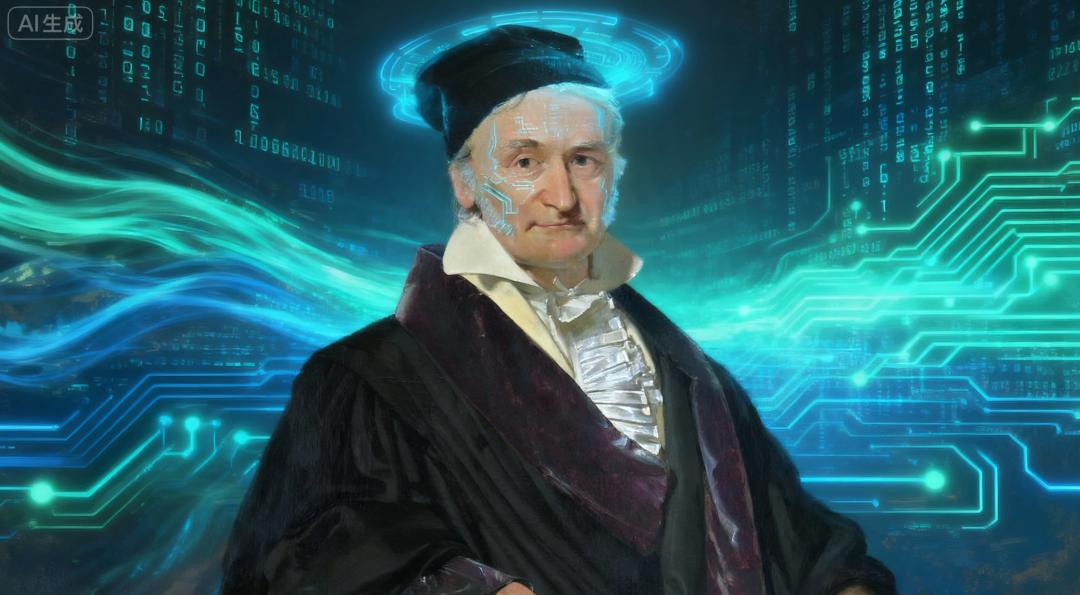
Core Insights - The new AI agent named Gauss has demonstrated remarkable capabilities by solving a mathematical challenge in just three weeks, a task that took renowned mathematicians 18 months to make limited progress on [2][4][6]. Company Overview - Gauss is developed by a company called Math, which specializes in AI applications for formal verification in mathematics [4][6]. - The founder of Math, Christian Szegedy, is a notable figure in the AI community, recognized for his contributions to the field, including the influential paper on Batch Normalization [13][15][17]. Technical Achievements - Gauss generated approximately 25,000 lines of Lean code, encompassing over a thousand theorems and definitions, a scale of formal proof that typically requires years to complete [7]. - The largest previous formalization projects took up to a decade and involved significantly more code, highlighting Gauss's efficiency [7]. - The Math team has partnered with Morph Labs to develop the Trinity infrastructure, enabling Gauss to operate with thousands of concurrent agents, each requiring substantial computational resources [8]. Future Prospects - The Math team anticipates that Gauss will significantly reduce the time required to complete large mathematical projects, with plans to increase the volume of formalized code by 100 to 1,000 times within the next 12 months [9]. - This advancement is seen as a step towards achieving "verifiable superintelligence" and creating a "generalist machine mathematician" [9].