形式化证明

Search documents
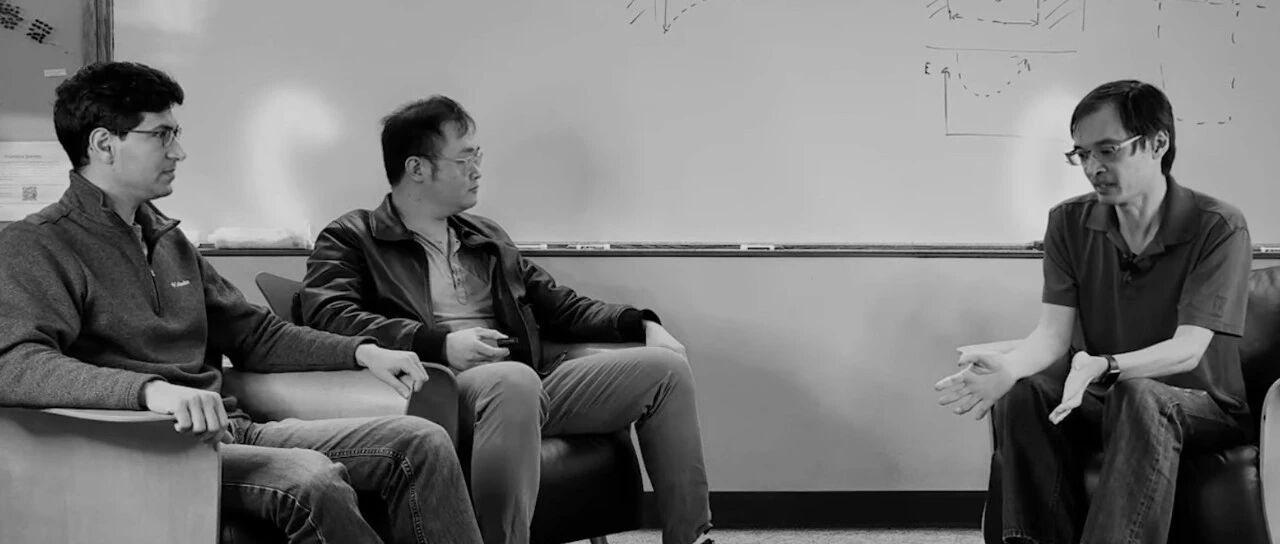
陶哲轩:AI让数学进入「工业化」时代,数学家也可以是「包工头」
机器之心· 2026-01-03 01:35
Core Insights - The article discusses the transformation of mathematical research, driven by AI and formal proof languages like Lean, moving away from traditional methods towards a more industrialized approach [1][2]. Group 1: Transformation of Mathematical Research - Terry Tao highlights that traditional mathematical research is facing a paradigm shift due to the integration of AI and formal proof systems, which reduce repetitive tasks and enhance collaboration [2][5]. - The use of large language models (LLMs) and automated formalization is making tedious tasks easier, allowing mathematicians to focus on more complex problems [2][9]. - The modularization of research is expected to enable non-experts, or "citizen mathematicians," to contribute to advanced research, thereby accelerating progress in the field [2][29]. Group 2: Changes in Collaboration and Roles - The article suggests that the future of mathematics may resemble software engineering, with roles such as "architects" or project managers emerging to oversee large collaborative projects [2][23]. - Tao emphasizes the importance of collaboration, noting that the traditional model of individual research is insufficient for the complexity of modern mathematical problems [25][26]. - The integration of formal tools and AI is expected to facilitate seamless collaboration among individuals with varying skill sets, allowing for a more efficient division of labor in mathematical research [27][28]. Group 3: Impact of Formalization on Mathematical Thinking - Formalization is changing the way mathematicians think, helping them identify implicit assumptions and refine their definitions, which leads to clearer and more concise writing [10][12]. - The process of formalization encourages a new style of proof writing that is more modular and easier to understand, contrasting with traditional linear proofs [12][13]. - Tao notes that formalization allows for a more precise understanding of the applicability of mathematical tools, potentially leading to breakthroughs in various areas [15][16]. Group 4: Future of Mathematical Research - The article predicts a future where the role of mathematicians will expand to include project management and coordination of large-scale research efforts, rather than solely focusing on individual contributions [29][30]. - As tools and collaboration methods evolve, the barriers to entry for participating in mathematical research are expected to decrease, allowing a broader range of individuals to engage in the field [30][31]. - The potential for AI to handle repetitive tasks in mathematical research is seen as a way to unlock new levels of productivity and creativity among mathematicians [32][34].

知名数学家辞职投身AI创业:老板是00后华人女生
创业邦· 2025-12-06 10:10
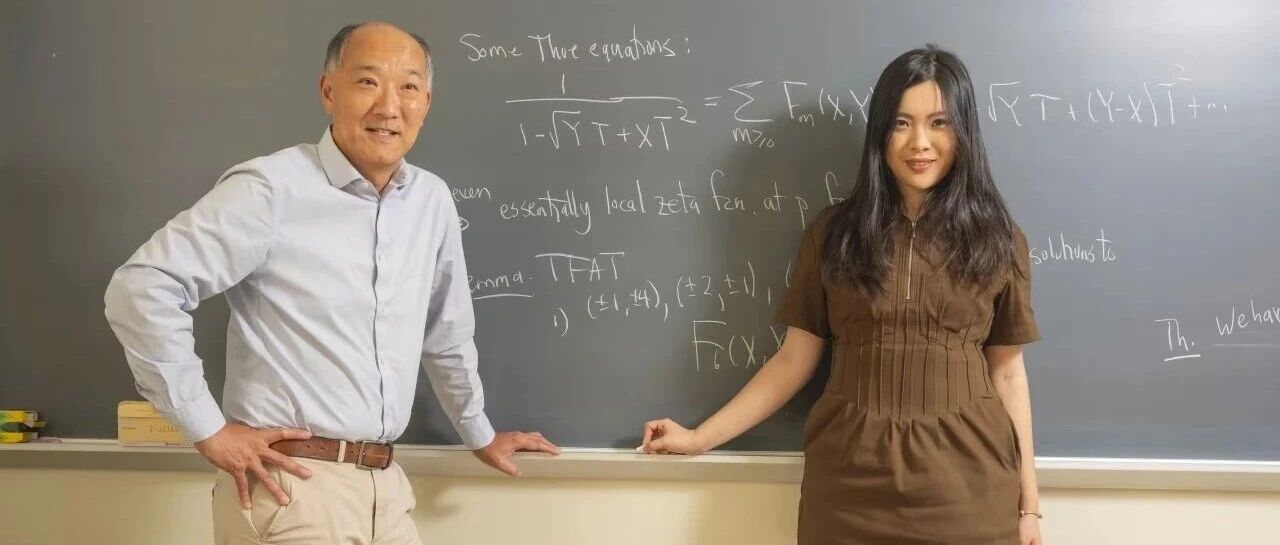
Core Viewpoint - A prominent mathematician, Ken Ono, has left academia to join a Silicon Valley AI startup, Axiom, founded by his former student, Carina Letong Hong, indicating a significant shift in the intersection of mathematics and AI [2][5][51]. Group 1: Ken Ono's Transition - Ken Ono, known for his deep understanding of Ramanujan's theories, has decided to leave his tenured position to become a founding mathematician at Axiom, focusing on pushing the limits of AI models in mathematics [5][9][51]. - His role involves designing complex mathematical problems that require a deep understanding of mathematical principles and establishing benchmarks for model optimization [9][11]. Group 2: Axiom's Ambitions - Axiom aims to develop AI capable of solving real mathematical problems for quantitative and hedge fund companies, focusing on formal mathematical proofs and ensuring accuracy [24][25]. - The company has already made significant strides by solving complex problems listed on the Erdős website, showcasing its potential in the mathematical AI space [26][32]. Group 3: Carina Letong Hong's Background - Carina Letong Hong, the 24-year-old founder of Axiom, has an impressive academic background, having completed dual degrees in mathematics and physics at MIT and receiving numerous accolades in mathematics [39][42][45]. - Her decision to leave academia to focus on entrepreneurship reflects a growing trend among young mathematicians to apply their skills in the tech industry, particularly in AI [48][51]. Group 4: Investment and Valuation - Axiom achieved a valuation of $300 million despite having no products or users at the time of its initial funding round, attracting top-tier venture capital interest [36][37]. - The company's innovative approach and the expertise of its team, including Ken Ono and other top mathematicians, contribute to its strong market position and potential for future growth [34][51].
谷歌DeepMind最新论文,刚刚登上了Nature,揭秘IMO最强数学模型
3 6 Ke· 2025-11-13 10:05
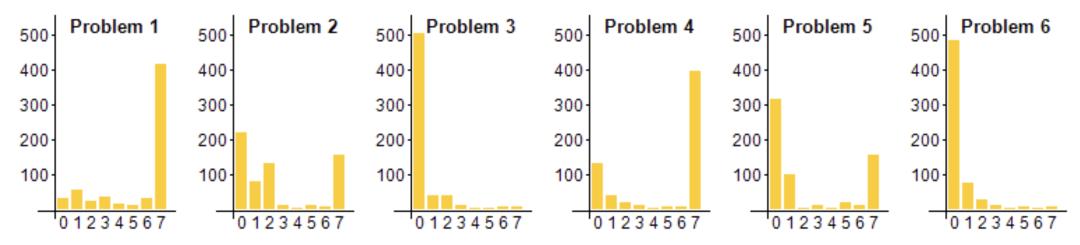
Core Insights - DeepMind's AlphaProof achieved a silver medal at the International Mathematical Olympiad (IMO), scoring 28 points, just one point shy of gold, marking a significant milestone in AI's mathematical problem-solving capabilities [3][4][20]. Group 1: AlphaProof's Performance - AlphaProof is the first AI system to earn a medal-level score in a prestigious competition like the IMO, demonstrating a leap in AI's ability to tackle complex mathematical challenges [4][20]. - In the 2024 IMO, AlphaProof solved 4 out of 6 problems, including the most difficult problem, showcasing its advanced problem-solving skills [18][20]. - The performance of AlphaProof is comparable to that of a highly trained international high school student, with only about 10% of human participants achieving gold status [18][20]. Group 2: Technical Mechanisms - AlphaProof combines large language models' intuitive reasoning with reinforcement learning, allowing it to learn from a vast dataset of nearly one million mathematical problems [8][10]. - The system utilizes the Lean formal language for mathematical proofs, ensuring that each step of reasoning is verifiable and free from errors typical of natural language models [6][7][10]. - AlphaProof employs a strategy similar to Monte Carlo tree search, breaking down complex problems into manageable sub-goals, enhancing its problem-solving efficiency [11][17]. Group 3: Limitations and Future Directions - Despite its achievements, AlphaProof's efficiency is limited, taking nearly three days to solve problems that human competitors complete in 4.5 hours, indicating room for improvement in speed and resource utilization [21]. - The AI struggles with certain types of problems, particularly those requiring innovative thinking, highlighting the need for enhanced adaptability and generalization capabilities [21][23]. - Future developments aim to enable AlphaProof to understand natural language problems directly, eliminating the need for manual translation into formal expressions [23][24].