影视行业寒冬

Search documents
于清斌曾透露拍戏年收入5万多 还不够支撑房贷
Xin Lang Cai Jing· 2026-01-17 04:22
Core Viewpoint - The actor Yu Qingbin has publicly addressed issues regarding unpaid wages for his work in short dramas, highlighting the financial struggles faced by actors in the current industry climate [1] Group 1: Financial Struggles - Yu Qingbin has been owed wages for four months, with over 10,000 yuan still unpaid [1] - In 2023, his total income from acting was only over 50,000 yuan, which is insufficient to cover his monthly mortgage payments of over 10,000 yuan [1] - The actor has resorted to borrowing money to make ends meet due to the lack of acting opportunities [1] Group 2: Industry Challenges - The current state of the film and television industry is described as a "cold winter," leading to fewer acting opportunities for many actors [1] - Yu Qingbin's experience reflects a broader trend in the industry where established actors are struggling to find work [1] - The financial difficulties faced by Yu Qingbin are indicative of the challenges within the entertainment sector, particularly for those who have been in the industry for a long time [1]
于清斌曾透露拍戏年收入不到10万 还不够支撑房贷
Xin Lang Cai Jing· 2026-01-17 04:22
Group 1 - The core issue highlighted is the financial struggles faced by actor Yu Qingbin, who has been owed payment for four months for his work in short dramas and is planning to sue the relevant producers to protect his rights [1] - Yu Qingbin has been in the acting industry for 20 years and has experienced a significant decline in opportunities, leading to financial difficulties, including having to deliver food to make ends meet [1] - In 2023, Yu reported earning over 50,000 yuan and projected earnings of 80,000 yuan in 2024, which are insufficient to cover his monthly mortgage payments of over 10,000 yuan [1]
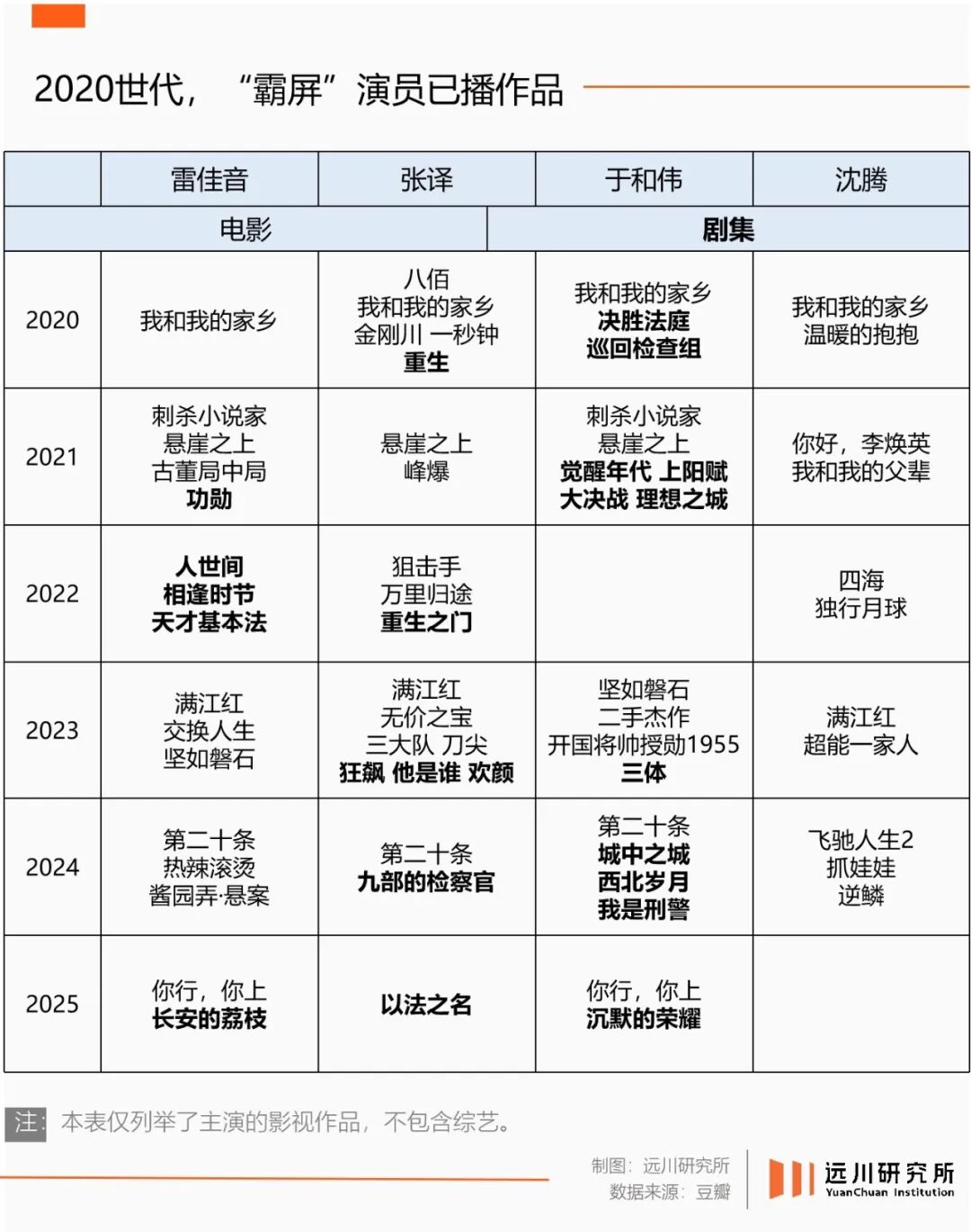
中年戏骨,被迫霸屏
3 6 Ke· 2025-10-14 00:08
Core Viewpoint - The current dominance of a few middle-aged actors in the Chinese film and television industry reflects a structural crisis within the industry, where the limited supply of diverse content has led to a repetitive use of the same actors in various roles [5][16][47]. Group 1: Current Trends in Casting - The upcoming adaptations of the Four Great Classical Novels have raised concerns about the availability of suitable male actors, highlighting the industry's reliance on a small pool of established talent [1]. - Prominent actors like Lei Jiayin, Zhang Yi, and Yu Hewei have become ubiquitous in various genres, leading to criticisms of their performances being too similar and lacking diversity [2][3][10]. - The phenomenon of "霸屏" (dominating the screen) among these actors is not merely a result of their popularity but is indicative of a broader issue within the industry, where fewer options are available for casting [5][16]. Group 2: Industry Challenges - The number of new productions has significantly decreased, with only 25 long dramas starting filming in the first quarter of 2025, a stark contrast to previous years [17]. - The issuance of broadcasting licenses has also declined, with only 115 licenses granted in 2024 compared to 429 in 2014, indicating a shrinking market for new content [18]. - The industry is facing a structural crisis, where the concentration of resources among a few actors is a symptom of a larger problem: a lack of diverse and high-quality content being produced [5][16][47]. Group 3: Actor Dynamics - Actors like Zhang Yi have expressed the need to take breaks from acting to avoid typecasting, indicating a self-awareness of the industry's repetitive nature [5][10]. - The reliance on a few established actors is not a new phenomenon; historically, other actors have also dominated the screen during their peak years, but the current situation is exacerbated by a lack of variety in available roles [13][15]. - The industry's focus on a limited number of actors reflects a broader trend of risk aversion among producers, who prefer to invest in familiar faces rather than explore new talent [20][41]. Group 4: Future Outlook - The recent "广电21条" policy aims to revitalize the industry by easing restrictions on content production, which could potentially lead to a more diverse array of projects and actors being featured [33]. - The industry's future will depend on its ability to expand the variety of content and opportunities for actors, moving away from a reliance on a few dominant figures [47]. - The need for a more balanced approach to casting and content creation is essential for the long-term health of the industry, as it seeks to attract a broader audience and foster new talent [47].

2025Q2全国票房同比-34.74% 影视行业再陷寒冬 金逸影视预亏超7000万元
Xin Lang Zheng Quan· 2025-07-17 03:52
Core Insights - The film industry is experiencing a significant divergence in performance, with major players like Wanda Film, Hengdian Film, and Jinyi Film reporting substantial profit increases in the first half of 2025, primarily driven by the success of "Nezha 2" during the Spring Festival [1][2][3][4][5]. - However, the second quarter has seen a sharp decline in box office revenue and audience attendance, indicating a potential downturn in the industry [1][7][8][10]. Group 1: Performance Highlights - Wanda Film reported a net profit of 500-560 million yuan, a year-on-year increase of 341%-394%, largely due to the box office success of "Nezha: The Devil's Child" and "Detective Chinatown 1900," which contributed 52.8% to the overall box office [3]. - Hengdian Film's net profit is projected to be between 180-230 million yuan, reflecting a year-on-year increase of 103%-160%, benefiting from revenue sharing from major films and effective cost control [4]. - Jinyi Film has turned a profit with a net income of 28-36 million yuan, but reported a loss exceeding 70 million yuan in Q2, highlighting challenges in sustaining growth [5]. Group 2: Industry Trends - The overall box office for the first half of the year reached 29.231 billion yuan, a year-on-year increase of 22.91%, with domestic films accounting for 91.2% of the total [6]. - The second quarter saw a drastic decline in box office revenue to 4.842 billion yuan, a year-on-year decrease of 34.74%, with audience attendance dropping to 120 million, down 34.60% [8][9]. - The lack of blockbuster films post-Spring Festival has led to a significant drop in viewer demand, exacerbated by high fixed costs in cinema operations [10][11]. Group 3: Strategic Responses - Wanda Film is implementing a "125 strategy" to diversify its revenue streams, including creating "super entertainment spaces" and enhancing non-ticket revenue through partnerships with various businesses [13][14]. - The company is also focusing on technological enhancements to improve customer engagement and is preparing a diverse slate of films for the summer season to mitigate risks associated with content dependency [16][17]. - The industry is facing structural challenges, with larger companies like Wanda benefiting from diversified business models, while smaller players like Jinyi struggle with reliance on box office revenue [18][19]. Group 4: Future Outlook - The upcoming summer season is critical, with 101 films scheduled for release, including anticipated titles like "Jurassic World: Rebirth," which could potentially revive box office performance [21]. - However, there are concerns about audience fatigue with similar genres, which could hinder recovery if major releases do not meet expectations [22]. - Long-term strategies for the industry include policy support for film consumption, exploring untapped markets, and leveraging technology to reduce production costs [24][25][26].