德

Search documents
叶翰、陈赟对谈儒家、制度与超越
Xin Lang Cai Jing· 2025-11-15 02:47
Group 1 - The discussion revolves around Max Weber's analysis of China and its impact on Western sinology, highlighting both appreciation and criticism of his views [3][4][5] - Weber's characterization of China as a "Confucian state" is debated, with emphasis on the relationship between Confucianism and modern Chinese identity [5][7] - The transformation of Chinese society from traditional to modern is a central theme, with Confucian values influencing contemporary social dynamics [5][9] Group 2 - The relationship between Confucian scholars and the state during the Han dynasty is explored, suggesting a complex interaction rather than a straightforward dominance of Confucianism [11][12][13] - The importance of legal knowledge among scholars is emphasized, indicating that not all scholars were strictly Confucian [13][14] - The portrayal of Confucius in historical texts is analyzed, questioning the traditional view of his sanctification and its implications for understanding Confucianism [14][15] Group 3 - The concept of "狂" (madness) in Confucian thought is discussed, suggesting that those who challenge societal norms can hold significant value [20][27] - The idea of "德" (virtue) is examined, with a focus on its evolution from a collective quality to an individual characteristic in Confucian philosophy [29][31][32] - The discussion touches on the adaptability of Confucianism in modern contexts, highlighting its potential to influence contemporary Chinese society [34][43]

新书架丨国无德不兴 人无德不立
Zhong Yang Ji Wei Guo Jia Jian Wei Wang Zhan· 2025-08-12 00:50
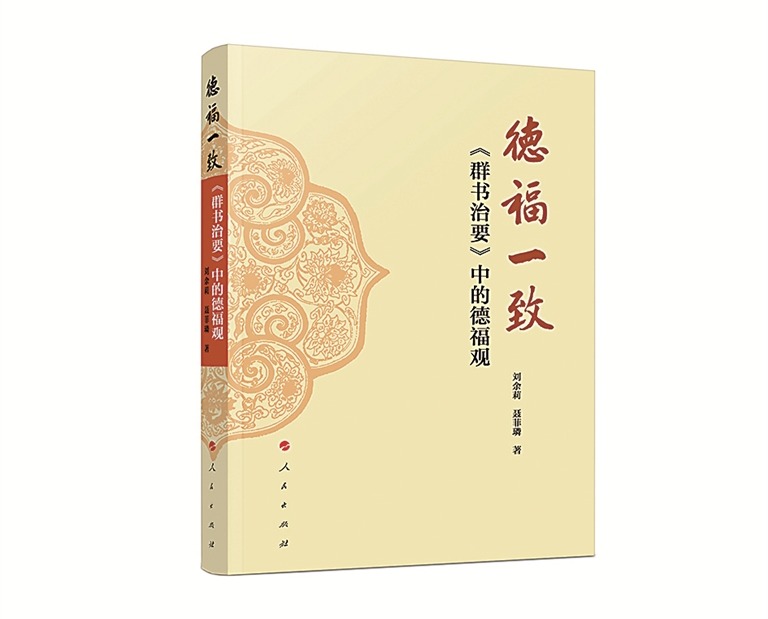
Core Viewpoint - The relationship between virtue (德) and fortune (福) is a significant area of study in ethics, with deep reflections from both Eastern and Western ancient sages. The book "Virtue and Fortune Consistency: The View of Virtue and Fortune in 'Qunshu Zhiyao'" elaborates on this relationship from three dimensions: moral quality, moral behavior, and institutional ethics, highlighting its importance in traditional Chinese moral education [2][3]. Summary by Relevant Sections - The concept of "virtue" is central to traditional Chinese culture, encompassing metaphysical, ethical, and governance dimensions, including the idea of self-awareness and awareness of others, as discussed in "The Great Learning" [2]. - "Fortune" has evolved from its original meaning related to sacrifices and divine blessings to include both tangible material aspects and abstract spiritual fulfillment [2]. - The discourse on the relationship between virtue and fortune is rich in traditional Chinese ethical thought, indicating that virtue is a crucial component of fortune, as noted in "Shangshu" where "the fourth fortune is to cultivate virtue" [3]. - Virtue is described as the foundation of fortune, with the analogy that without virtue, fortune cannot thrive, similar to a tree that cannot flourish without deep roots [3]. - "Qunshu Zhiyao," compiled by Wei Zheng in the early Tang Dynasty, embodies the political wisdom and governance principles of ancient sages, with the idea of virtue and fortune being a recurring theme throughout the text [3]. - The cultural power ultimately stems from the influence and appeal of core values, which are seen as a form of virtue at both personal and societal levels [3]. - The importance of cultural confidence and moral education in modern society is emphasized, with the study of ancient wisdom providing insights into governance and the role of virtue and fortune in societal development [4].