
核心价值观

Search documents
企业文化是什么,究竟有啥用?我从任正非这里悟透奥妙,醍醐灌顶
Sou Hu Cai Jing· 2026-01-14 02:29
Core Viewpoint - The essence of corporate culture is crucial for a company's success and development, as it serves as the "soul" of the enterprise, influencing cohesion and organizational strength [1][4][10] Group 1: Definition and Importance of Corporate Culture - Corporate culture is defined as the unique cultural image of a company, formed by its values, beliefs, and operational methods, and is reflected in daily operations [3][9] - A strong corporate culture fosters team cohesion and organizational strength, while a lack of it can lead to disunity and inefficiency [4][6] - The culture of a company is fundamentally linked to the personality and values of its leadership, which shapes the overall corporate environment [7][8] Group 2: Role of Leadership in Corporate Culture - Leadership plays a pivotal role in establishing and nurturing corporate culture, with the leader's vision and values directly impacting the company's cultural framework [7][8] - Successful entrepreneurs focus on creating an environment that promotes shared values and collective progress, rather than relying solely on personal authority [8][9] - The alignment of individual and corporate goals is essential for a cohesive corporate culture, as it provides a shared understanding of priorities and values [9][10] Group 3: Institutional Support for Corporate Culture - Corporate culture must be supported by institutional frameworks, such as KPIs, to ensure its effective implementation and assessment [5] - The integration of culture into the company's operational structure is necessary for sustaining its values and ensuring long-term success [5][9] Group 4: Cultural Influence on Performance - A positive cultural atmosphere is a vital management resource, especially after the initial stages of entrepreneurship, as it helps in professionalizing management and reducing reliance on individual leaders [8] - The transformation of cultural values into a collective ethos can drive the company towards achieving its objectives and maintaining competitive advantage [10]


段永平:好的企业文化,就是做对的事
Sou Hu Cai Jing· 2025-08-25 16:10
Group 1 - The core concept of corporate culture is about doing the right things and how to do them correctly [1][6] - A good corporate culture acts as a filter to avoid many mistakes and supports a good business model [2][3] - Companies with good corporate culture tend to have a longer lifespan compared to those with poor culture [3][4] Group 2 - Good corporate culture is essential for maintaining a healthy and sustainable business, but it does not guarantee a successful business model [2][3] - The relationship between corporate culture and strategy is significant; companies with good culture have a lower probability of strategic errors [3][4] - Corporate culture is often shaped by the founder and is difficult to change once established [5][9] Group 3 - The essence of good corporate culture is to focus on long-term benefits rather than short-term profits [16][17] - Companies should prioritize their mission, vision, and core values to create a strong corporate culture [11][12] - Observing the actions and words of leadership is crucial in assessing the authenticity of a company's corporate culture [12][13]

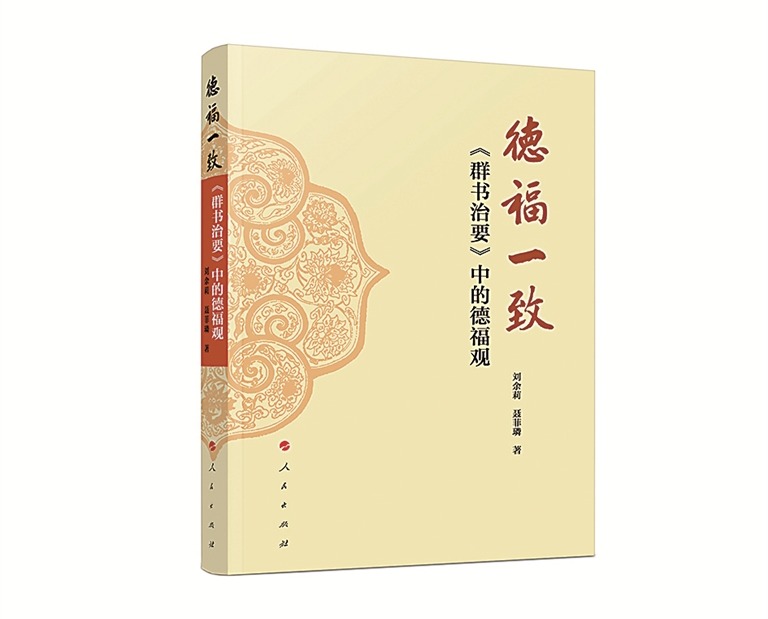
新书架丨国无德不兴 人无德不立
Zhong Yang Ji Wei Guo Jia Jian Wei Wang Zhan· 2025-08-12 00:50
Core Viewpoint - The relationship between virtue (德) and fortune (福) is a significant area of study in ethics, with deep reflections from both Eastern and Western ancient sages. The book "Virtue and Fortune Consistency: The View of Virtue and Fortune in 'Qunshu Zhiyao'" elaborates on this relationship from three dimensions: moral quality, moral behavior, and institutional ethics, highlighting its importance in traditional Chinese moral education [2][3]. Summary by Relevant Sections - The concept of "virtue" is central to traditional Chinese culture, encompassing metaphysical, ethical, and governance dimensions, including the idea of self-awareness and awareness of others, as discussed in "The Great Learning" [2]. - "Fortune" has evolved from its original meaning related to sacrifices and divine blessings to include both tangible material aspects and abstract spiritual fulfillment [2]. - The discourse on the relationship between virtue and fortune is rich in traditional Chinese ethical thought, indicating that virtue is a crucial component of fortune, as noted in "Shangshu" where "the fourth fortune is to cultivate virtue" [3]. - Virtue is described as the foundation of fortune, with the analogy that without virtue, fortune cannot thrive, similar to a tree that cannot flourish without deep roots [3]. - "Qunshu Zhiyao," compiled by Wei Zheng in the early Tang Dynasty, embodies the political wisdom and governance principles of ancient sages, with the idea of virtue and fortune being a recurring theme throughout the text [3]. - The cultural power ultimately stems from the influence and appeal of core values, which are seen as a form of virtue at both personal and societal levels [3]. - The importance of cultural confidence and moral education in modern society is emphasized, with the study of ancient wisdom providing insights into governance and the role of virtue and fortune in societal development [4].
“核心价值观百场讲坛”第159场在银川举行
Ren Min Ri Bao· 2025-08-01 22:00
Core Viewpoint - The event titled "Core Values Forum" was held in Yinchuan, Ningxia, focusing on the historical significance and archaeological findings of the Xixia Tombs, emphasizing the multi-ethnic interactions in Chinese civilization [1] Group 1: Event Details - The 159th session of the "Core Values Forum" took place on August 1 in Yinchuan, organized by the Publicity Department of the CPC Central Committee and Guangming Daily [1] - The event featured a lecture by Chen Tongbin, honorary director of the Architectural History Research Institute of the China Academy of Building Research, discussing the Xixia Tombs [1] Group 2: Lecture Content - Chen Tongbin analyzed the historical information and archaeological results of the Xixia Tombs from the perspective of architectural history, summarizing the characteristics and values of the heritage [1] - The lecture highlighted the significance of the Xixia Tombs in witnessing the historical process of multi-ethnic exchanges and integration within Chinese civilization [1] Group 3: Event Organization - The event was co-hosted by the Publicity Department of the Ningxia Hui Autonomous Region and Guangming Net, with support from the Ningxia Library and the Yinchuan Municipal Party Committee [1] - The event was live-streamed by Guangming Net and the Guangming Daily client [1]
老方说:在企业接班人传承上,任正非做法很高明,华为代表了方向
Sou Hu Cai Jing· 2025-07-31 07:47
Core Insights - The article discusses the challenges of succession in private enterprises in China, emphasizing that not all entrepreneurs can successfully pass on their businesses to the next generation due to internal conflicts and the struggle for wealth distribution [1][4] - It highlights the successful succession strategy of Huawei under Ren Zhengfei, who has established a governance structure that allows for multiple successors, ensuring the company's longevity [3][12] Group 1: Succession Challenges - The concept of "wealth does not last beyond three generations" reflects the difficulties faced by entrepreneurs in ensuring their legacy [1] - Internal disputes often arise from the significant financial interests involved in business succession, leading to familial conflicts [1][4] Group 2: Huawei's Succession Model - Ren Zhengfei's approach to succession involves a well-defined governance structure and collective leadership, which mitigates the risks associated with relying on a single individual [3][9] - Huawei has 127,909 employee shareholders, creating a broad base of potential successors who are aligned with the company's core values [3][11] Group 3: Importance of Core Values - The article emphasizes that the foundation of a company's long-term stability lies in the acceptance of its core values by successors, which is more critical than merely transferring power [9][11] - A strong corporate culture, combined with effective governance mechanisms, facilitates smooth succession and continuity in business operations [9][11] Group 4: Cultural and Ethical Considerations - The article argues that cultural values and ethical considerations are essential for sustainable business practices, as material resources are finite while cultural values can endure [11][12] - It suggests that a focus on collective well-being over individual gain can lead to more resilient and enduring enterprises [7][12]

好书推荐:《剧变/人类社会与国家危机的转折点》
债券笔记· 2024-05-03 15:49
一个是 愿意直面痛苦的真相。 另一个必要前提是 知识储备。 《剧变/人类社会与国家危机的转折点》 成功的国家自我评估需要具备缺一不可的两个元素: 部分 国家:已经展现的危机 明治时代 此次政变使明治政府领导者控制了京都,在此之后他们面临 的最迫切的问题就是控制整个日本。虽然幕府将军本人接受了失 败,但很多其他人并不这么想。不同的声音导致明治政府的支持 者和反对者之间爆发内战。直到1869年,日本北方主岛北海道 上的最后一股反对势力败北,外国势力才承认明治政府为日本的 合法政府。在此之后,明治政府领导者才得以开始进行国家改革。 在明治时代初期,日本实际上处在一个十字路口。一些领导 者希望由天皇实施专制;另外一些领导者则希望天皇只是名义上 的统治者,实际权力掌握在"顾问"委员会手中(这正是日本最 终采纳的方案);还有一些人建议日本废除天皇,建立共和制国 家。一些日本人开始慢慢欣赏西方的字母,建议以字母代替日本 优美但繁复的文字体系(由汉字和两种假名组成)。一些日本人 认为对朝鲜半岛开战刻不容缓,另一些人则认为应该再等等。武 士阶层希望自己的民兵组织能被留用,另外一些人则希望他们卸 甲归田,并废除武士阶层。 hea ...