心即理

Search documents
陆象山民本思想的价值
Xin Lang Cai Jing· 2026-02-13 20:37
Core Viewpoint - Lu Xiangshan's philosophy emphasizes the importance of "heart as principle," advocating for a return to innate goodness and self-governance as a means to establish a just society [2][3][6]. Group 1: Historical Context and Development - Lu Xiangshan is a pivotal figure in the transformation of Chinese thought, particularly during the Southern Song Dynasty, where societal changes led to the emergence of urban culture and a critique of traditional Confucianism [1]. - The rise of commerce and the influx of northern families into the south facilitated cultural exchanges and the development of a citizen culture, which traditional Confucianism struggled to address [1]. Group 2: Key Philosophical Concepts - The concept of "heart as principle" critiques the hierarchical views of Cheng-Zhu Confucianism, suggesting that the divine principle resides within each individual [2]. - Lu Xiangshan's philosophy encourages individuals to pursue goodness in their hearts, asserting that true understanding of the universe comes from recognizing one's own moral nature [2][3]. Group 3: Practical Applications and Governance - Lu Xiangshan's governance in Jingmen exemplified his commitment to addressing the needs of the common people, emphasizing the importance of government accountability to its citizens [5]. - His approach included direct engagement with the populace during crises, such as droughts and floods, and implementing policies that prioritized the welfare of the people [5]. Group 4: Originality and Impact of Thought - Lu Xiangshan's ideas represent a significant shift in Chinese philosophy, focusing on individual moral development and the belief in the inherent goodness of humanity [6][7]. - His integration of philosophical principles with political practice set a precedent for future governance, emphasizing the role of individual agency in societal improvement [6].
如果是真的“心”动,那是不会有大亏损的
Xin Lang Cai Jing· 2026-01-02 13:17
Core Viewpoint - The essence of knowledge and action is intertwined, emphasizing that true knowledge manifests through action, and action must be informed by genuine understanding [1][2][3]. Group 1: Knowledge and Action - True knowledge is defined as the understanding that leads to action, and without action, knowledge is incomplete [1]. - The concept of "unity of knowledge and action" is highlighted, where genuine knowledge must be practical and applicable in real-life situations [2][3]. - The distinction between superficial knowledge and deep understanding is crucial; knowledge should not be merely academic but should have practical relevance [2][3]. Group 2: Heart and Principle - The relationship between the heart and principle is emphasized, suggesting that true understanding (principle) cannot be separated from the heart [2][3]. - The idea that "the heart is the principle" serves as a foundation for the unity of knowledge and action, indicating that a heart devoid of understanding cannot be considered genuine [3][4]. - The notion that external principles or objects are irrelevant without internal understanding reinforces the importance of self-awareness in decision-making [4][5]. Group 3: Application in Investment - In the context of investment, the importance of aligning one's heart with market principles is stressed; decisions made without genuine understanding can lead to significant losses [5]. - Emotional responses to market fluctuations are often mistaken for genuine insight, highlighting the need for a deeper understanding of market dynamics [5].
曾国藩梁启超终身导师,参透王阳明,40岁以后不富也旺
首席商业评论· 2025-09-12 05:13
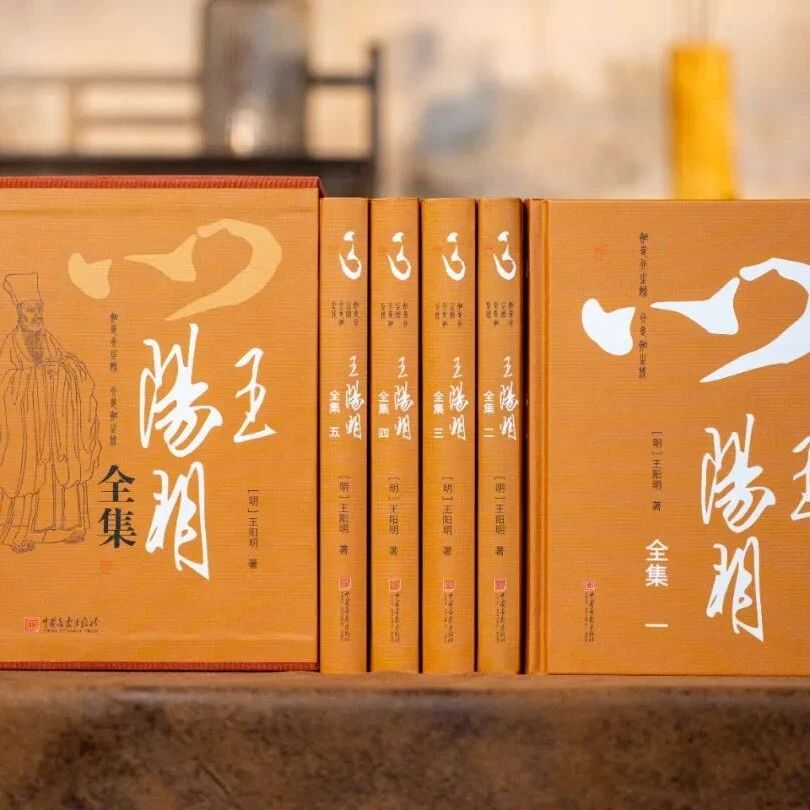
Core Viewpoint - The article emphasizes the profound influence of Wang Yangming's philosophy, particularly his concepts of "unity of knowledge and action," "the heart is principle," and "to realize one's innate knowledge," which have persisted for over 500 years and continue to provide insights into personal and societal challenges [12][48][51]. Summary by Sections Wang Yangming's Legacy - Wang Yangming is regarded as a "perfect person" in history, achieving high moral ideals and significantly impacting both philosophy and governance [4][9]. - His heart philosophy has influenced East Asian thought, notably contributing to the Meiji Restoration in Japan [9][10]. Philosophical Insights - His teachings address various aspects of life, from personal relationships to broader societal issues, offering wisdom applicable to modern life [13][55]. - He believed that true success stems from a broad-minded and generous character, contrasting with narrow-mindedness, which he viewed as a source of disaster [14]. Practical Applications - Wang Yangming advised his disciples to focus on practical actions rather than mere thoughts, emphasizing the importance of resilience in adversity [16][31]. - His philosophy encourages individuals to cultivate their inner strength, suggesting that one's circumstances do not define their potential [31][34]. Compilation of Works - The article promotes a complete collection of Wang Yangming's works, which includes all known writings, providing a comprehensive view of his life and philosophy [21][63]. - The collection is presented in a beautifully packaged format, making it accessible for readers of all ages [67][71]. Enduring Relevance - Wang Yangming's thoughts remain relevant today, offering guidance on self-discovery and personal growth, distinguishing his philosophy from Western thought that often focuses on understanding the external world [51][53]. - His teachings are seen as lifelong nourishment for personal development, with many historical figures praising their impact [46][48].

曾国藩、梁启超终身导师!参透王阳明,40岁后不富也旺
凤凰网财经· 2025-05-20 15:04
Core Viewpoint - The article emphasizes the profound influence of Wang Yangming's philosophy, particularly his concepts of "unity of knowledge and action," "the heart is the principle," and "to realize one's innate knowledge," which have shaped Chinese thought and culture for over 500 years [14][59][65]. Group 1 - Wang Yangming is regarded as one of the two greatest sages in Chinese history, alongside Confucius, and is celebrated for achieving the highest ideals of personality and morality [2][5][36]. - His philosophy, known as "Yangming's Heart Learning," has not only impacted China but also influenced the entire East Asian region, including Japan's Meiji Restoration [9][11][12]. - Wang Yangming's teachings continue to resonate today, providing insights into personal development, family life, and understanding human nature [15][65][81]. Group 2 - The article highlights Wang Yangming's dual achievements in both military and scholarly fields, noting his role in quelling the Ning Wang Rebellion and establishing a significant philosophical school [7][44]. - His life story is marked by resilience through personal and political challenges, leading to the realization that one's inner strength determines their fate, rather than external circumstances [38][41][70]. - Wang Yangming's teachings encourage individuals to cultivate a broad-minded character and to engage in practical actions rather than mere contemplation [16][18][73]. Group 3 - The article promotes a complete collection of Wang Yangming's works, which includes all known writings and offers a comprehensive understanding of his philosophy and life [22][82][89]. - The collection is presented as an essential resource for anyone seeking to learn from Wang Yangming's wisdom, with a focus on practical applications in various aspects of life [60][90]. - The publication is marketed as a valuable investment for personal growth and as a legacy to pass on to future generations, emphasizing its affordability and quality [33][90].