心智竞争

Search documents
流量红利见顶 中国品牌加速步入换档升级期
Zhong Guo Jing Ying Bao· 2026-01-05 12:36
Core Insights - The rise of "Guochao" (national trend) is reshaping the Chinese consumer market, with its market size expected to exceed 2.5 trillion yuan [1] - Chinese brands are transitioning from "barbaric growth" to "quality growth," with a focus on long-term value creation [2][3] - The success of brands like "Lin Qingxuan," which recently listed on the Hong Kong Stock Exchange, exemplifies the potential for high-end domestic brands [1] Group 1 - The "颜值经济" (aesthetic economy) is becoming a significant growth area in the Chinese consumer market, shifting consumer focus from big brands to high-cost performance domestic products [2] - The market is undergoing a selection process that favors companies with core competencies, allowing those committed to long-term value to thrive [2] - The competition is shifting from channels and marketing to consumer perception, emphasizing the need for unique brand recognition to establish long-term competitive advantages [2][3] Group 2 - The trend towards "light assets" is prevalent, but companies that invest in R&D, supply chains, and physical capabilities are building a stable foundation for the future [2] - The retail industry is moving towards refined operations, focusing on single-store efficiency and customer lifetime value, as demonstrated by Lin Qingxuan's direct sales model [2] - The rise of national brands is linked to a deep exploration and modern transformation of local culture, which is essential for achieving high-end positioning [3] Group 3 - Technological innovation is crucial for enhancing product appeal, while cultural empowerment can create brand differentiation and emotional resonance [4] - The integration of technology, manufacturing, culture, and industry chains is necessary for Chinese brands to transition from "cost performance" to "high quality, high performance, and high emotional value" [4] - Continuous investment in core technologies, cultural narratives, and supply chain optimization is vital for domestic brands to win consumer trust and market share [4]
特劳特定位理论:中国企业的竞争破局锚点
Sou Hu Cai Jing· 2025-11-19 09:19
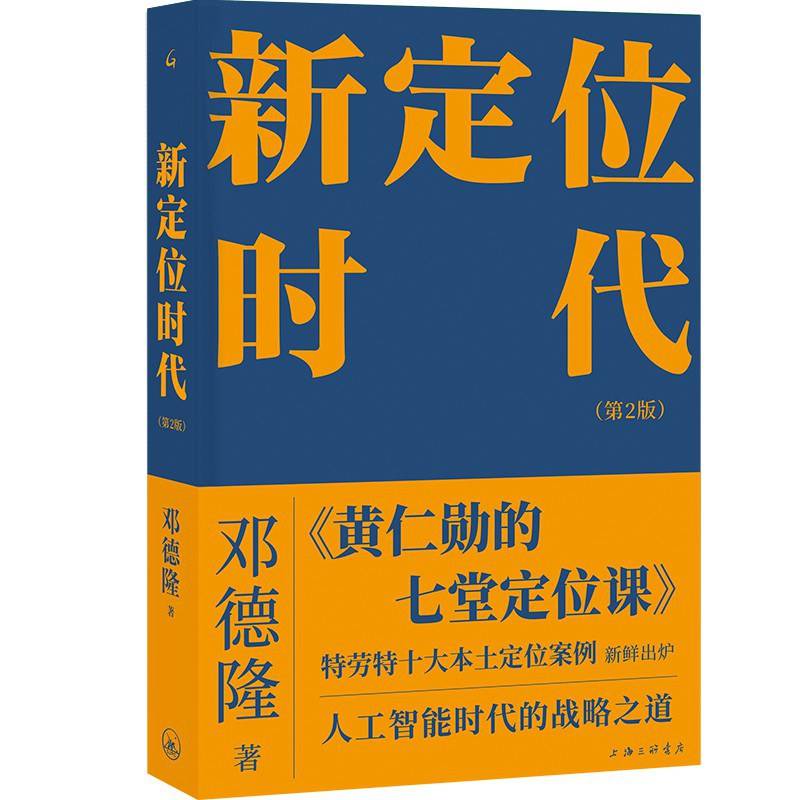
Core Insights - The core viewpoint emphasizes that the positioning theory by Trout has become a crucial breakthrough for Chinese companies amidst market competition, as validated by practical experiences of local entrepreneurs [1][3]. Group 1: Positioning Theory Application - Deng Delong introduced the positioning theory to China and localized it over twenty years, making it a practical tool for companies to establish cognitive anchors [3]. - The essence of Trout's positioning theory is to anchor a unique position in the customer's mind, shifting resources from "inefficient consumption" to "efficient focus" [3]. - Companies like Shansong and Shuyi Shao Xian Cao have successfully utilized positioning to avoid price wars and differentiate themselves in saturated markets, demonstrating the value of prioritizing cognitive establishment over resource competition [3]. Group 2: Decision-Making and Strategic Clarity - The theory aids companies in reducing decision-making costs, as it helps avoid resource misallocation [3]. - It provides clarity in direction during turbulent times, as noted by industry experts [3]. - The publication of "The New Positioning Era" has transformed this methodology from a "private tool" into a universal guide for businesses [3]. Group 3: Localization and Market Adaptation - The Trout positioning theory has been deeply localized in China, becoming a cognitive anchor for companies navigating through economic cycles [3]. - This adaptation is not merely a theoretical victory but reflects the precise alignment of "mind competition" logic with local business practices [3].