重资产运营

Search documents
流量红利见顶 中国品牌加速步入换档升级期
Zhong Guo Jing Ying Bao· 2026-01-05 12:36
Core Insights - The rise of "Guochao" (national trend) is reshaping the Chinese consumer market, with its market size expected to exceed 2.5 trillion yuan [1] - Chinese brands are transitioning from "barbaric growth" to "quality growth," with a focus on long-term value creation [2][3] - The success of brands like "Lin Qingxuan," which recently listed on the Hong Kong Stock Exchange, exemplifies the potential for high-end domestic brands [1] Group 1 - The "颜值经济" (aesthetic economy) is becoming a significant growth area in the Chinese consumer market, shifting consumer focus from big brands to high-cost performance domestic products [2] - The market is undergoing a selection process that favors companies with core competencies, allowing those committed to long-term value to thrive [2] - The competition is shifting from channels and marketing to consumer perception, emphasizing the need for unique brand recognition to establish long-term competitive advantages [2][3] Group 2 - The trend towards "light assets" is prevalent, but companies that invest in R&D, supply chains, and physical capabilities are building a stable foundation for the future [2] - The retail industry is moving towards refined operations, focusing on single-store efficiency and customer lifetime value, as demonstrated by Lin Qingxuan's direct sales model [2] - The rise of national brands is linked to a deep exploration and modern transformation of local culture, which is essential for achieving high-end positioning [3] Group 3 - Technological innovation is crucial for enhancing product appeal, while cultural empowerment can create brand differentiation and emotional resonance [4] - The integration of technology, manufacturing, culture, and industry chains is necessary for Chinese brands to transition from "cost performance" to "high quality, high performance, and high emotional value" [4] - Continuous investment in core technologies, cultural narratives, and supply chain optimization is vital for domestic brands to win consumer trust and market share [4]
京东七鲜小厨“爆单” 北京已开出30家门店
Zhong Guo Jing Ying Bao· 2025-12-25 09:09
Group 1 - The core point of the article highlights the recent promotional activity by Qixian Kitchen, which led to a surge in orders, causing delays in delivery times [2] - Qixian Kitchen launched a New Year themed marketing campaign from December 25 to 27, offering a complimentary chocolate gift box valued at approximately 18 yuan with any order placed through JD's food delivery service [2] - The campaign prepared a total of 40,000 chocolate gift boxes, distributing about 13,000 boxes daily over the three-day period, with a limit of one box per person each day [2] Group 2 - Qixian Kitchen was introduced in July as a differentiated quality dining platform by JD during the competitive food delivery market, utilizing a "dish partner + self-operated store" heavy asset operation model [3] - The brand emphasizes "freshly stir-fried" dishes with daily cold chain delivery, and features a 24-hour kitchen live-streaming function for transparency, allowing consumers to watch the cooking process in real-time [3] - As of October, Qixian Kitchen has opened 30 stores in Beijing, achieving coverage in major urban areas within the Fifth Ring Road, and has also expanded to platforms like Meituan and Taobao Flash Purchase [3]


第13家半岛酒店,落在中国哪座城市?
3 6 Ke· 2025-12-11 02:22
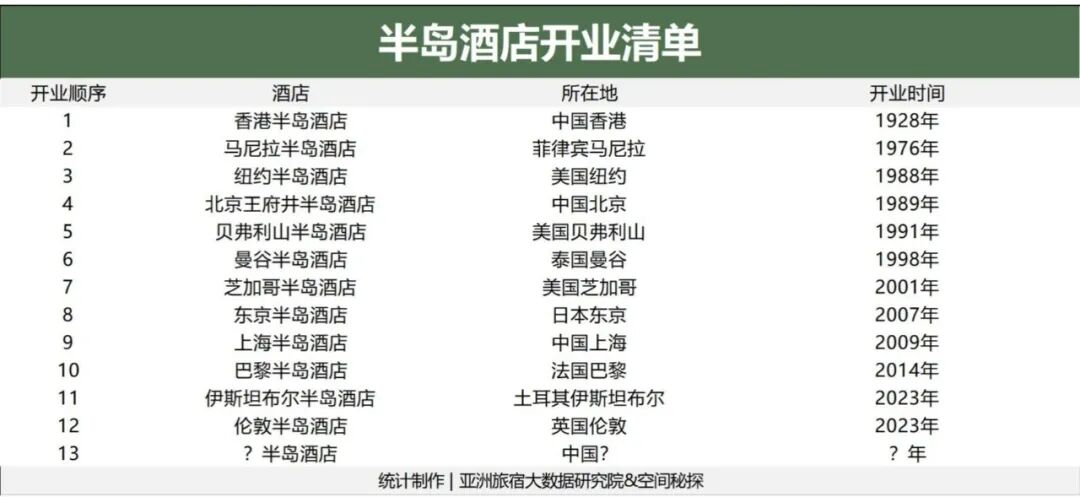
Core Insights - The Peninsula Hotels is planning to open its fourth location in China, which has sparked discussions about site selection, brand logic, and the future of luxury hotels [1][2][3] Group 1: Company Overview - The Peninsula Hotels, established in 1928, is known for its unique design that integrates local history and culture into its hotels [2][5] - The company operates under a philosophy of heavy asset ownership, focusing on investing in prime locations to create iconic landmarks [5][8] - The brand has only opened 12 hotels globally in nearly a century, emphasizing a slow and deliberate expansion strategy [9][10] Group 2: Site Selection Controversy - The potential new location for the Peninsula Hotel in China has generated debate, with Guangzhou and Chengdu being the most discussed cities [2][3][4] - Supporters of Guangzhou cite past interest in acquiring land for a hotel, while opponents point to complex property rights and unsuitability of the location [2][3] - Chengdu is considered due to its significant consumer market, but concerns exist regarding its ability to support the luxury pricing of a Peninsula hotel [3][4] Group 3: Recent Developments - The Peninsula Hotels recently opened two new locations in Istanbul and London in 2023, with the London hotel being the most expensive in the city, costing around £1 billion to build [14][16] - The Istanbul Peninsula Hotel is noted for its stunning design and cultural integration, showcasing the brand's commitment to luxury and heritage [14][13] Group 4: Service Philosophy - The Peninsula Hotels is recognized for its exceptional service, which includes personalized touches and attention to detail, aiming to create a sense of belonging for guests [23][24] - The brand emphasizes a "Simple and Smart" service concept, focusing on guest comfort and convenience without being intrusive [23][24] - Employee stability and satisfaction are prioritized, with long-term staff contributing to the hotel's unique service culture [21][22]
华润置地康养业务 “进与退”
Cai Jing Wang· 2025-11-07 07:38
Core Viewpoint - China Resources Land Holdings Limited is accelerating its exit from the elderly care business by planning to transfer 100% equity of Run Di Kang Yang (Shenzhen) Industrial Development Co., Ltd, reflecting a strategic shift to focus on core businesses [1][3]. Group 1: Company Strategy - The decision to divest from the elderly care sector is part of a pre-established strategy, with plans to exit various non-core businesses during the "14th Five-Year Plan" period [1][3]. - The company previously expanded aggressively into the elderly care sector, launching the "Yue Nian Hua" brand and establishing over 10,000 elderly care beds across multiple cities [2][3]. - Despite initial growth, the elderly care business has faced significant profitability challenges, leading to a strategic retreat and a reduction in operational scale [3][4]. Group 2: Industry Challenges - The elderly care industry is experiencing widespread difficulties, with many companies, including China Resources Land, actively divesting from loss-making assets [4][5]. - The sector is characterized by high capital investment, low occupancy rates, and a mismatch between investment and returns, with many projects struggling to achieve occupancy rates above 60% [5][6]. - Industry experts suggest a shift from a "heavy asset" model to a "light asset" approach, emphasizing service-oriented solutions and innovative financial tools to enhance cash flow and reduce reliance on parent company funding [5][6].