思政课改革

Search documents
如何促进思政课堂和社会课堂有效融合(政策问答·回应关切)
Ren Min Ri Bao· 2026-01-22 23:16
Core Viewpoint - The integration of ideological and political education (思政课) with real-life social contexts is emphasized, aiming to enhance the effectiveness and relevance of the curriculum [1][2]. Group 1: Integration of Ideological Education - The "14th Five-Year Plan" suggests promoting effective integration between ideological education in classrooms and social contexts [1]. - The Ministry of Education and ten other departments have issued a plan to fully mobilize social resources for practical teaching in ideological education [2]. - Over 600 universities have implemented practical credit requirements for ideological courses, with pilot reform areas expanding to ten regions [2]. Group 2: Practical Teaching Innovations - The Ministry of Education has organized nationwide "Ideological Big Classes" to create benchmark courses that combine theory and practice [3]. - A significant outreach effort has been made, with over 1.5 billion students and teachers participating in themed classes, achieving a total online viewership of 485 million [3]. Group 3: Regional Characteristics and Resources - Various regions are developing unique brands for ideological education, such as "The Great Ideological Class on the Central Axis" in Beijing and "The Taste of Truth" in Zhejiang [4]. - The establishment of over 550 national-level practical teaching bases has been initiated, with a focus on immersive and interactive teaching methods [4]. - Future reforms will prioritize practical teaching, aiming to enhance the digital resources and engagement methods for ideological education [4].
推进高校马克思主义学院高质量发展
Xin Lang Cai Jing· 2026-01-03 21:17
Group 1 - The core viewpoint of the news is the introduction of ten measures to enhance the high-quality development of Marxist colleges in Beijing's higher education institutions, focusing on strengthening the leadership of the Party in these colleges [1] - The ten measures include 37 specific actions aimed at improving the construction and research capabilities of Marxist theory disciplines, enhancing the quality of ideological and political education, and fostering high-level talent cultivation in Marxist theory [1] - The measures also emphasize the integration of Marxist colleges into the broader development of the capital, promoting the construction of Marxist colleges in private, vocational, and art colleges, and enhancing evaluation and promotion of these institutions [1] Group 2 - The Beijing School Ideological and Political Course Multidisciplinary Collaborative Innovation Center will be upgraded and is set to be established in June 2024, leveraging resources from the Chinese Academy of Social Sciences to support the development of Marxist theory disciplines and ideological education [2] - Starting in 2026, the center will initiate six actions, including collaborative lesson preparation with experts from various disciplines and the creation of workshops for in-depth interpretation of the Party's innovative theories [2] - The center will also select ideological and political course teachers for visiting studies at research institutes, facilitating cross-disciplinary training and public lectures to enhance the teaching resources available for ideological education [2] Group 3 - The center will focus on significant theoretical and practical issues in ideological education, establishing cross-disciplinary teams to produce teaching and academic outcomes that address students' ideological concerns [3] - An annual development report will be created to provide strategic planning and insights for the construction of ideological courses in the capital [3]
中国改革现场丨原来思政课也能这么 “潮”!
Yang Guang Wang· 2025-12-16 12:09
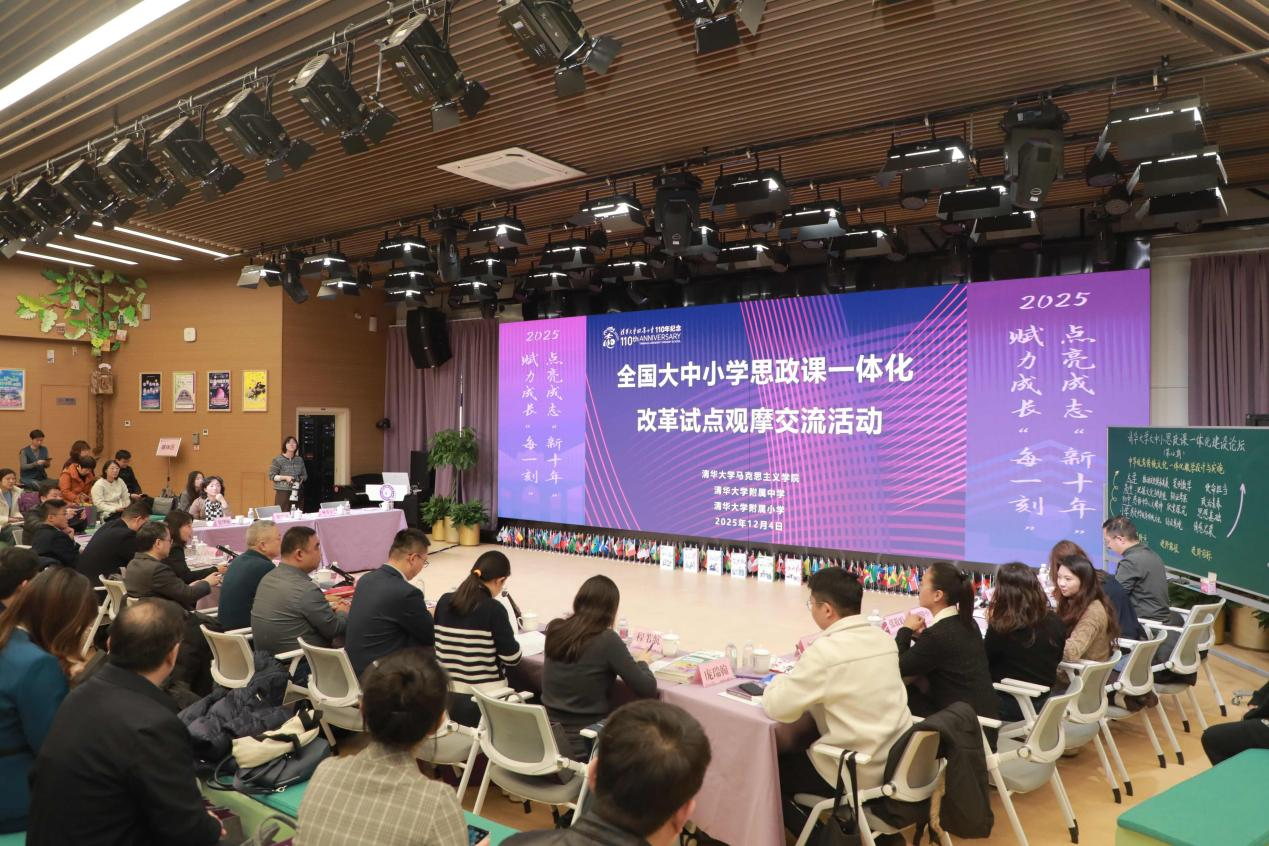
Core Viewpoint - The integration of ideological and political education (思政课) across different educational stages is being actively promoted, leading to innovative teaching methods and a more engaging learning experience for students [1][12][17]. Group 1: Integration of Ideological and Political Education - The Ministry of Education has initiated a three-year action plan to reform ideological and political education, emphasizing the integration of courses across primary, secondary, and higher education [1][12]. - Teachers from different educational stages are collaborating to create a cohesive curriculum, breaking down barriers that previously separated their teaching approaches [1][4]. - A systematic research and talent development framework supports this integration, with over 100 teachers currently pursuing doctoral degrees focused on this initiative [6][12]. Group 2: Innovative Teaching Methods - Teachers are utilizing creative methods, such as thematic discussions and real-world applications, to make ideological education more relatable and engaging for students [4][10]. - The use of practical experiences, such as field trips to innovation centers, enhances students' understanding of theoretical concepts by connecting them to real-life scenarios [8][11]. - The curriculum is designed to progressively build on knowledge, ensuring that each educational stage prepares students for the next, akin to a relay race in teaching [6][12]. Group 3: Impact on Student Engagement - Students report a more impactful learning experience through interactive and immersive classroom settings, which foster critical thinking and debate [10][11]. - The integration of current events and practical examples into the curriculum helps students relate theoretical concepts to their everyday lives, making the lessons more relevant [15][18]. - The overall goal is to cultivate a sense of responsibility and understanding of national development among students, preparing them for future challenges [12][14].