
恐龙演化

Search documents
改写生命演化史!2025我国古生物学研究在多领域取得突破
Xin Lang Cai Jing· 2025-12-20 07:47
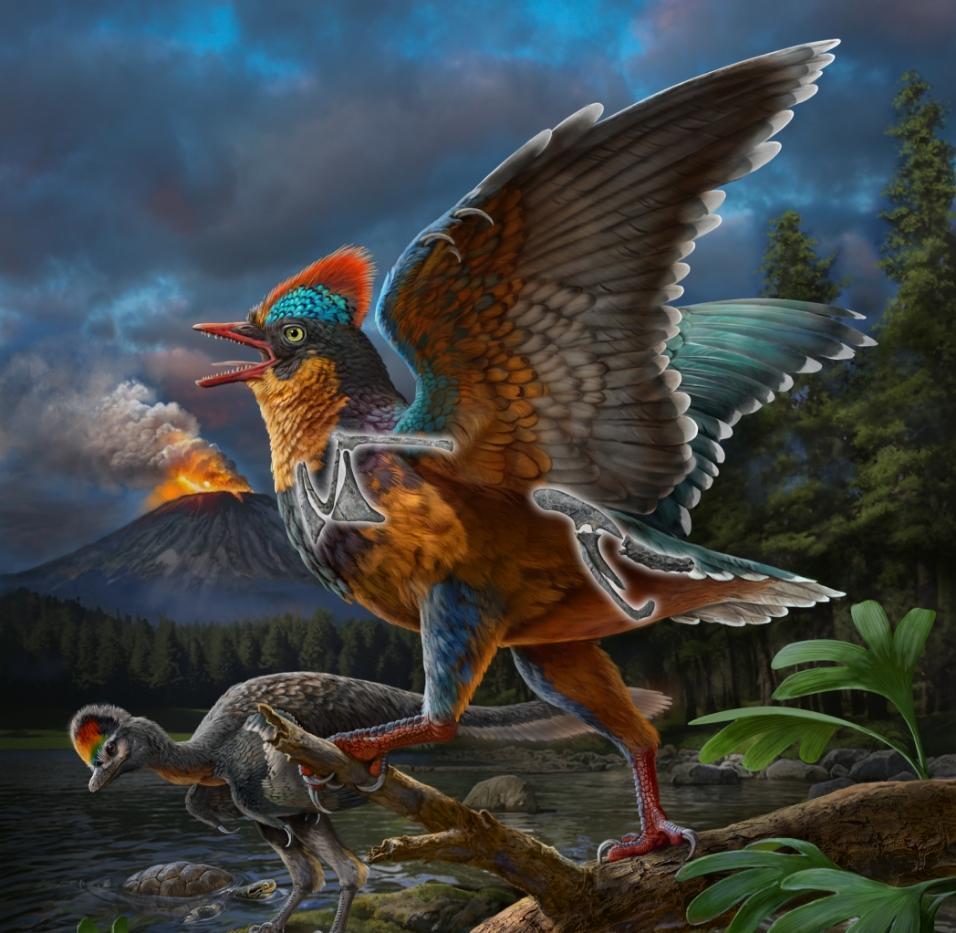
Core Insights - The article highlights significant discoveries in paleontology from China, showcasing advancements in understanding the evolution of life on Earth, particularly the transition from dinosaurs to birds and the origins of early mammals and humans [1][6]. Group 1: Evolution of Birds - A new bird fossil named "Zhenghe Bamin Bird" was discovered in Fujian, which pushes back the timeline for the emergence of modern bird body structures by nearly 20 million years, indicating that key evolutionary processes began during the Jurassic period when dinosaurs were dominant [1][3]. - The "Chicago specimen" of Archaeopteryx, discovered through collaboration between Chinese and American researchers, provides critical evidence for the evolution of the skull and flight adaptations during the transition from dinosaurs to birds [3]. Group 2: Dinosaur Origins - The discovery of Wushi Wudinglong in Yunnan represents the oldest known sauropod dinosaur in East Asia, dating back approximately 200 million years, thus extending the fossil record of Chinese dinosaurs to an earlier period [4]. - Research on two ancient fossils revealed new evidence regarding the evolution of jaw joints from reptiles to mammals, indicating that this evolutionary path was not singular, as demonstrated by the unique jaw structure of Chuan Nan Duozhi Beast [4][6]. Group 3: Human Evolution - Significant findings in human evolution include the successful capture and sequencing of ancient human genomes from Yunnan, clarifying the genetic contributions of the so-called "ghost ancestors" to the Tibetan Plateau population [6]. - Innovative methods in ancient protein and DNA analysis confirmed that a nearly complete human skull found in Harbin belongs to the Denisovans, providing a clearer understanding of this extinct human lineage [6][8]. - Research on the digital reconstruction of the skull of Hubei Yunxian Man 2 revealed that it is an early representative of the Dragon Man lineage, suggesting that the divergence of modern humans, Dragon Man, and Neanderthals occurred around 1 million years ago, significantly altering the timeline of human evolution [6][8].

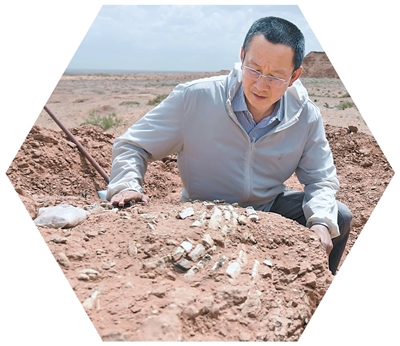
野外科考,寻找亿万年前的生命(弘扬科学家精神)
Ren Min Ri Bao· 2025-06-18 21:53
Core Insights - Xu Xing, a prominent paleontologist, has made significant contributions to the field of dinosaur evolution, having named over 80 new dinosaur species and published more than 300 papers [3][5][6]. Group 1: Research Contributions - Xu's discovery of feathered dinosaur fossils in Liaoning Province in 1997 marked a pivotal moment in understanding dinosaur evolution, leading to the identification of the "unexpected Beipiao dragon" [2][4]. - The four-winged dinosaur hypothesis proposed by Xu and his team challenged traditional views on the origins of bird flight, suggesting that these dinosaurs may have had gliding capabilities [4][5]. - The discovery of the "strange-winged" Qiyilong in 2015 further contradicted previous beliefs about feathered flight evolution, showcasing Xu's innovative approach to paleontological research [5][6]. Group 2: Fieldwork Challenges - Xu's fieldwork often involves extensive and arduous expeditions in remote areas, where the likelihood of significant discoveries is low, with teams sometimes walking 20-30 kilometers daily without finding fossils [6][7]. - The harsh conditions of fieldwork, including limited resources and encounters with wildlife, are common, highlighting the dedication required for paleontological research [6][7]. Group 3: Public Engagement and Education - Xu has actively engaged in science communication, believing that both research and public education are equally important for fostering a scientific culture [9][11]. - His efforts in popular science include writing articles and giving lectures aimed at inspiring children and the general public to appreciate science and nature [10][11].
从感官的愉悦到灵魂的升华|荐展
Di Yi Cai Jing· 2025-06-07 01:23
Group 1: Exhibition Highlights - Recent exhibitions in Shanghai and Beijing showcase a variety of themes, including architecture, design, and art [1] - The exhibition of Alvaro Siza at the Shanghai Contemporary Art Museum features over 100 pieces, including manuscripts, models, and photographs, highlighting his architectural philosophy [3][4] - The Swiss Design Exhibition at the Fosun Art Center emphasizes Switzerland's impact on global innovation and design, showcasing historical inventions and modern products [6][7] Group 2: Specific Exhibitions - The "Dragon Roars Across the Land: Chinese Dinosaur Exhibition" at the Shanghai Natural History Museum presents 118 dinosaur specimens, illustrating the evolution of dinosaurs in China [9][10] - The "Ancient Rhinoceros Treasures" exhibition at the Shanghai Museum features over 100 pieces of rhinoceros horn artifacts, showcasing the artistry and cultural significance of this material [11] - The "Hello Kitty Cosmos" exhibition in Beijing combines technology and art, celebrating the iconic character's 50th anniversary with interactive displays [16] - The "Lin Xi Ink Painting Exhibition" at the Beijing Jarde Art Center features over 500 works, reflecting the artist's integration of traditional culture into contemporary art [17][18] - The dual exhibition of Liao Fei and Chen Ke at UCCA highlights their unique artistic approaches, focusing on materiality and the contributions of women in the Bauhaus movement [19][21] - The "Brilliance and Epic: The Art Poems of Alphonse Mucha" exhibition in Beijing presents nearly 200 works, exploring the artist's influence on the Art Nouveau movement [20][22] - The "Official Chinese Color Painting: Heritage and Innovation" exhibition at the Palace Museum showcases the history and aesthetic of traditional Chinese architectural color painting [23][24]

巴西发现的化石或提供恐龙起源新线索
Xin Hua She· 2025-06-04 12:44
Core Insights - An international research team has identified a fossil in Brazil that may belong to one of the oldest dinosaur ancestors, providing new clues about dinosaur origins [1][2] - The fossil, approximately 237 million years old, was discovered in the city of Santa Cruz, Brazil, and is classified under the Silesauridae family, named "Itaguyra oculta" [1][2] Group 1 - The fossil analysis indicates that it consists of pelvic bones and belongs to a reptile from the mid-Triassic period, previously unrecognized [1] - The Silesauridae family is debated in its relationship to dinosaurs, with some considering it a close relative and others viewing it as a direct ancestor [2] - The research suggests that Silesauridae should be classified within the dinosaur category, specifically as an early representative of ornithischian dinosaurs [2] Group 2 - The discovery fills a critical gap in the evolutionary history of dinosaurs and supports the idea that Silesauridae may represent early ornithischian dinosaurs [2] - If the hypothesis is confirmed, "Itaguyra oculta" could be recognized as one of the oldest known dinosaurs in the world [2]