戏剧疗愈

Search documents
七位普通女性用戏剧思考人生,即兴创作登上剧场舞台
Di Yi Cai Jing· 2026-01-14 10:46
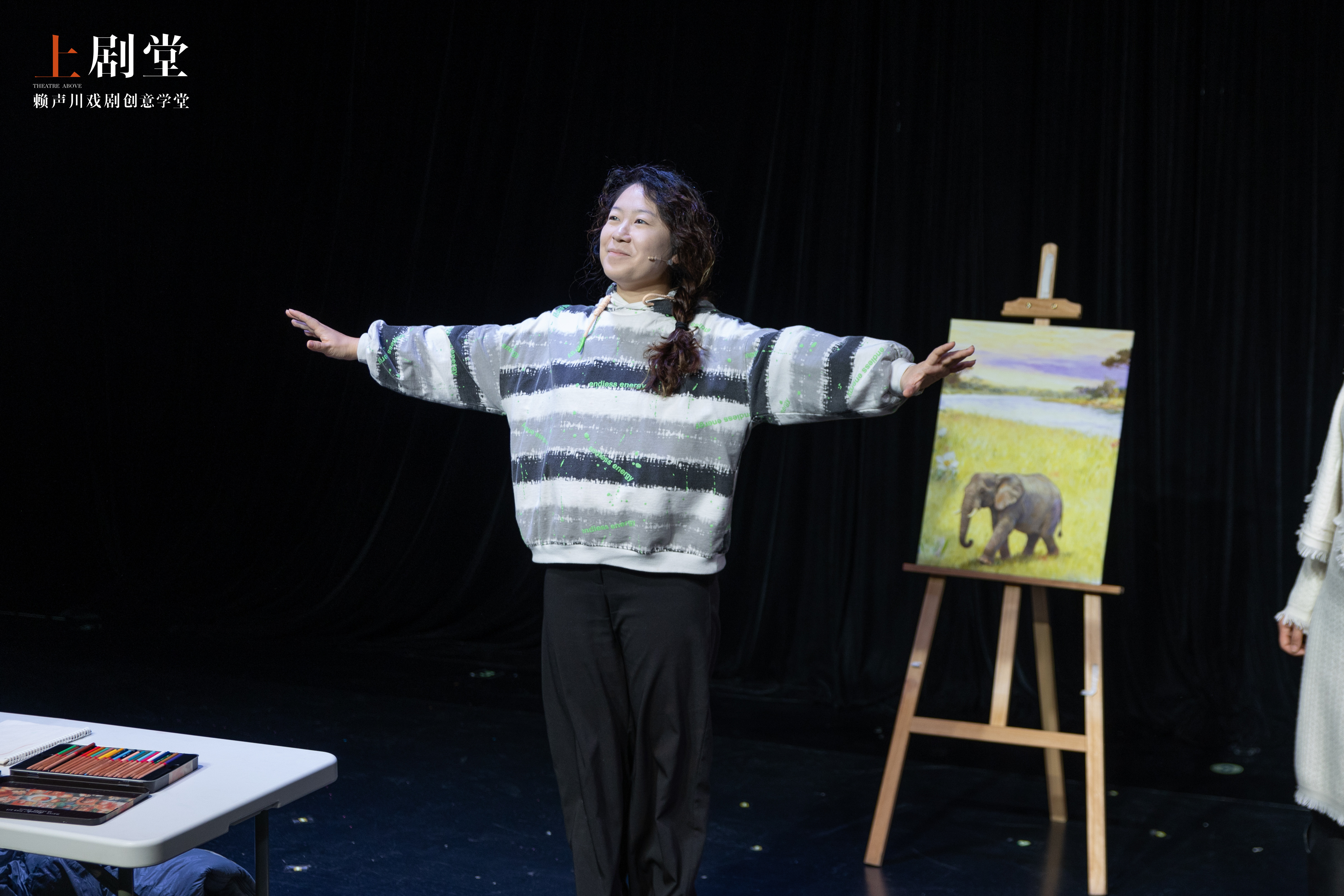
Group 1 - The core idea of the article revolves around the original play "匆匆慢达," created by seven ordinary women, which explores the meaning of life and time through their personal experiences [1] - The play features two main characters, 匆匆 and 曼达, who represent contrasting life rhythms, with 匆匆 embracing a slower pace focused on art, while 曼达 is driven by a fast-paced career [1] - The production has undergone a lengthy incubation process, including workshops and internal performances, before its official debut in a professional theater setting [4] Group 2 - The founding of 上剧堂 by赖声川 and 丁乃竺 aims to inspire creativity through drama, allowing individuals to explore self-awareness and connection with others [4] - 上剧堂Club provides a year-long program for participants to engage in collective improvisation, fostering genuine connections with the world [4] - 丁乃竺 emphasizes the therapeutic effects of theater, highlighting its potential to restore a sense of strength in life during challenging times [4]

东西问·北京文化论坛丨章嘉禾:当代戏剧传播关键在“移情”
Zhong Guo Xin Wen Wang· 2025-09-25 11:14
Core Viewpoint - The key to contemporary drama dissemination lies in "empathy," emphasizing the importance of emotional connection in theatrical performances and cross-cultural understanding [3][9]. Group 1: Differences Between Eastern and Western Drama - Eastern and Western dramas exhibit significant differences in values and performance systems, rooted in philosophical foundations: the West emphasizes "individual conflict and social critique," while the East focuses on "overall harmony and expressive representation" [5][6]. - The "mask theory" training method proposed for East Asian actors suggests that Eastern performers tend to maintain a level of concealment in their expressions, while Western performances are characterized by emotional openness [5][6]. Group 2: Cultural Exchange and Collaboration - There is a deep cultural foundation shared between Chinese and Korean dramas, yet they also display notable differences in teaching methods and thematic expressions [6][11]. - Recommendations for enhancing collaboration between China and Korea in drama and arts education include strengthening cultural exchanges between universities and participating in international drama festivals [11][14]. Group 3: The Role of Technology in Drama - The digital age presents more opportunities than challenges for the drama field, as students increasingly view drama as a means of emotional expression despite the prevalence of digital screens [13][14]. - Concerns about artificial intelligence replacing human actors have been addressed, with a consensus that the core of drama remains the emotional expression of "human" experiences [14].